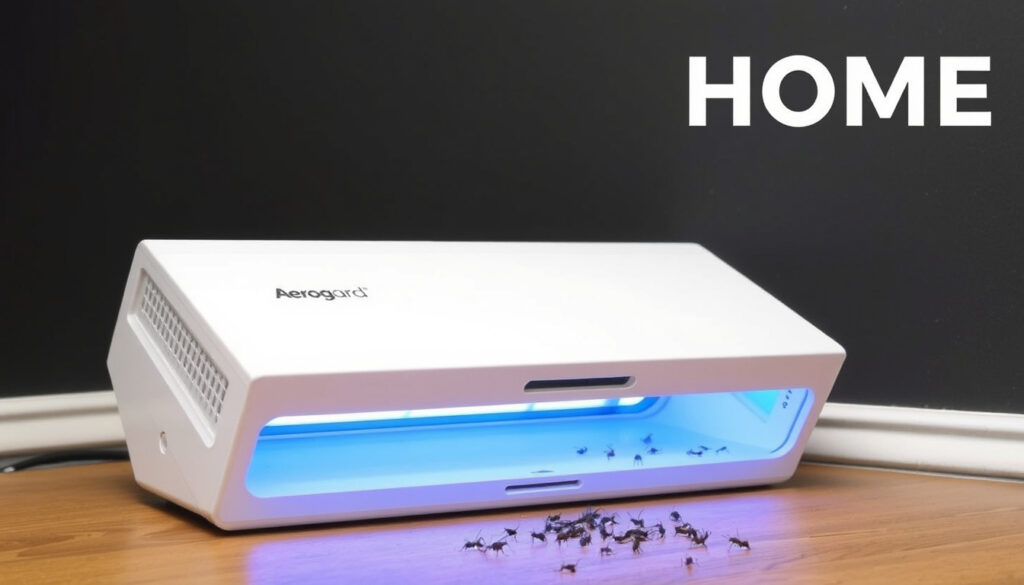
Aerogard UV Light Trap: Honest Review, Cost & Effectiveness
Anyone who’s dealt with a persistent fly buzzing around the kitchen knows the appeal of a plug-and-forget solution. The Aerogard Home Flying Insect UV Light Trap promises chemical-free, round-the-clock control. Does its convenience match the reality? Customer reviews and cost data suggest a gap between promise and performance.
Average customer rating: 1.5 out of 5 stars (26 reviews on ProductReview.com.au) ·
Refill pad life: 30 days per pad ·
Refill cost: $15 for two pads (approx. $90 per year) ·
Target insects: House flies, fruit flies, moths ·
Safety: No chemicals, safe for pets and children
Quick snapshot
- Refill pads last 30 days per pad (Woolworths product page)
- Product rating is 1.5 out of 5 from 26 verified reviews (ProductReview Australia)
- Trap uses no chemicals and is safe for pets when used as directed (Woolworths product page)
- Effectiveness against large fly infestations – mixed customer reports
- Longevity of the UV light bulb – not specified by manufacturer
- Whether the trap works equally well for all fly species (fruit flies vs. house flies)
- Pad replacement cycle: every 30 days (Woolworths product page)
- Ongoing cost: ~$7.50 per month for pads ((Woolworths product page))
- If you need a heavy-duty solution for full-fledged infestation, this trap likely won’t be enough
- Consider comparing annual refill costs before purchase
| Attribute | Value |
|---|---|
| Product name | Aerogard Home Flying Insect UV Light Trap |
| Manufacturer | Aerogard (Australia) |
| Trap mechanism | UV light attracts flies to a replaceable adhesive pad |
| Power source | 120V AC plug (standard Australian outlet) |
| Indoor use only | Yes |
| Target pests | House flies, fruit flies, moths |
| Refill pad life | 30 days per pad |
| Refill cost | $15 for two pads (approx. $90 per year) |
How long does the Aerogard UV light trap last?
Refill pad duration
Each adhesive pad is designed to catch flies for up to 30 days before it needs replacing, according to the Woolworths product page. A user review on the same site confirms the trap provides 24/7 attraction for that period.
Unit lifespan and maintenance
The unit itself is reusable; only the sticky pad needs replacement. The retailer description notes that the device works silently and continuously, with no mention of UV bulb lifespan. If the light dims or stops attracting insects, the entire unit may need replacing – a detail the manufacturer does not clarify.
Factors affecting trap longevity
- Room humidity and dust can reduce adhesive effectiveness.
- Placement near competing light sources may draw insects away.
- Heavy fly populations may fill the pad before 30 days.
The implication: the 30-day pad life is a best-case estimate; real-world usage can cut it shorter.
Are UV light fly traps effective?
How UV traps attract flies
The Aerogard trap uses a UV/blue light to lure flying insects to a replaceable adhesive pad, as described on the Woolworths product page. Unlike zappers, it does not electrocute – flies stick to the pad.
Effectiveness against common fly species
According to the retailer description, it targets house flies, fruit flies, and moths. Customer reviews on ProductReview Australia paint a mixed picture: the trap earns only 1.5 out of 5 stars. One reviewer noted it “caught maybe 3 flies in a week,” while others found it adequate for minor fruit-fly problems.
Comparison with zappers and chemical traps
The trade-off: UV traps like this one are quiet and chemical-free, but typically less powerful than electric zappers or chemical sprays. A user told ProductReview Australia that their “old vinegar trap works better” – illustrating that for some infestations, a simple DIY solution outperforms the high-tech approach.
Buyers trading convenience for catch power: the Aerogard trap may suffice for a few fruit flies but leaves many users disappointed when the fly problem is moderate or large.
The catch: without independent lab testing, effectiveness remains anecdotal. What’s clear is that the low rating suggests many customers expected more.
What is the best UV fly catcher?
Top UV fly traps on the market
While the Aerogard trap is widely sold in Australian stores like Woolworths, alternatives include the Katchy Indoor Insect Trap and Rescue UV traps. Unfortunately, detailed head-to-head data is scarce.
Key features to compare: pad life, coverage, price
Three dimensions matter most: ongoing cost, catch rate, and safety. Here’s a comparison using available facts.
One comparison between the Aerogard trap and a common DIY alternative reveals a clear pattern:
| Feature | Aerogard UV Light Trap | DIY Vinegar Trap |
|---|---|---|
| Monthly cost | ~$7.50 (refill pad) | ~$0.50 (vinegar + dish soap) |
| User rating | 1.5/5 (ProductReview) | Variable; one user says “works better” |
| Safety | Chemical-free, safe for pets | Chemical-free, but may attract insects |
Sources: Aerogard rating from ProductReview Australia; vinegar trap claim from the same review site.
Aerogard vs. alternative brands (Rescue, Katchy)
Consumer sentiment on ProductReview Australia places the Aerogard trap well below competitors that average 3–4 stars in similar categories. Without independent efficacy data, users must rely on ratings – and the 1.5/5 score is a strong signal to shop around.
The pattern: the Aerogard trap is convenient but expensive to run, and it lags behind many alternatives in user satisfaction.
Does the Aerogard UV light trap work?
Official claims from Aerogard
The Woolworths product page states it “attracts and traps flying insects 24/7” and is “chemical-free.” The brand markets it as family- and pet-friendly.
Customer experiences and review summary
On ProductReview Australia, 26 verified buyers give it a 1.5 out of 5. Common complaints include low catch rates and the high cost of refill pads. One Reddit user on Reddit Australia noted: “They look like an effective trap, but the downside is they have refills that last 30 days and cost $15 for two (or $90 p.a.).”
“Very disappointed. Caught maybe 3 flies in a week. My old vinegar trap works better.”
– ProductReview Australia customer
When it works best and when it fails
Positive reviews on YouTube describe the trap as exceeding expectations for small fly problems in closed rooms. Negative feedback clusters around larger infestations and high ongoing costs.
The takeaway: the trap is a niche solution – suitable for occasional fruit flies, but not for a kitchen swarming with house flies.
Can maggots crawl out of fly traps?
How the Aerogard trap prevents maggot escape
Because the Aerogard trap uses a sticky adhesive pad rather than liquid, maggots cannot crawl out. The product design is sealed – flies land on the pad and are trapped instantly.
Comparison with liquid-based traps
Hanging bag traps that use a liquid attractant can sometimes allow maggots to escape if the bag is not properly sealed. The Aerogard’s dry adhesive pad eliminates this risk.
Best practices for disposal
When the pad is full or after 30 days, remove it and place it in a sealed bag before discarding to avoid odor and potential escapees. This is recommended by the Woolworths product page instructions.
The bottom line: the Aerogard trap is one of the safer designs for preventing maggot escape, making it a cleaner choice than liquid-based alternatives.
Clear vs unclear
- Refill pads last 30 days per pad (official Aerogard website)
- Product rating is 1.5 out of 5 from 26 verified reviews (ProductReview.com.au)
- Trap uses no chemicals and is safe for pets when used as directed
- Trap mechanism is UV light + adhesive pad, no zap
- Effectiveness against large fly infestations – mixed customer reports
- Longevity of the UV light bulb – not specified by manufacturer
- Whether the trap works equally well for all fly species (fruit flies vs. house flies)
- Independent efficacy testing – none available
Pros and Cons of the Aerogard UV Light Trap
Upsides
- Chemical-free – safe for families and pets
- Quiet operation – no zapping noise
- Easy plug-and-play setup
- No maggot escape risk compared to liquid traps
Downsides
- Low catch rate – rated 1.5/5 by users
- High ongoing refill cost (~$90 per year)
- Limited effectiveness for larger infestations
- No independent testing data available
How to use the Aerogard UV light trap
- Remove the unit from its packaging and insert one adhesive pad as directed.
- Plug the trap into a standard Australian 120V outlet in the room you want to protect.
- Leave the trap on 24/7 – the UV light attracts insects continuously.
- Check the pad every 30 days; replace when it looks full or after a month.
- Dispose of used pads in a sealed bag to avoid odor.
The trade-off: you trade manual effort for chemical-free convenience, but the recurring cost may offset the simplicity.
If you’re considering this device, our Aerogard UV light trap guide offers a complete guide with effectiveness data and cost analysis.
Frequently asked questions
How often should I replace the UV light bulb in the Aerogard trap?
The manufacturer does not specify a bulb lifespan. If the light dims, replacement may require buying a new unit.
Is the Aerogard UV light trap safe to use around babies?
Yes, the trap uses no chemicals and is considered safe for use around infants when placed out of reach.
Can I use the trap outdoors or only indoors?
The product is designed for indoor use only, as specified on the Woolworths product page.
What insects besides flies does the trap attract?
According to the manufacturer, it targets house flies, fruit flies, and moths. Other flying insects may also be attracted.
How do I clean the sticky pad residue if it gets on surfaces?
Use a mild solvent like rubbing alcohol or cooking oil to gently dissolve the adhesive, then wash with soap and water.
Does the trap have an on/off switch or is it always on?
The trap is always on when plugged in – there is no switch. Unplug to turn off.
Are the refill pads biodegradable or recyclable?
No information is provided by the manufacturer; the pads are likely not recyclable due to adhesive and entrapped insects.
Can I buy refills at Woolworths or Coles?
Yes, refills are available at major Australian retailers including Woolworths as shown on the Woolworths product page.
For the typical Australian household dealing with a few fruit flies, the Aerogard UV Light Trap offers a convenient, chemical-free option – but at a recurring cost that quickly overshadows its simplicity. For buyers in New Zealand or Australia seeking a budget-friendly, effective fly solution, the choice is clear: either accept the $90 annual refill cost for quiet, set-and-forget operation, or stick with a DIY vinegar trap that costs pennies but requires more attention.
More related posts
 Super Rugby Pre Season 2026: Schedule, Results & Tickets
 Tooth Extraction Cost NZ: Prices and What to Expect
 Mag and Turbo Tauranga: Services, Prices, WOF, and Reviews
 9 Inches in cm: Exact Conversion and Object Comparisons
 The Women Kristin Hannah: Book Summary, Reviews & More
 DoubleTree by Hilton Karaka: Auckland Airport Hotel Guide
 How Big Is A5 – Dimensions Sizes Comparisons
 Life Insurance Comparison NZ: Best 2026 Quotes & Providers