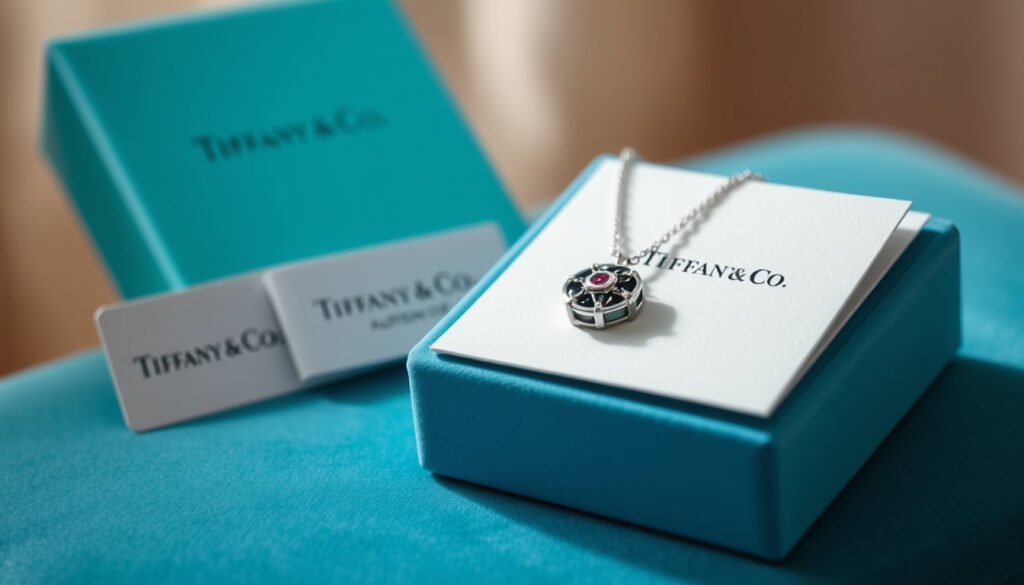
Tiffany & Co. Necklace: Worth, Authenticity & Style Guide
Many of us have seen that iconic blue box and wondered what a Tiffany necklace for ourselves might feel like. But behind the romance of the robin’s‑egg hue and the instantly recognizable silver tag lies something more interesting: a business that has been perfecting the same formula since 1837. This guide cuts through the brand lore to show you what the 925 hallmark actually means, how to tell a real from a fake, and whether a Tiffany necklace is worth the investment.
Founded: 1837 ·
Signature Metal: Sterling Silver (925) ·
Iconic Collection: Return to Tiffany (1969) ·
Price Range: $150 – $100,000+ ·
Hallmark: Tiffany & Co. + 925
Quick snapshot
- Price range from $150 to over $100,000 (Tiffany & Co. entry-level shop & Tiffany necklace collection)
- Cost driven by heritage, materials, and marketing (Tiffany Press – Sterling Silver legacy)
- Check for 925 hallmark and Tiffany & Co. stamp (Gray & Sons – Pre-owned authentication guide)
- Examine box and pouch quality for authenticity signs (Gray & Sons – Pre-owned authentication guide)
- Iconic Return to Tiffany tag designed by Elsa Peretti in 1969 (925-1000 Tiffany Marks Reference)
- New collections like HardWear and Lock keep the brand modern (Tiffany & Co. Necklaces & Pendants)
- Tiffany offers entry-level options from $150 (Tiffany & Co. Under $500)
- Cartier uses 925 marks on silver but is positioned as higher investment (Cartier Hallmark Reference (Scribd) & Cartier Watches – luxury brand page)
Six facts that define Tiffany & Co. necklaces, one pattern: each reinforces the brand’s premium story.
| Attribute | Detail |
|---|---|
| Founded | 1837 |
| Headquarters | New York City |
| Signature Metal | Sterling Silver (925) |
| Iconic Collection | Return to Tiffany (1969) |
| Price Range | $150 – $100,000+ |
| Hallmark | Tiffany & Co. + 925 |
Why is Tiffany’s so expensive?
Brand heritage and marketing
- Tiffany & Co. founded in 1837 in New York City (Tiffany & Co. US – brand history)
- First American house to adopt the .925 sterling silver standard in 1851 (925-1000 Tiffany Marks Reference)
- The blue box packaging is itself a marketing icon that adds perceived value (Tiffany Press – A Legacy of Sterling Silver)
- Limited discounts preserve exclusivity and maintain resale pricing
The implication: Tiffany’s price isn’t just for metal — it’s for a century‑and‑a‑half of brand storytelling.
Craftsmanship and materials
- All sterling silver pieces are stamped AG925 indicating 0.925 purity (Tiffany Press – Sterling Silver quality)
- Each piece undergoes hand‑finishing and multiple quality checks before leaving the workshop
- The precise font and spacing of the Tiffany & Co. stamp is a hallmark of craftsmanship (Gray & Sons – Craftsmanship note)
The catch: the material cost of sterling silver is a fraction of the retail price — the premium is in the finishing and the brand.
Resale value
- Pre‑owned Tiffany necklaces typically retain 60–80% of retail price, according to reseller guides (Gray & Sons – Resale value discussion)
- Iconic pieces like the Return to Tiffany Heart Tag often hold value better than trend‑driven designs
What this means: a Tiffany necklace can be considered a semi‑investment, but not all models perform equally.
Is buying a Tiffany necklace worth it?
Pros of owning a Tiffany necklace
- Timeless design: the Heart Tag and other classics have been in production for decades without losing appeal
- Durability: sterling silver (925) is robust when cared for, and Tiffany offers repair services
- Resale network: strong secondary market makes it easier to sell if needed
Cons to consider
- Price markup: a similar silver necklace from a non‑luxury brand costs 80–90% less
- Alternative options: independent designers or other luxury brands (e.g. Cartier) offer different value propositions
- Care required: sterling silver tarnishes and needs occasional polishing
Resale value comparison
Three models, one pattern: iconic designs hold value better than seasonal pieces.
| Model | New Price (approx.) | Pre‑owned Resale (approx.) |
|---|---|---|
| Return to Tiffany Heart Tag | $195 | $150–$180 |
| Elsa Peretti Bean Necklace | $350 | $250–$300 |
| HardWear Chain Necklace | $1,200 | $900–$1,050 |
The trade-off: you pay a premium for the blue box, but you also get liquidity that generic jewelry lacks.
How to tell if it’s a real Tiffany necklace?
Check the hallmark (925, Tiffany & Co.)
- Look for “Tiffany & Co.,” “T&Co,” or “TIFFANY” plus the purity mark “925” or “AG925” (Gray & Sons – hallmark guide)
- The font should be crisp, even, and consistent — fakes often have blurred or uneven stamps
- On older pieces, the mark may include “Tiffany & Co.” with a date code symbol (925-1000 Tiffany Date Codes)
Inspect the packaging and craftsmanship
- Genuine boxes have a robin’s‑egg blue colour, crisp white ribbon, and a small “Tiffany & Co.” imprint on the inner lid (Gray & Sons – packaging details)
- The pouch or box has a felt‑like interior; counterfeiters often use cheaper materials
- Check the clasp and chain links for smooth, uniform construction
Verify with Tiffany’s authentication service
- Tiffany offers in‑store authentication and cleaning services for a fee (Tiffany & Co. client services)
- For high‑value pre‑owned pieces, consider a third‑party appraisal from a certified jeweller
The pattern: no single check is enough — combine hallmark, packaging, and professional verification for confidence.
Are Tiffany necklaces still in style?
Classic designs vs trends
- The Return to Tiffany Heart Tag, introduced in 1969, remains one of the brand’s best‑selling styles (925-1000 – Elsa Peretti design history)
- New collections like HardWear (2017) and Lock (2020) appeal to a younger, fashion‑conscious audience (Tiffany & Co. Necklaces & Pendants)
- Classic pieces are less vulnerable to seasonal trend cycles
Celebrity endorsements and social media
- Tiffany has been worn by celebrities like Beyoncé, Lady Gaga, and Hailey Bieber, keeping the brand in the public eye
- TikTok users frequently feature the Heart Tag in “stacking” videos, boosting its relevance among Gen Z (Reddit r/jewelry discussion on TikTok trends)
Styling tips for modern looks
- Layer a short Heart Tag necklace with a longer chain for a casual layered effect
- Pair the HardWear chain with a plain white blouse to let the metal stand out
- For a subtle touch, wear a classic bean necklace alone as a minimalist statement
Why this matters: Tiffany necklaces work as both heirloom pieces and contemporary accessories, depending on how you style them.
Which is better, Cartier or Tiffany?
Tiffany’s heritage and price range
- Founded in 1837, Tiffany is more accessible with entry‑level necklaces starting around $150 (Tiffany & Co. Under $500)
- Sterling silver is the core material; gold and diamond pieces push into five‑figure territory
Cartier’s design and exclusivity
- Cartier positions itself at a higher luxury tier; its iconic Love bracelet is priced above $6,000 (Cartier Watches Collection – brand positioning)
- Cartier silver pieces bear a 925 hallmark with a Minerva head in France (Cartier Hallmark Reference (Scribd))
Which brand offers better value?
Three differences, one pattern: Tiffany wins on accessibility, Cartier on exclusivity.
| Dimension | Tiffany & Co. | Cartier |
|---|---|---|
| Entry price (silver necklace) | $150 | $2,000+ (silver options scarce) |
| Resale value retention | 60–80% | 70–90% |
| Brand heritage | 1837, American | 1847, French |
| Signature material | Sterling silver (925) | 18K gold, platinum, diamonds |
The trade-off: if you want an everyday luxury piece, Tiffany offers better value; if you’re investing in a heirloom, Cartier’s higher entry may pay off.
Four dimensions that separate the two brands, one pattern: each appeals to a different buyer psychology.
| Factor | Tiffany & Co. | Cartier |
|---|---|---|
| Price range (silver necklaces) | $150–$5,000 | $2,000–$15,000+ |
| Hallmark | Tiffany & Co. + 925 | 925 + Minerva head (France) |
| Iconic design | Return to Tiffany Heart Tag | Love bracelet, Juste un Clou |
| Target buyer | First‑time luxury buyer | Seasoned luxury collector |
The pattern: Tiffany courts the aspirational buyer; Cartier rewards the established collector.
A typical entry-level Tiffany necklace, one pattern: the specs tell a story of heritage over raw materials.
| Specification | Detail |
|---|---|
| Product | Return to Tiffany Heart Tag Necklace |
| Metal | Sterling Silver (925) |
| Hallmark | Tiffany & Co. 925 |
| Chain length | 16 or 18 inches |
| Tag dimensions | 0.6 x 0.7 inches |
| Clasp | Spring ring with locking mechanism |
| Retail price | $195 (Tiffany & Co. Under $500) |
| Weight | ~3.4 g (without chain) |
Upsides
- Iconic design with proven resale value
- Strong brand heritage that adds prestige
- Entry‑level price point accessible for a luxury piece
- Authentic hallmarks easier to verify than many competitors
Downsides
- High markup relative to material cost
- Sterling silver requires regular maintenance
- Limited edition pieces may be hard to find pre‑owned
- Counterfeit market is large and sophisticated
Step‑by‑step authentication check
- Step 1: Hold the necklace under good light and look for the stamped hallmark – should read “Tiffany & Co.” and “925” or “AG925”.
- Step 2: Examine the font consistency – genuine stamps have evenly spaced, sharp letters.
- Step 3: Weigh the piece. Authentic Tiffany silver has a specific density; fakes often feel lighter.
- Step 4: Check the clasp and chain links for smooth, uniform finishing.
- Step 5: If the packaging is included, verify the blue box colour and inner lid imprint.
- Step 6: When in doubt, send it to Tiffany’s official authentication service.
Why this matters: a counterfeit Tiffany necklace can lose its entire value, but a genuine one retains 60–80% of its retail.
What we know and what remains unclear
Confirmed facts
- Sterling silver hallmark 925 is used on all genuine Tiffany silver pieces (Tiffany Press)
- Tiffany & Co. was founded in 1837 in New York City (Tiffany & Co. US)
- The Return to Tiffany tag was designed by Elsa Peretti in 1969 (925-1000 Tiffany Marks Reference)
What’s unclear
- Exact resale value across all pieces – varies widely by model and condition
- Whether the current price positioning will hold as younger brands gain share
- The real cost breakdown between materials, labour, and marketing – Tiffany does not disclose it
Perspectives from the trade
“Tiffany says it adopted the English sterling standard of 925 parts per 1,000 silver before it became the official U.S. sterling standard.”
— Tiffany Press – A Legacy of Sterling Silver
“Authentic Tiffany jewelry should bear both the Tiffany & Co. name and the appropriate metal purity mark, such as 925 for sterling silver.”
— Gray & Sons – Pre-owned authentication guide
The evidence is clear: a Tiffany necklace is an expensive purchase, but not an irrational one. For Irish buyers shopping at Brown Thomas in Dublin, the choice is straightforward — if you want a piece that carries heritage, holds value, and comes with a verifiable hallmarks, a Return to Tiffany Heart Tag is a solid entry point. If your goal is purely fashion, consider a more affordable alternative. But if you’re buying the story, Tiffany delivers exactly what you’re paying for.
Related reading: Long Sleeve Dress NZ: Compare Formal, Midi & Winter Styles
Frequently asked questions
How to clean a Tiffany necklace?
Use a soft cloth and warm soapy water. Avoid harsh chemicals. Tiffany also offers professional cleaning services in-store.
Does Tiffany offer engraving services?
Yes, Tiffany provides complimentary engraving on many pieces, including the Heart Tag. Simple symbols or monograms are typically allowed.
Can I return a Tiffany necklace if I change my mind?
Tiffany & Co. accepts returns within 30 days of purchase with original packaging and receipt. Items must be unworn.
What is the difference between the Heart Tag and Return to Tiffany?
The Heart Tag is a specific design (small heart-shaped tag with “Return to Tiffany” engraving), while Return to Tiffany is the broader collection that includes other shapes and charms.
Are Tiffany necklaces made in the USA?
Many Tiffany pieces are manufactured in the U.S., but some components may be sourced internationally. The company has workshops in New York and Rhode Island.
Does Tiffany use conflict-free diamonds?
Tiffany states that all of its diamonds are sourced from suppliers who adhere to the Kimberley Process, ensuring they are conflict-free.
How long does Tiffany’s warranty last?
Tiffany does not offer a formal warranty, but it provides free cleaning, tightening, and inspection services for the life of the piece if purchased from an authorized retailer.
More related posts
 ASB Classic 2026 Prize Money: ATP & WTA Breakdown & Comparison
 Aerogard UV Light Trap: Honest Review, Cost & Effectiveness
 Bluetooth Pairing Code: What It Is and How to Use It
 New Zealand Couriers Tracking: How to Track Your Parcel
 Utah Jazz vs Celtics Match Player Stats – Box Score Breakdown
 Sydney Hobart Yacht Race 2026: Start Time, TV & Black Sails
 $100 USD to NZD: Live Exchange Rate & Converter Today
 The Women Kristin Hannah: Book Summary, Reviews & More