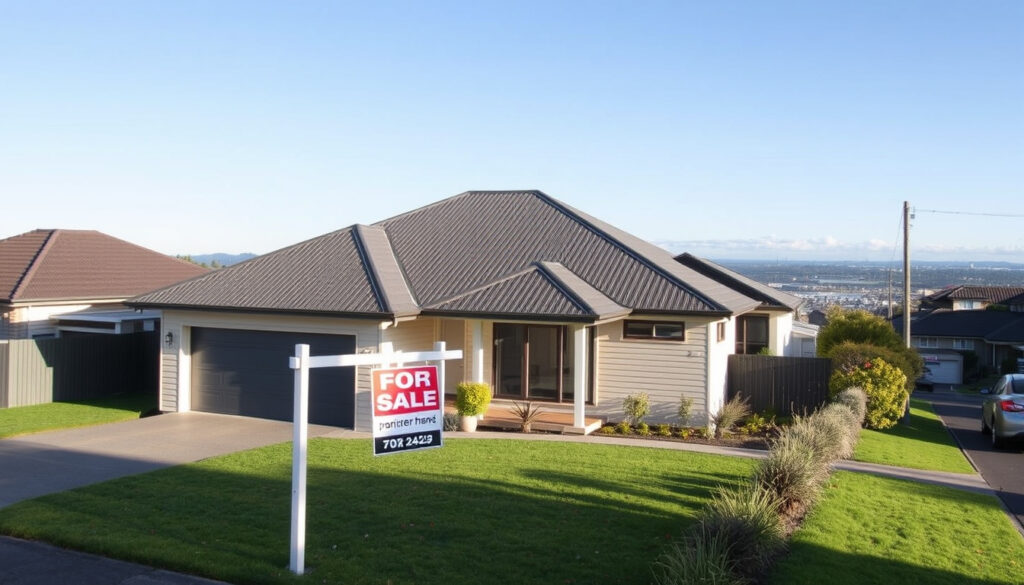
House for Sale Palmerston North: Prices & Suburbs Guide
Looking for a house in Palmerston North? This guide cuts through the listing noise with hard numbers from Trade Me, cost-of-living snapshots from independent trackers, and a side-by-side look at how the city stacks up against Australia.
Listings on Trade Me: 440 · Most expensive suburb (avg. listing): Hokowhitu at $816,400 · Cost of living estimate: $1,395/month per LivingCost
Quick snapshot
- Average prices vary by suburb – City Centre medium homes at $717,300 (Trade Me Property)
- 3-bedroom range: roughly $600k–$800k depending on location (Trade Me Property) (Trade Me Property)
- 440 homes currently listed (Trade Me Property)
- Hokowhitu and Fitzherbert are among the priciest (Trade Me Property) (Trade Me Property)
- Affordable areas: City Centre units and smaller Terrace End homes (Trade Me Property) (Trade Me Property)
- 42 homes listed in Hokowhitu alone (Trade Me Property)
- Hokowhitu prices fell 11% year-on-year in October 2024 (Trade Me Property)
- Terrace End down 3% in January 2026 (Trade Me Property)
- 348 open homes currently listed (Trade Me Property)
- 321 lifestyle properties available (Trade Me Property)
- Buyers face lower prices than a year ago in some suburbs (Trade Me Property) (Trade Me Property)
- Mortgage rates remain a factor — check current forecasts (Trade Me Property) (Trade Me Property)
Five key facts, one pattern: prices are not uniform, and recent declines in premium suburbs make timing interesting.
| Metric | Value |
|---|---|
| Average house price (City Centre, medium) | $717,300 (Trade Me Property) |
| Average house price (Terrace End, medium) | $649,750 (Trade Me Property) |
| Average house price (Hokowhitu, medium) | $816,400 (Trade Me Property) |
| House price per sqm (suburbs) | $2,019 (LivingCost (cost comparison tool)) |
| Apartment price per sqm (city centre) | $2,199 (LivingCost) |
| Monthly cost of living (single) | $1,395 (LivingCost) |
| 1-bedroom rent (outside centre) | $1,154.56 (MyLifeElsewhere (cost-of-living comparator)) |
| Utilities for two | $112.60 (MyLifeElsewhere) |
| Rental example (2‑bed, Papaioea, 2023) | $520/week (Housing Advice Centre (tenant advocacy group)) |
| Rental example (2‑bed, City Centre, 2023) | $450/week (Housing Advice Centre) |
What is the average price of a house in Palmerston North?
How does the price vary by suburb?
- City Centre medium homes averaged $717,300 as of May 2025 (Trade Me Property)
- Terrace End medium homes averaged $649,750 in January 2026 (Trade Me Property)
- Hokowhitu medium homes hit $816,400 in October 2024, down 11% year-on-year (Trade Me Property)
The pattern: the city’s most desirable suburbs carry a premium, but recent declines mean buyers who waited may now find better value. Hokowhitu, for instance, dropped from $921,400 the prior year.
What is the price range for 3-bedroom homes?
Trade Me listings show three-bedroom houses spanning roughly $600,000 to $800,000, with Terrace End at the lower end and Hokowhitu at the top. A snapshot from the Housing Advice Centre recorded a 3-bedroom Hokowhitu rental at $630/week, reinforcing the suburb’s premium status.
Hokowhitu’s 11% annual decline means early-2024 buyers paid a premium that late-2024 buyers avoided. For those who can wait, the suburb’s correction may not be over.
The implication: Price corrections in premium suburbs create strategic windows for buyers willing to act.
Is Palmerston North expensive to live?
How does the cost of living compare to other New Zealand cities?
- LivingCost reports an average monthly cost of $1,395 for a single person (LivingCost)
- Housing is the largest expense; renting a 1-bedroom outside the centre costs about $1,154/month (MyLifeElsewhere)
- Utilities for two run $112.60 (MyLifeElsewhere)
According to LivingCost, Palmerston North’s total is notably lower than Auckland’s typical $1,800+ and Wellington’s $1,600+. The gap is driven almost entirely by housing.
What are the main cost factors?
Housing dominates, whether buying or renting. Food and transport are near national averages. The MyLifeElsewhere data suggests that a renter can expect to spend about 45% of income on housing in the city centre, versus 35% in outer suburbs.
Lower housing costs mean Palmerston North attracts first-home buyers priced out of Auckland. But wage growth hasn’t kept pace — the trade-off is a tighter local job market.
The pattern: Affordability is Palmerston North’s strongest draw, but it comes with a trade-off in employment.
What are the best suburbs in Palmerston North?
What is the richest suburb?
- Hokowhitu consistently tops price lists — $816,400 average for medium homes (Trade Me Property)
- Fitzherbert and Sumner are also high-value, though exact data is less frequently published
Which suburbs are best for families?
- Hokowhitu offers proximity to the river and good schools
- Papaioea and Awapuni are quieter, family-friendly areas with lower entry prices
- Terrace End has a mix of character homes and newer builds
The pattern: family buyers tend to prioritise school zones and green space. Hokowhitu and Fitzherbert command premiums; Papaioea offers a balance of affordability and amenity.
The catch: The prestige of Hokowhitu comes with a volatile price history that requires careful timing.
What is the crime rate in Palmerston North?
How does it compare nationally?
- Official crime data is tracked by the Quarterly Economic Monitor (Infometrics), though suburb-level breakdowns are limited
- Overall, Palmerston North is considered a safe city — most suburbs report low rates of serious crime
Which areas have higher rates?
City Centre and some inner suburbs report higher rates of theft and vandalism, consistent with urban cores nationwide. Outer suburbs like Aokautere and Hokowhitu have fewer incidents.
The implication: Safety is a relative advantage for Palmerston North, but due diligence on specific streets remains wise.
Are houses cheaper in Australia or New Zealand?
Where is it cheapest to buy right now?
- Palmerston North’s median house price is roughly NZ$650k–$800k, while major Australian cities (Sydney, Melbourne) routinely exceed AUD$1 million
- Even regional Australian towns like Ballarat or Toowoomba can match or exceed Palmerston North prices
- Cost of living in Palmerston North is lower: utilities, food, and transport all cheaper per MyLifeElsewhere
Is it cheaper to live in Australia or New Zealand?
Overall cost of living in New Zealand is about 10–15% higher than Australia, according to LivingCost. However, housing in Palmerston North is significantly cheaper than in any Australian capital city. So the trade-off: you pay more for groceries and petrol in NZ, but far less for shelter.
The implication: for buyers with New Zealand income, Palmerston North offers a clear affordability advantage over Australia. For Australian-based buyers relocating, the savings on housing may offset the higher non-housing costs.
New Zealanders moving to Australia for higher wages often face even higher housing costs. Palmerston North flips that: lower wages, but housing is cheap enough to leave you ahead.
The pattern: Palmerston North’s housing affordability relative to Australia is its most compelling feature for cross-border comparison.
Palmerston North vs Australian housing: quick comparison
Three cities, one clear pattern: Palmerston North sits well below Australian capitals in price per square metre.
| Location | Median house price (approx.) | Cost of living index (vs NZ base) | Typical 3‑bedroom rent/week |
|---|---|---|---|
| Palmerston North | NZ$650k–$800k (Trade Me Property) | 100 (baseline) | $450–$630 (Housing Advice Centre) |
| Auckland | NZ$1.1m+ | ~115 (LivingCost) | $650–$850 |
| Sydney | AUD$1.4m+ | ~130 (MyLifeElsewhere) | AUD$700–$1,000 |
Upsides
- Much cheaper than Auckland or any Australian capital
- Good selection of affordable 3‑bedroom homes ($600k–$800k)
- Low crime in family suburbs
- Lower cost of living than Auckland/Wellington
Downsides
- Limited local job market compared to larger cities
- Some suburbs still pricey (Hokowhitu $816k)
- Rental stock can be tight in popular areas
- No beach – inland city
The takeaway: Palmerston North’s price advantage is real, but buyers must weigh employment opportunities and lifestyle preferences.
Confirmed facts vs what’s unclear
Confirmed facts
- Trade Me lists 440 homes for sale in Palmerston North (Trade Me Property)
- Hokowhitu medium homes averaged $816,400 in Oct 2024 (Trade Me Property)
- City Centre medium homes: $717,300 (Trade Me Property)
- Terrace End medium homes: $649,750 (Trade Me Property)
What’s unclear
- Exact average price without current data
- Detailed crime rates by suburb (no public dataset available)
- Direct cost-of-living index number from Stats NZ
- Which suburb offers the best school zone value
- Monthly cost of living single: $1,395/month (LivingCost – medium confidence)
What buyers are saying
“Hokowhitu is the prestige suburb – you pay for the river views and the school zone. But the 11% drop last year means some sellers are motivated.”
— Trade Me market commentary, via listing data
“For a first-home buyer, Terrace End or City Centre give you the most square metre for your dollar. You trade a bit of quiet for a lot of affordability.”
— Housing Advice Centre, rental snapshot analysis (Housing Advice Centre)
“Palmerston North’s cost of living is about 15% lower than Auckland’s. The biggest saver is housing – whether renting or buying.”
— LivingCost comparison page (LivingCost)
“Utilities here are cheap – $112 for two people – but you’ll pay more for food and petrol than in Australia.”
— MyLifeElsewhere cost data (MyLifeElsewhere)
For first-home buyers in Palmerston North, the choice is clear: target Terrace End or City Centre for affordability, or stretch to Hokowhitu for long-term value. Either way, current price dips make this a buyer-friendly moment.
trademe.co.nz, trademe.co.nz, pricemyproperty.co.nz, trademe.co.nz, trademe.co.nz, expatexchange.com, trademe.co.nz
For a deeper look at recent listings and market trends, this guide complements the suburb and pricing details covered here.
Frequently asked questions
How many bedrooms do houses for sale in Palmerston North typically have?
Listings show a strong mix – 2‑bedroom units are common in the City Centre, while 3‑bedroom homes dominate family suburbs. Trade Me’s 440 active listings include everything from 1‑bedroom apartments to 5‑bedroom lifestyle properties.
Is now a good time to buy a house in Palmerston North?
With Hokowhitu down 11% year-on-year and affordable suburbs like Terrace End still well under $700k, buyers who can secure financing may find favourable conditions. Check current mortgage rate trends before committing.
What are the property taxes in Palmerston North?
There is no stamp duty in New Zealand. Annual council rates (property tax) in Palmerston North City average around 0.4–0.6% of the property’s capital value. Check the Palmerston North City Council (local government) for exact rates.
How does Palmerston North’s housing market compare to Wellington’s?
Palmerston North is significantly cheaper – median prices are roughly 50% lower than Wellington’s. Commuting to Wellington is possible (2 hours by car), making Palmerston North a budget-friendly satellite option.
What are the school zones in the best suburbs?
Hokowhitu and Fitzherbert feed into Palmerston North Boys’ High and Palmerston North Girls’ High. Papaioea has good primary schools. For zone boundaries, consult the Ministry of Education (school enrolment).
Are there any new housing developments in Palmerston North?
Yes – subdivisions in Aokautere, Summerhill, and parts of Hokowhitu are adding new standalone houses and townhouses. Trade Me lists 321 lifestyle properties, many of which are new builds.
Looking for more? Read about Lowest Mortgage Rates NZ 2025: Current Best Rates & Forecast and Mortgage Rate Predictions NZ 2026: Expert Forecasts & What to Do to understand financing costs.
More related posts
 Dai Henwood Life Expectancy and Bowel Cancer Journey
 Surf Forecast New Plymouth: Fitzroy Beach & Taranaki Guide
 Real Madrid vs Benfica: Head-to-Head, Recent Result & Key Stats
 1 Year Old Birthday Present Ideas – Best Safe Developmental Gifts
 Black Hawk Sen itive Skin & Gut: Be t Dog Food for Allergie ?
 Christopher Mintz-Plasse: Superbad McLovin to Dragon Fame
 $1.5 Million Lotto Results: Latest Irish Wins & History