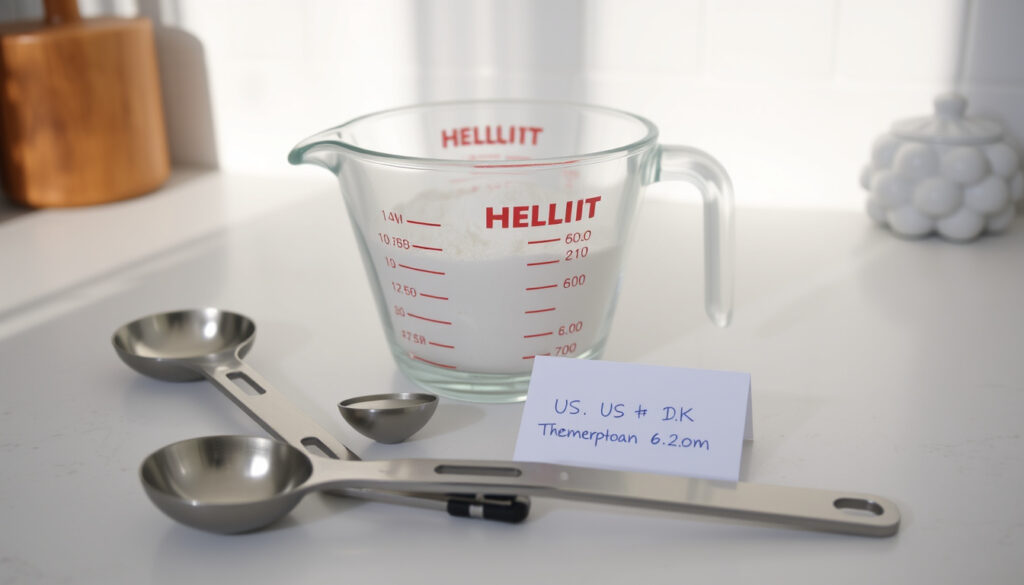
How Many Tablespoons in a Cup? Conversion Guide (US & UK)
A recipe calls for a cup of flour, but your measuring spoons are all you have handy. The answer determines whether your bake turns out right. This guide walks through the exact cup-to-tablespoon conversions for US, metric, and imperial systems, with practical tips for butter, flour, and other common ingredients so you can swap confidently between any measuring set.
US legal cup (240ml): 16 tbsp ·
Metric cup (250ml): ~16.9 tbsp ·
Imperial cup (UK): 16 tbsp ·
Half US cup: 8 tbsp ·
Quarter US cup: 4 tbsp ·
Three-quarter US cup: 12 tbsp
Quick snapshot
- 1 US customary cup = 16 US tablespoons (USDA Measurement Conversion Tables)
- 1 US cup = 8 fluid ounces (UnitConverters.net)
- 1 UK metric cup (250 ml) ≈ 16.67 UK tablespoons (The Calculator Site)
- Some Australian recipes use a metric cup (250 ml) but a 20 ml tablespoon — 12.5 tbsp per cup (The Calculator Site)
- Nutrition-label “cups” (240 ml) differ slightly from US customary (236.6 ml) (The Calculator Site)
- Older UK imperial cup (284 ml) still appears in heritage recipes (The Calculator Site)
- Modern UK metric cup (250 ml) is now standard in most new cookbooks (The Calculator Site)
- More recipes are adopting weight-based measurements for accuracy
- Conversion apps and printed charts remain essential for volume-to-volume swaps
The pattern: cup-to-tablespoon ratios look simple but change when you cross national borders. Three major cup definitions and at least three tablespoon sizes exist.
| Measurement | US (customary) | US (nutrition) | Metric | Imperial (UK) |
|---|---|---|---|---|
| 1 cup | 16 tbsp (236.6 ml) | 16.23 tbsp (240 ml) | 16.67 tbsp (250 ml) | 16 tbsp (284 ml) |
| 1/2 cup | 8 tbsp | 8.12 tbsp | 8.33 tbsp | 8 tbsp |
| 1/4 cup | 4 tbsp | 4.06 tbsp | 4.17 tbsp | 4 tbsp |
| 1/8 cup | 2 tbsp | 2.03 tbsp | 2.08 tbsp | 2 tbsp |
| Tablespoon volume | 14.79 ml | 14.79 ml | 15 ml | 17.76 ml |
The implication: a single “cup” can mean 236.6 ml, 240 ml, 250 ml, or 284 ml. Your tablespoon choice shifts the count further.
How many tablespoons are in 1/2 cup?
Tablespoon conversion for half cup (US standard)
- 1/2 US cup = 8 US tablespoons — confirmed by the USDA Measurement Conversion Tables
- 1/2 US nutrition cup (120 ml) = 8.12 US tablespoons
Tablespoon conversion for half cup (UK/imperial)
- 1/2 UK metric cup (125 ml) ≈ 8.33 metric tablespoons (The Calculator Site)
- 1/2 UK imperial cup (142 ml) = 8 imperial tablespoons (The Calculator Site)
The catch: A US half-cup always equals 8 tablespoons, but UK half-cups deliver slightly different volumes depending on which system the recipe uses. If you’re following an older British cookbook, reach for the imperial conversion, not the metric one.
Home bakers who use the US “4 tbsp = 1/4 cup” rule for a metric recipe may under-measure by about 2.5 ml per quarter-cup — small per scoop, but noticeable over a full batch of cookies.
How many tablespoons are in 1/4 cup?
Tablespoon conversion for quarter cup (US standard)
- 1/4 US cup = 4 US tablespoons (USDA)
- 1/4 US nutrition cup = 4.06 US tablespoons
Tablespoon conversion for quarter cup (UK/imperial)
- 1/4 UK metric cup = 4.17 metric tablespoons (The Calculator Site)
- 1/4 UK imperial cup = 4 imperial tablespoons
What this means: 4 tablespoons = 1/4 cup is a reliable rule for US and imperial systems, but the metric quarter-cup delivers a few extra milliliters — enough to matter in precise baking.
Are US and UK tablespoons the same?
Difference in volume: US vs UK tablespoon
- US tablespoon = 14.79 ml (UnitConverters.net)
- UK imperial tablespoon = 17.76 ml (The Calculator Site)
- Metric tablespoon (used in UK and international recipes) = 15 ml (BCcampus Pressbooks)
When the difference matters in recipes
Using a US tablespoon for an imperial recipe adds roughly 3 ml per spoonful — over 16 tablespoons, that’s nearly 50 extra ml, enough to throw off a cake batter’s liquid balance. The GigaCalculator converter notes that US recipes using 240 ml nutrition cups yield 16.23 tablespoons, adding another layer of variability.
The pattern: Two tablespoons (UK vs. US) differ by about 17% in volume — negligible for stocks or sauces, but significant for baking powder, butter, or any ingredient where precision alters texture.
How many tablespoons in a cup of common ingredients?
Tablespoons in a cup of butter
1 cup of butter = 16 tablespoons (2 standard sticks). Each US stick of butter is 8 tablespoons, so two sticks fill one cup. For UK bakers, a 250 ml metric cup of butter weighs about 240 grams — close to the US weight, but check your stick markings.
Tablespoons in a cup of flour
1 cup of all-purpose flour ≈ 16 tablespoons by volume, but weight varies: a cup of spooned-and-leveled flour weighs about 120 grams, while a scooped cup can hit 150 grams. The King Arthur Baking Company (trusted flour authority) stresses that measuring flour by spoon-and-level is more reliable than scooping.
Tablespoons in a cup of sugar
1 cup of granulated sugar = 16 tablespoons. Sugar is denser than flour, so a cup weighs about 200 grams. The volume-to-tablespoon conversion holds, but recipes that specify weight are preferable for consistent results.
Tablespoons in a cup of milk
1 cup of milk = 16 tablespoons. Since milk has a similar density to water (about 240 grams per cup), the volume conversion is straightforward. For metric cups, use 16.67 tablespoons per 250 ml.
Tablespoons in a cup of water
1 cup of water = 16 tablespoons (US). Water is the baseline for volume measurements — its weight matches its volume closely (1 ml ≈ 1 gram), making it the simplest conversion in the kitchen.
The pattern: Volume-based conversions for dry ingredients like flour and sugar are inherently less precise than weight. The tablespoon rule works, but for critical bakes, a kitchen scale eliminates the guesswork.
How do I convert tablespoons to cups?
Conversion formula: tablespoons ÷ 16 = cups
The core formula: cups = tablespoons ÷ 16 (Infoplease US Metric Cooking Conversions). To go the other way, multiply cups by 16.
This formula works across all systems as long as you use the correct tablespoon size.
Quick reference table for common conversions
| Tablespoons | US Cups | Metric Cups (250ml) |
|---|---|---|
| 2 tbsp | 1/8 cup | ~0.12 cup |
| 4 tbsp | 1/4 cup | ~0.24 cup |
| 8 tbsp | 1/2 cup | ~0.48 cup |
| 12 tbsp | 3/4 cup | ~0.72 cup |
| 16 tbsp | 1 cup | ~0.96 cup |
| 32 tbsp | 2 cups (1 pint) | ~1.92 cups |
The formula works across all systems as long as you use the correct tablespoon size. For UK metric, substitute 15 ml tablespoons into the same equation.
Confirmed facts
- US legal cup = 240 ml, 16 US tablespoons
- US tablespoon = 14.79 ml
- Imperial cup = 284 ml, 16 imperial tablespoons
- Imperial tablespoon = 17.76 ml
- 1/2 US cup = 8 US tablespoons
What’s unclear
- Some Australian recipes use a 20 ml tablespoon with a 250 ml cup — 12.5 tbsp per cup
- Nutrition-label cups (240 ml) vs. customary (236.6 ml) cause a 1.5% variation
Expert perspectives on cup and tablespoon conversions
“1 U.S. cup is equal to 16 tablespoons and 8 fluid ounces.”
“Measuring flour correctly is essential for consistent baking. Spoon flour into the measuring cup and level it off — never scoop directly.”
“Standard volume-to-weight conversions for common baking ingredients help ensure recipe accuracy across different measuring methods.”
The consensus across these sources: volume conversions are reliable for liquids, but dry ingredients demand weight-based precision for the best results. The tablespoon-to-cup ratio is a starting point, not a finished guarantee.
Related reading: 160 cm in Feet · Sausage Roll Recipe NZ
unitconverters.net, thecalculatorsite.com, inchcalculator.com, simpleveganblog.com, arahr.com, bakeprofit.com
Frequently Asked Questions
What is the difference between a US and a UK tablespoon?
A US tablespoon is 14.79 ml; a UK imperial tablespoon is 17.76 ml; a metric tablespoon (used in UK and international recipes) is 15 ml. Using the wrong size can throw off a recipe’s liquid balance.
How many tablespoons are in a third of a cup?
1/3 US cup = 5 tablespoons + 1 teaspoon (since 16 ÷ 3 ≈ 5.33 tbsp). The same ratio applies to imperial and metric cups when using the correct tablespoon size.
How many tablespoons are in a cup of honey?
1 cup of honey = 16 tablespoons by volume. But honey is much denser than water — one cup weighs about 340 grams versus 240 grams for water — so weight measurements are strongly recommended for sticky ingredients.
Is a tablespoon the same as a dessert spoon?
No. A dessert spoon is roughly 10 ml (2/3 of a tablespoon), and is common in UK and Australian table settings but rarely used in precise recipe measurements.
Can I use a kitchen scale instead of measuring tablespoons?
Yes, and it’s often more accurate. For dry ingredients like flour and sugar, a kitchen scale eliminates the variability of scooping or packing. One cup of all-purpose flour weighs about 120 grams; 1 tablespoon ≈ 7.5 grams.
The home cook’s choice: memorize the 16-tablespoon-per-cup rule for quick volume work, but keep a kitchen scale nearby for the ingredients that really matter. A few grams one way or the other can mean the difference between a perfect crumb and a dense disappointment.
More related posts
 CCT Lavender Farm Cafe Opening Hours, Menu & Visitor Guide
 Sydney Hobart Yacht Race 2026: Start Time, TV & Black Sails
 NZ Dollar Rate in India: Live NZD to INR Conversion
 Weeks in a Year: Exact Number, 53-Week Years & 56 Myth
 10,000 USD to NZD: Complete Conversion & Exchange Guide
 Criminal Justice Season 4: Release, Cast & Ending Explained
 NZ Post Parcel Sizes and Prices: 2025 Complete Guide
 When is Labour Day NZ 2025? Date, History & Holiday Info