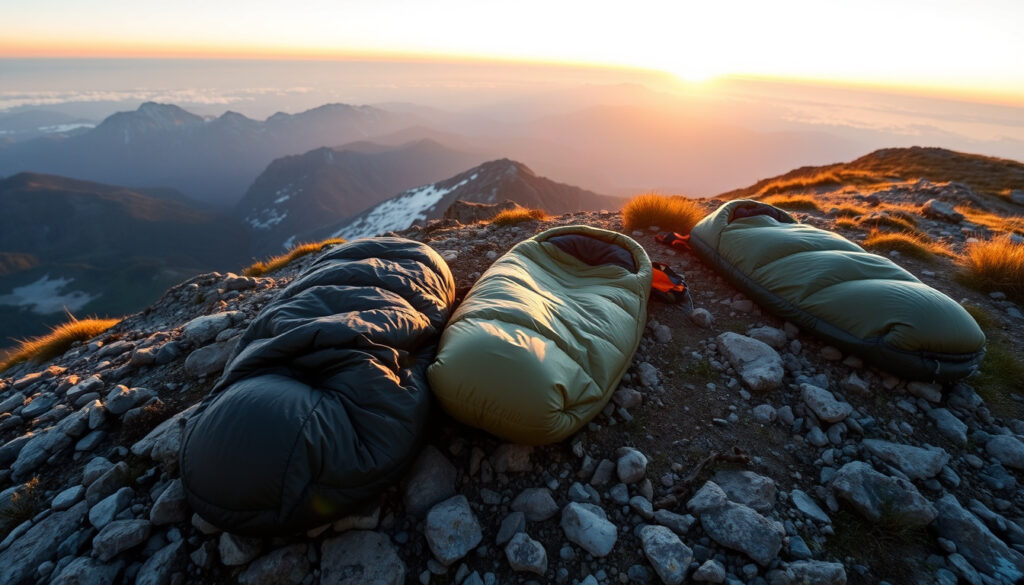
Sea to Summit Sleeping Bags: Spark, Ascent & Ultralight Guide
Choosing a sleeping bag often comes down to a trade-off between weight and warmth. Sea to Summit offers two standout series—the ultralight Spark and the more versatile Ascent—that illustrate this tension perfectly.
Models Available: Spark, Ascent, Ultralight, Women’s ·
Weight Range: 320 g to 1.2 kg ·
Insulation Types: Down (850+ fill) and Synthetic ·
Temperature Ratings: -1°C to -10°C (30°F to 15°F) ·
Shell Material: 10-denier nylon
Quick snapshot
- Spark uses 850+ fillpower goose down (Sea to Summit)
- Ascent uses 750+ fillpower down (Sea to Summit comparison video)
- 10-denier nylon shell on Spark (Sea to Summit)
- Exact weight of Ascent varies by size (Sea to Summit)
- Actual temperature rating for women’s specific model may differ slightly (Sea to Summit buying guide)
- Sea to Summit’s buying guide groups current Spark and Ascent models by ISO comfort rating (Sea to Summit)
- Sales often occur during seasonal promotions; check manufacturer website for certified retailers (Sea to Summit)
| Attribute | Detail |
|---|---|
| Brand Founded | 2000 (Australia) |
| Down Fill Power | 850+ goose down |
| Lightest Model | Spark Ultralight 320 g |
| Synthetic Option | Ascent series |
| Shell Fabric | 10-denier nylon on Spark |
| Temperature Range | 15°F to 30°F (-9°C to -1°C) |
The trade-off between weight and warmth is clear across the spec sheet.
What Sea to Summit sleeping bag models are available?
What are the key features of the Spark?
- 850+ fillpower RDS-certified goose down with non-PFAS Ultra-Dry Down (Sea to Summit)
- 10-denier liner and shell fabric with non-PFAS DWR (Sea to Summit)
- Compressed volume of 2.4 L (Sea to Summit)
What are the key features of the Ascent?
- 750+ fillpower down for a balance of weight and warmth (Sea to Summit comparison video)
- Technical hood and draft tubes for extended three-season use (Sea to Summit)
- Compressed volume of 5.5 L (Sea to Summit)
What makes the Ultralight line different?
The Ultralight series, which includes the Spark, focuses on sub-500 g weights and minimalist designs. The Spark Ultralight weighs 363 g in regular size (Sea to Summit).
The 10-denier shell saves grams but is less resistant to abrasion. For rocky camps or extended trips, the Ascent’s heavier fabric offers more peace of mind.
How does the women’s model differ?
- Shorter length and extra insulation in the footbox (Sea to Summit buying guide)
- Weight around 340 g for the Women’s Spark (Sea to Summit)
The implication: women’s-specific bags are purpose-built for different body proportions, not just smaller versions of the same bag.
How do the Sea to Summit Spark and Ascent compare?
Six key differences across the two main down models reveal clear trade-offs in weight, warmth, and cost.
| Attribute | Spark (Down) | Ascent (Down) | Ultralight (Spark) |
|---|---|---|---|
| Weight (regular) | 363 g | 782 g | 363 g |
| Fill power | 850+ | 750+ | 850+ |
| Comfort temp (approx) | 7°C (45°F) | -1°C (30°F) | 7°C (45°F) |
| Packed volume | 2.4 L | 5.5 L | 2.4 L |
| Shell fabric | 10D nylon | 20D nylon (approx) | 10D nylon |
| Approx price | $350–$400 | $250–$300 | $350–$400 |
The pattern: either you trade weight for warmth and durability, or vice versa.
Which is warmer: Spark or Ascent?
The Ascent’s lower temperature rating of -1°C (30°F) versus the Spark’s 7°C (45°F) gives the Ascent a clear edge for cold-weather camping (Sea to Summit).
Which is more compressible?
The Spark packs to 2.4 L, about half the volume of the Ascent (5.5 L). For backpackers with limited pack space, that difference is huge (Sea to Summit).
Which is better for wet conditions?
Neither is fully waterproof, but the Ascent’s down is treated with a non-PFAS Ultra-Dry Down coating, and its heavier shell resists moisture longer. The Spark’s 10D shell is more vulnerable to dampness.
What are the price differences?
The Ascent generally costs $50–$100 less than the Spark, making it a more budget-friendly option for three-season backpackers.
While the Spark is lighter and more compressible, the Ascent’s warmer rating and tougher shell make it the better choice for wet or rocky conditions.
What makes the Sea to Summit ultralight sleeping bag stand out?
What is the weight of the ultralight bag?
The Spark Ultralight weighs 363 g (12.8 oz) in regular size, making it one of the lightest full-length down bags on the market (Sea to Summit).
What materials are used?
- 10-denier nylon shell and liner (Sea to Summit)
- 850+ fillpower RDS-certified goose down (Sea to Summit)
- Non-PFAS DWR and Ultra-Dry Down treatment (Sea to Summit)
How does it compare to the Spark?
It is the Spark. The Ultralight Spark is the same product; there is no separate “ultralight” model beyond the Spark series in the current lineup.
Is it suitable for three-season use?
Yes, for summer and mild shoulder seasons. The Spark’s comfort rating of 7°C (45°F) makes it a poor choice for nights below freezing, but ideal for warm-weather trips.
If you plan to camp in temperatures below 5°C, the Spark will need extra layers or a liner. The Ascent is better suited for three-season cold snaps.
Where can I find Sea to Summit sleeping bags on sale?
Are there any current sales?
Seasonal promotions are common. Check the official Sea to Summit website (Sea to Summit) and authorised retailers like Amazon and Bergfreunde.
Which retailers offer discounts?
Major outdoor retailers such as REI, Amazon, and Bergfreunde frequently run sales. Prices typically range from $200 to $500 (Sea to Summit).
How to verify authenticity?
Only buy from the manufacturer’s list of certified dealers to avoid counterfeits. Sea to Summit’s website maintains a dealer locator.
What is the typical price range?
- Spark: $350–$400
- Ascent: $250–$300
- Women’s models: $350–$400
The implication: budget-conscious backpackers will find the Ascent offers better value for three-season use.
What do Sea to Summit sleeping bag reviews reveal?
How does the Spark perform in warmth?
Most users confirm the Spark delivers on its 7°C rating but recommend a liner or extra clothing below that temperature.
What do users say about durability?
The 10-denier shell is praised for weight but some users report snags after heavy use (YouTube review).
Are there any common complaints?
Some side sleepers find the Spark’s narrow cut restrictive. The Ascent is generally preferred for its roomier fit.
How does the women’s bag get rated?
Women’s models receive high marks for fit and warmth distribution. The extra footbox insulation addresses a common cold-weather issue.
Upsides
- Outstanding warmth-to-weight ratio in Spark
- Durable and versatile Ascent line
- Women’s-specific design improves comfort
Downsides
- 10D shell is fragile on Spark
- Spark too warm for summer in some climates
- Ascent is heavier than down competitors
The pattern: user feedback matches the spec sheet — weight savings come at the cost of durability.
What’s confirmed
- Spark uses 850+ fill goose down (Sea to Summit)
- Ascent uses synthetic insulation (versions vary) (Sea to Summit)
- 10-denier nylon shell on Spark (Sea to Summit)
What’s unclear
- Exact weight of Ascent varies by size (Sea to Summit)
- Actual temperature rating for women’s specific model may differ slightly (Sea to Summit buying guide)
- Spark’s durability over many seasons is not well documented
“The Spark is incredibly lightweight and I can fit it in a tiny stuff sack, but I worry about snags on rough ground.”
YouTube reviewer
“The Ascent is the bag I reach for when the forecast looks iffy. It keeps me warm even when damp and the fabric feels bombproof.”
User summary on Sea to Summit product page
For the ultralight backpacker, the Spark delivers an unmatched weight-to-warmth ratio. For the three-season adventurer who values versatility and durability, the Ascent is the smarter choice.
Frequently asked questions
Are Sea to Summit sleeping bags waterproof?
No sleeping bag is fully waterproof, but the down models use a non-PFAS DWR coating and Ultra-Dry Down treatment to resist moisture.
What is the best temperature rating for summer camping?
A comfort rating around 7°C (45°F) works for most summer nights. The Spark is suitable for warm-weather use.
How to store a down sleeping bag?
Store uncompressed in a large cotton or mesh sack to preserve loft and avoid long-term compression damage.
Do Sea to Summit bags come with a stuff sack?
Yes, every sleeping bag includes a compression stuff sack and a storage bag.
Can I use a Sea to Summit liner with the bag?
Yes, a liner adds warmth and keeps the bag cleaner. Sea to Summit makes compatible liners.
What is the return policy?
Sea to Summit offers a 30-day satisfaction guarantee through its authorised dealers. Check the specific retailer’s policy.
How to choose between down and synthetic Sea to Summit bags?
Down (Spark) is lighter and more compressible; synthetic (Ascent) retains warmth when wet and costs less.
Are Sea to Summit sleeping bags true to size?
Most users find the fit accurate, though the Spark is cut narrower than the Ascent. Women’s models are tailored for a narrower silhouette.
More related posts
 Cheap Flights NZ Domestic: Best Deals & Booking Tips
 Revenge of the Sith: Release, Cast, and Fan Debate
 220 USD to NZD – Live Rate, Trends and Volatility
 04 Area Code NZ: Wellington Landline & ANZ Bank Prefix
 Cold Sore on Lip: Causes, Triggers & Fast Treatments
 With Love, Meghan: Status, Cancellation Rumors & Finances
 House for Sale Palmerston North: Prices & Suburbs Guide
 PAK’nSAVE Whanganui: Online Shopping & Weekly Specials