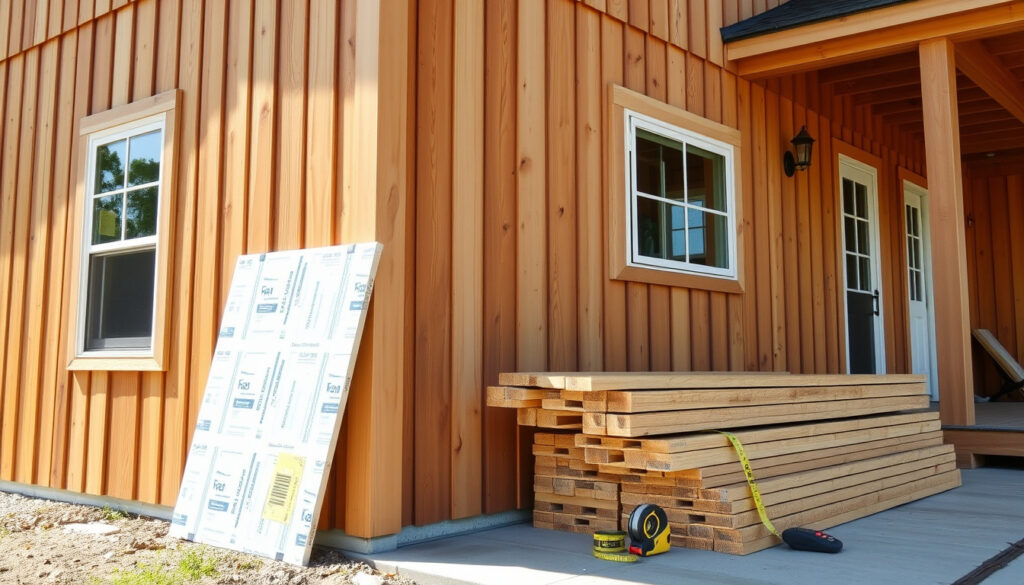
Board and Batten Cladding: Cost, Materials, Pros and Cons
There’s a reason board and batten cladding has been a go-to choice for over a century: it’s simple, striking, and surprisingly versatile. But when you start comparing materials and adding up costs, the decision gets trickier.
Average lifespan of wood board and batten cladding: 20–40 years · Typical cost range per square foot (installed): $5–$10 · Common wood species used: Cedar, pine, redwood · R-value of typical wood cladding: R-1 to R-2
Quick snapshot
- Board and batten cladding has been used for over 100 years (James Hardie – leading fiber‑cement manufacturer).
- Proper house wrap and flashing are required to prevent moisture damage (APA – The Engineered Wood Association).
- Wood board and batten needs re‑coating every 3–5 years to maintain protection (InsideOut Inspections Plus – inspection experts).
- Exact long‑term cost comparison between wood and composite over 30 years remains unverified by independent studies. (APA – The Engineered Wood Association)
- Optimal batten width for different climate zones has no standard recommendation (APA – The Engineered Wood Association).
- Independent verification of the typical 20‑40 year lifespan for wood board and batten is lacking (James Hardie provides estimates but no independent long‑term study confirms them).
- Board and batten has been a recognized siding style for over a century, with modern variations in engineered wood and fiber cement emerging in the past 30 years (James Hardie).
- Expect continued growth in low‑maintenance composite and metal options as homeowners prioritize durability over upfront savings (Knutson Partners – siding contractors).
| Average cost per sq ft (installed) | $5–$10 for wood; $8–$15 for composite |
| Most popular wood species | Cedar (western red cedar most common) |
| Minimum roof pitch for cladding | At least 4:12 recommended |
| Commonly required maintenance frequency | Re‑coat every 3–5 years for wood |
What is the cheapest exterior cladding option?
What is the cheapest way to do board and batten exterior?
- Vinyl board and batten is widely regarded as the most cost‑effective material. According to a 2026 contractor article from Ferguson Builders (experienced siding contractors), vinyl offers the lowest cost per square foot and requires minimal maintenance.
- For board and batten specifically, the cheapest approach is using plywood sheets with battens installed over them. DIY installation can cut total project costs by 50–60% by eliminating labor, reports Board and Batten Pro (installation resource).
- Material costs for a DIY plywood‑with‑batten project run about $3–$8 per square foot for materials alone, according to the same guide. Adding labor from a professional ($50–$100 per hour) typically brings the installed cost to $5–$10 per sq ft.
For the homeowner on a tight budget, plywood plus battens installed yourself is the cheapest route. But the trade‑off is that this approach demands regular maintenance every few years to keep moisture out.
The pattern: Vinyl saves upfront, plywood DIY saves labor, but both carry long‑term maintenance or durability trade‑offs.
TL;DR for the budget‑conscious homeowner: DIY plywood‑with‑battens cuts the biggest cost – labor – but commits you to a 10‑15 year maintenance cycle. Vinyl offers a professional finish at a lower upfront cost than wood or fiber cement.
What is the most affordable way to clad a building?
If you’re cladding an entire structure, vinyl board and batten is the most affordable option that still delivers the vertical look. A 2026 cost guide from SidingCosts.com (cost estimator) puts a 2,000‑sq‑ft home at roughly $8,000–$16,000 for vinyl board and batten installed. That’s about half the cost of fiber cement or real wood.
- Some builders report that metal board and batten can be competitive on large projects, especially when factoring in its 40–70 year lifespan and zero maintenance beyond occasional cleaning.
The trade‑off: Vinyl saves money upfront but can become brittle and fade over time, as InsideOut Inspections Plus notes. Metal sits in the middle on upfront cost but wins on longevity.
What kind of wood do you use for board and batten exterior?
What is the best wood for board and batten siding?
- Cedar – Preferred for natural rot resistance and dimensional stability. Western red cedar is the most common choice for board and batten, according to APA – The Engineered Wood Association. Cost: $4–$8 per sq ft unfinished.
- Pine – Cheaper (about $2–$5 per sq ft) but requires pressure treatment or regular painting to resist rot and insects. Maintenance is higher.
- Redwood – Durable and attractive with natural decay resistance, but expensive (often $6–$12 per sq ft) and less readily available.
- Engineered wood (LP SmartSide, etc.) – Offers natural wood texture at $3–$6 per sq ft, with better moisture resistance than pine. Ferguson Builders notes it can be painted in many colors and holds up well in most climates.
The wood you choose determines not just the look but how often you’ll be re‑staining and re‑caulking. Cedar buyers pay more upfront but buy a decade or more of reduced maintenance.
The pattern: Cedar leads for longevity and workability; pine is the budget pick for a temporary look; engineered wood splits the difference.
TL;DR for wood lovers: Cedar is the best balance of durability and workability, but expect to pay $4–$8/sq ft. Pine is half the price but demands heavy maintenance. Engineered wood mimics real wood with better moisture resistance and lower upkeep.
Can board and batten be used for exterior cladding?
Is board and batten siding good for all climates?
- Yes, board and batten is suitable for most climates when properly installed with house wrap and flashing, per APA – The Engineered Wood Association.
- Moisture control is the critical factor. In high‑humidity areas, composite or metal options may outperform wood, as InsideOut Inspections Plus warns that wood is vulnerable to rot and insects if not sealed.
- Metal board and batten (steel or aluminum) is especially suited for fire‑prone regions and coastal environments because it doesn’t rot or warp.
The catch: While wood board and batten can work anywhere, the maintenance burden rises sharply in wet, humid, or salty environments. Composite and metal become the smarter choice there, even with a higher upfront cost.
What are the downsides of using board and batten siding?
What are the cons of board and batten?
- High maintenance for wood: Requires painting, staining, or sealing every 3–5 years, along with regular caulking of seams. InsideOut Inspections Plus calls wood “high maintenance” compared to vinyl or fiber cement.
- Expansion and contraction: Wood naturally moves with moisture and temperature, which can cause gaps between boards or warped battens. Proper installation with gaps (1/8–1/4 inch) is critical.
- Potential water damage: If battens trap moisture against the wall or if caulking fails, rot can develop behind the siding. This is especially risky in climates with freeze‑thaw cycles.
- Higher installation cost than standard siding: Because board and batten uses more material and takes extra time to align, it costs more than traditional horizontal lap siding. InsideOut Inspections Plus confirms it’s “more expensive to install than standard vinyl or aluminum.”
- Vinyl brittleness: The cheapest material, vinyl, can become brittle and fade over time, especially in direct sun exposure, per Ferguson Builders.
Upsides
- Classic vertical look that suits many architectural styles
- Wood offers natural insulation (R‑1 to R‑2)
- Composite and metal options offer 40+ year lifespans with minimal upkeep
- Fire‑resistant in fiber cement and metal variants
Downsides
- Wood requires painting every 3–5 years
- Higher installation cost than horizontal siding
- Potential moisture issues if not properly detailed
- Vinyl can fade and become brittle over time
The reality: Wood offers timeless appeal but demands constant care; vinyl is cheap but ages poorly; composite and metal cost more upfront but cut down long‑term headaches.
What is the cheapest way to do board and batten exterior?
Can I do board and batten cladding myself?
- Yes, DIY installation eliminates the largest cost: labor. Board and Batten Pro estimates that labor accounts for 50–60% of total project cost, so a 2,000‑sq‑ft home can save $7,000–$15,000 by going DIY.
- Using plywood sheets with battens is the most cost‑effective DIY method. Material cost runs $3–$8 per sq ft for wood, $2–$5 for OSB/plywood.
- Install house wrap and flashing over sheathing (APA).
- Space boards with a 1/8–1/4 in. gap for expansion.
- Use galvanized or stainless steel fasteners to prevent rust.
- Seal all joints and battens with a high‑quality exterior caulk.
- Prime and paint immediately; don’t leave wood exposed to weather.
DIY board and batten is doable for a handy homeowner, but mistakes in moisture management can lead to expensive rot repairs down the road. If you’re unsure about flashing details, pay a pro for that part.
The implication: For the budget‑conscious, DIY with plywood and battens is the cheapest path, but it’s a 10–15 year solution at best. For a permanent cladding that adds home value, engineered wood or fiber cement is worth the extra money.
What cladding to avoid?
- Untreated pine or spruce – Without pressure treatment, these softwoods are highly susceptible to rot and insect damage. InsideOut Inspections Plus specifically warns that wood board and batten is vulnerable to rot and insects if not sealed.
- Low‑quality vinyl – Thin vinyl (<0.045 in.) is more prone to cracking, fading, and warping. Ferguson Builders notes that vinyl can become brittle over time, especially in hot climates.
- OSB (oriented strand board) used as final siding – OSB is not rated for direct weather exposure unless specifically manufactured as siding. It will delaminate and rot quickly if left unsealed.
Verdict: Avoid any material that can’t handle moisture or sun exposure. Stick with proven options like cedar, engineered wood, or fiber cement for long-term performance.
Comparison table: Board and batten material options
Four materials, one pattern: upfront cost is inversely related to maintenance and lifespan.
| Material | Cost per sq ft (installed) | Lifespan | Maintenance | Best for |
|---|---|---|---|---|
| Vinyl | $4–$7 | 20–30 years | Low | Budget builds, mild climates |
| Wood (cedar/pine) | $5–$10 | 20–40 years | High (every 3–5 yrs) | Traditional look, DIY projects |
| Engineered wood | $6–$12 | 25–50 years | Medium | Good balance for most homes |
| Metal (steel/aluminum) | $8–$14 | 40–70 years | Very low | Fire‑prone areas, coastal |
| Fiber cement | $8–$15 | 30–50 years | Low | Fire resistance, durability |
The pattern: Vinyl and metal sit at opposite ends of the cost‑vs‑longevity trade‑off. Wood and fiber cement offer a middle path, but wood demands your time.
Specifications table: Installation requirements for board and batten
Six key specs that vary across materials, one takeaway: substrate preparation matters more than the cladding itself.
| Minimum wall substrate | Plywood or OSB sheathing |
| House wrap | Required (weather resistive barrier) |
| Flashing | All windows, doors, and corners must be flashed |
| Fastener type | Galvanized or stainless steel; no uncoated steel |
| Minimum roof pitch | 4:12 or steeper |
| Clearance from grade | Minimum 6 in. for wood, 2 in. for non‑absorptive materials |
Bottom line: A proper weather barrier and correct flashing are non‑negotiable, regardless of cladding material. Skimp on these and even premium cladding will fail.
Quotes from the industry
“Board and batten siding can be achieved with fiber cement for fire resistance, offering the classic vertical look with the peace of mind of a non‑combustible material.”
— James Hardie product guide (fiber‑cement manufacturer)
“Proper installation of wood‑based siding systems requires a continuous weather‑resistive barrier and careful attention to joint detailing to prevent moisture intrusion.”
— APA – The Engineered Wood Association (industry standards)
Summary: What it means for your home
Board and batten cladding is not a one‑size‑fits‑all product. The material you choose locks you into a specific cost trajectory and maintenance schedule for decades. For the New Zealand homeowner sourcing cladding at a Mitre 10 or Bunnings, the decision is clear: if you’re handy and on a tight budget, go with plywood and battens as a short‑term solution; if you’re building for resale value and peace of mind, invest in engineered wood or fiber cement from a reputable supplier like James Hardie. The trade‑off between affordability and longevity is real, and the wrong choice can cost you twice.
chilterntimber.co.uk, klc.co.nz, westform.com, jsc.co.nz, jsc.co.nz, usawire.com
Homeowners weighing the classic look of board and batten cladding should also consider the detailed breakdown of board and batten siding costs for a full cost comparison.
Frequently asked questions
How long does board and batten cladding last?
Wood board and batten lasts 20–40 years with regular maintenance. Composite and metal options can last 40–70 years, while vinyl averages 20–30 years (InsideOut Inspections Plus).
Is board and batten cladding waterproof?
No cladding is fully waterproof; it is water‑resistant. Proper installation with house wrap, flashing, and caulked seams is essential to keep moisture out (APA – The Engineered Wood Association).
Can I paint board and batten cladding?
Yes, wood, engineered wood, fiber cement, and even vinyl can be painted. Wood requires primer and a high‑quality exterior paint; re‑coat every 3–5 years.
What is the best wood for board and batten cladding?
Cedar is widely considered the best due to its natural rot resistance and stability. Pine is a cheaper alternative but requires pressure treatment or regular painting (Board and Batten Pro).
How much does board and batten cladding cost per square foot?
Vinyl: $4–$7; wood: $5–$10; engineered wood: $6–$12; metal: $8–$14; fiber cement: $8–$15. All costs are installed (SidingCosts.com).
Does board and batten cladding increase home value?
Yes, especially when installed with durable materials. Board and batten is a desirable architectural feature that can boost curb appeal. However, poorly maintained wood can have the opposite effect.
What is the difference between board and batten and shiplap?
Board and batten uses wide vertical boards with narrow battens covering the seams. Shiplap is horizontal planks with a rabbeted joint for a tight fit. Board and batten is more common for exteriors; shiplap is often used indoors.
Can board and batten cladding be installed over existing siding?
It is generally not recommended because moisture can become trapped between layers. Removal of existing siding is best to ensure proper house wrap and flashing (Board and Batten Pro).
More related posts
 2025 F1 Driver Standings: Norris Edges Verstappen by 2
 Synopsis of ‘Too Late’ by Colleen Hoover: Plot, Spice, Triggers
 Flights to Gold Coast: Airlines, Transfers & Best Time to Visit
 Jon-Michael Ecker: Marine Biologist Turned Chicago Fire Actor
 Houses for Rent Hawkes Bay: Private Landlord Options
 NZ Tax Brackets 2025: Rates & Thresholds Explained
 Hair Dryer Curly Hair – Best 2025 Picks for Frizz Control
 The Women Kristin Hannah: Book Summary, Reviews & More