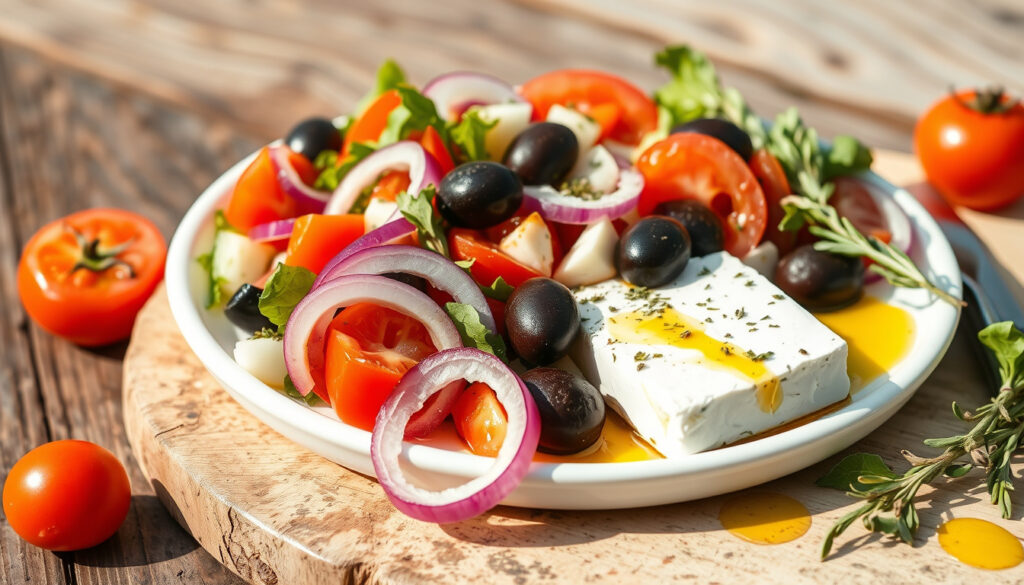
Greek Salad Recipe NZ – Authentic Horiatiki Guide
A traditional Greek horiatiki salad—known as village or peasant salad—brings together the sun-ripened flavours of the Mediterranean in a dish that requires minimal effort but delivers maximum taste. This classic recipe relies on fresh, quality ingredients rather than elaborate preparation, making it an ideal choice for New Zealand summer entertaining, backyard barbecues, and quick weeknight meals.
The horiatiki differs significantly from the Americanised Greek salads often found in cafés, primarily in its exclusion of lettuce and its simple olive oil and vinegar dressing. For those seeking an authentic Greek salad recipe with locally available New Zealand ingredients, understanding these traditional foundations makes all the difference between a genuine horiatiki and a Western interpretation.
This guide walks through everything needed to create an authentic Greek salad at home, from selecting the right feta cheese to mastering the traditional assembly method that has been passed down through generations of Greek families.
What Are the Key Ingredients in a Greek Salad?
The horiatiki salad depends entirely on the quality and freshness of its components. Each ingredient plays a specific role in creating the balance of flavours that defines this beloved dish. Traditional recipes consistently include tomatoes, cucumber, peppers, red onion, olives, and feta cheese dressed simply with olive oil and vinegar or lemon juice.
Greek Salad Types at a Glance
Traditional tomatoes, cucumber, peppers, onion, olives, and feta with olive oil and vinegar. No lettuce.
Uses locally produced Mainland or Dodoni feta with seasonal NZ cherry tomatoes for a regional adaptation.
Replaces feta with marinated chickpeas or tofu feta while maintaining all other traditional vegetable components.
Adds grilled halloumi or lamb for a more substantial main course variation, popular at NZ summer gatherings.
5 Key Tips for Perfect Greek Salad
- Select ripe, juicy tomatoes—Beefsteak or vine-ripened varieties work best. Underripe tomatoes lack the flavour foundation this dish requires.
- Never add lettuce—Authentic horiatiki contains no lettuce whatsoever. This is the primary distinction from American Greek salads.
- Use a generous amount of olive oil—Quality extra virgin olive oil (Greek or NZ-produced Olivo) coats every ingredient and carries the flavours.
- Let the salad rest—Allowing the dressed salad to sit for 30 minutes at room temperature lets the flavours meld together beautifully.
- Keep feta in slabs, not crumbled—Traditional serving places whole pieces of feta on top rather than crumbling it through the salad.
Greek Salad Quick Facts
| Attribute | Details |
|---|---|
| Preparation Time | 15 minutes total (5-10 min active prep) |
| Servings | 4-6 people |
| Calories per Serving | Approximately 142-250 calories |
| Dietary Profile | Gluten-free, vegetarian, keto-friendly |
| Key Macronutrients | Low carb, high healthy fats, protein from feta |
| Rest Time | 30 minutes at room temperature |
| Best Season | Summer (peak tomato season) |
| Storage | Best consumed immediately; keeps 1 day refrigerated |
How Do You Make a Classic Greek Salad Step by Step?
The beauty of horiatiki lies in its simplicity. No cooking is involved—instead, the technique centres on proper vegetable preparation, strategic seasoning, and thoughtful assembly. Following these steps ensures a result that honours the traditional recipe while maximising flavour.
Preparing Your Vegetables
Begin by washing all produce thoroughly under cold running water. Tomatoes should be cut into thick wedges or bite-sized chunks using a sharp knife. The English or Persian cucumbers work well when sliced into thick coins or half-moons; some prefer to peel them in stripes for visual appeal while leaving other strips of skin intact.
Green bell peppers—though some recipes use red—should be thinly sliced into rings or strips. Red onion requires careful attention: slicing it thinly into half-moons and then soaking in ice water with a splash of vinegar for approximately 10 minutes effectively mellows its sharpness without losing its flavour contribution.
Assembling the Salad
Combine the prepared tomatoes, cucumber, pepper, onion, and a handful of pitted Kalamata olives in a large shallow bowl or platter. The traditional vessel for horiatiki is wide and flat, allowing maximum surface area for the dressing to coat every piece.
The Traditional Dressing Method
The dressing could not be simpler. Sprinkle the vegetables generously with sea salt or kosher salt, then add approximately one and a half teaspoons of dried oregano—ideally the Greek wild variety. Drizzle with a quarter to half cup of extra virgin olive oil, followed by one to two tablespoons of red wine vinegar or fresh lemon juice.
Unlike many salads, horiatiki dressing requires no whisking. Simply drizzle the oil and vinegar directly over the ingredients and toss gently. The natural juices from the tomatoes will create an emulsified effect as the salad rests.
Place slab-sized portions of Greek feta cheese on top of the dressed vegetables. Traditional serving keeps the feta intact rather than crumbled, though some prefer to break it into large pieces at the table. An extra sprinkle of oregano on the feta adds the finishing touch, along with optional capers if desired.
Resting Before Serving
Allow the assembled salad to rest at room temperature for approximately 30 minutes before serving. This resting period allows the salt to draw out tomato juices, which combine with the olive oil and vinegar to create a light, flavourful dressing that coats every ingredient. The waiting, while tempting to skip, transforms a good salad into an exceptional one.
What Makes a Greek Salad Authentic?
Understanding the distinction between authentic horiatiki and the Greek salads commonly served outside Greece requires examining both historical tradition and common variations. The term “horiatiki” literally translates to “village” or “peasant” salad, reflecting its origins in rural Greek households where simple, fresh ingredients were combined without elaborate preparation.
Understanding Horiatiki vs. Greek Salad
The most significant difference between authentic horiatiki and the Greek salads found in restaurants worldwide is the inclusion of lettuce in the latter. Traditional recipes from Greek sources and Mediterranean cooking guides consistently exclude lettuce, focusing instead on the combination of tomato, cucumber, peppers, onion, olives, and feta.
The dressing also differs markedly from Western interpretations. Authentic horiatiki never uses a pre-mixed vinaigrette or creamy dressing. Instead, it relies solely on extra virgin olive oil, quality red wine vinegar or lemon juice, oregano, and salt—applied directly to the vegetables.
The Role of Feta Cheese
Feta occupies a central position in authentic horiatiki, and its preparation matters significantly. Traditional Greek feta is made from sheep’s milk (or a combination of sheep’s and goat’s milk) and aged in brine. It arrives as a block or wedge rather than pre-crumbled, and serving it intact rather than crumbled preserves both texture and flavour.
New Zealand supermarkets stock options ranging from locally produced Mainland feta to imported Dodoni Greek feta in brine. Both work well for authentic horiatiki, though imported Greek feta may offer a slightly different saltiness and texture characteristic of Mediterranean production methods.
The Authentic Ingredient List
According to traditional horiatiki recipes, the authentic ingredient combination includes exactly: ripe tomatoes, cucumber, green bell pepper, red onion, Kalamata olives, feta cheese in brine, extra virgin olive oil, red wine vinegar or lemon juice, dried oregano, and salt. Nothing more, nothing less.
Greek Salad Variations and NZ Twists
While maintaining the core principles of authenticity, numerous variations accommodate different tastes, dietary requirements, and local ingredient availability. These adaptations allow home cooks to personalise their horiatiki while respecting its traditional character.
Herb and Flavour Additions
Fresh herbs offer simple ways to vary the flavour profile. Some recipes incorporate fresh basil leaves alongside the dried oregano, while others add spearmint, thyme, or a combination of fresh herbs. These additions work particularly well when tomatoes are exceptionally ripe and flavourful.
Capers provide an optional burst of brininess that complements the Kalamata olives and feta. When added, they are typically sprinkled over the assembled salad just before serving rather than mixed through.
Cretan and Regional Variations
The Cretan variation of horiatiki includes barley rusks, known as paximadi, which are soaked in the salad juices before eating. This adds a textural element and transforms the salad into a more substantial dish. While not traditional in all Greek regions, this variation showcases how local ingredients influence the evolution of classic recipes.
Local adaptations might include using New Zealand cherry tomatoes when full-sized tomatoes lack ripeness, adding grilled halloumi cheese for those seeking more protein, or pairing the salad with New Zealand lamb at barbecue settings. These modifications honour the spirit of flexibility that characterises regional cooking throughout Greece.
Dietary Modifications
For those avoiding dairy, marinated chickpeas or specially prepared tofu feta can replace traditional cheese while maintaining the salad’s overall structure. These alternatives work particularly well when the other ingredients—particularly the olive oil and olives—provide sufficient fat content to balance the dish.
The substitution of lemon juice for red wine vinegar offers a brighter, more citrus-forward dressing that some prefer, particularly when serving the salad with grilled fish or seafood dishes common in New Zealand summer dining.
Is Greek Salad Healthy? Nutrition Breakdown
Greek horiatiki salad offers substantial nutritional benefits that extend beyond its fresh, satisfying flavours. Understanding the health profile helps contextualise why this traditional dish has endured for generations and gained popularity worldwide.
Caloric Content and Macronutrients
A single serving of traditional horiatiki—prepared with vegetables, approximately one cup of olives, 200 grams of feta cheese, and a quarter cup of olive oil—contains approximately 142 calories per serving when divided into six portions. The full salad contains roughly 850-1000 calories total, making it a nutrient-dense option that provides substantial satisfaction relative to its caloric content.
- Vitamins from vegetables—Tomatoes and bell peppers provide vitamins A, C, and K along with antioxidant compounds like lycopene.
- Healthy monounsaturated fats—Olive oil and olives contribute heart-healthy fats that aid nutrient absorption from vegetables.
- Protein from feta—The cheese provides moderate protein content along with calcium and probiotics.
- Low carbohydrate content—The absence of lettuce and reliance on vegetables rather than grains keeps carbohydrate levels minimal.
- Dietary fibre—Cucumber and tomatoes contribute fibre that supports digestive health.
Dietary Considerations
The horiatiki naturally accommodates several popular dietary approaches. Its lack of processed ingredients and simple preparation align well with whole-food eating patterns. The salad is naturally gluten-free, making it suitable for those with coeliac disease or gluten sensitivity.
For those following ketogenic or low-carbohydrate eating plans, horiatiki fits well within daily macronutrient targets. Vegetarians appreciate the protein from feta, while the combination of healthy fats and protein provides satisfying satiety that helps prevent the hunger that often accompanies plant-only meals.
Those monitoring sodium intake should note that feta cheese and Kalamata olives contribute significant salt content. Individuals following strict low-sodium diets may need to adjust portion sizes or select lower-sodium feta varieties when available.
Traditional vs. Modern Greek Salad Versions
Distinguishing between established traditional elements and modern interpretations helps clarify what constitutes authentic horiatiki versus contemporary adaptations.
| Established Traditional Elements | Modern Interpretations (Non-Traditional) |
|---|---|
| No lettuce in any form | Lettuce or mixed salad greens added |
| Tomatoes, cucumber, peppers, onion, olives, feta | Additional vegetables such as corn, avocado, or artichoke |
| Olive oil and vinegar or lemon juice dressing only | Pre-mixed vinaigrette or creamy dressings |
| Feta served as slabs or wedges on top | Feta crumbled throughout the salad |
| Dried oregano as primary herb | Extensive fresh herb mixtures or no herbs |
| No cooking or heating of ingredients | Grilled or roasted vegetables included |
The Origins of Horiatiki and Its Journey to New Zealand
The Greek village salad emerged from the agricultural traditions of rural Greece, where families combined whatever vegetables were ripe in their gardens with olive oil from their trees and cheese from their sheep. This practical approach to meals produced dishes that prioritised freshness and simplicity over complexity.
The dish gained international recognition as Greek immigration spread throughout the twentieth century, introducing Mediterranean cuisine to new audiences. New Zealand’s exposure to Greek culinary traditions came primarily through immigration patterns and the subsequent establishment of Greek restaurants and cultural organisations that shared traditional recipes with wider audiences.
Today, the ingredients for authentic horiatiki are readily available throughout New Zealand. Supermarkets stock quality feta, Kalamata olives, extra virgin olive oils including locally produced options, and the fresh produce necessary for successful preparation. This accessibility means home cooks can create genuinely traditional versions without specialised shopping.
Expert Recommendations and Reliable Sources
Several sources provide reliable guidance for authentic Greek salad preparation. Greek food writers and Mediterranean cooking experts consistently emphasise the importance of quality ingredients, simplicity in preparation, and respect for traditional methods.
The essence of horiatiki lies not in elaborate technique but in allowing exceptional ingredients to shine. A perfectly ripe tomato dressed with good olive oil and quality feta needs nothing else.
Those seeking to explore the traditional Greek approach to this salad will find valuable guidance from established Mediterranean cooking resources and international recipe collections that have documented authentic preparation methods passed through generations of Greek home cooks.
Bringing Authentic Horiatiki to Your Table
Creating an authentic Greek salad in New Zealand requires nothing more than selecting quality ingredients and respecting the simplicity that defines the dish. The traditional horiatiki offers a template for fresh, healthy eating that accommodates local adaptations while maintaining cultural integrity.
Whether served as a light meal during summer months, as a side dish alongside grilled meats, or as part of a spread of Mediterranean-inspired dishes, horiatiki brings brightness and flavour to any table. Its preparation demands minimal time yet delivers maximum satisfaction—qualities that have ensured its enduring popularity from Greek villages to New Zealand kitchens.
For those exploring other aspects of New Zealand living, related guides such as the Buying a Car NZ Step-by-Step Guide offer practical assistance with local purchasing decisions, while the Roblox.com/redeem Code Step-by-Step Guide provides tech-savvy readers with gaming-related guidance.
Frequently Asked Questions
What is traditional Greek salad called?
Traditional Greek salad without lettuce is called “horiatiki salata” (χωριάτικη σαλάτα), which translates to village salad or peasant salad. It originated in rural Greek villages and differs significantly from American-style Greek salads.
Do you put lettuce in authentic Greek salad?
No. Authentic horiatiki contains no lettuce whatsoever. The inclusion of lettuce or mixed salad greens is a Western adaptation that does not appear in traditional Greek recipes.
What is Greek salad dressing made of?
Traditional Greek salad dressing consists of only extra virgin olive oil, red wine vinegar or lemon juice, dried oregano, and salt. No whisking or emulsification is required—the ingredients are simply drizzled over the vegetables.
Is Greek salad healthy?
Yes. Horiatiki is naturally gluten-free, vegetarian, and keto-friendly. It provides vitamins from fresh vegetables, healthy monounsaturated fats from olive oil and olives, and moderate protein from feta cheese, all with approximately 142 calories per serving.
What kind of feta should I use for Greek salad?
Traditional Greek feta is made from sheep’s milk (or sheep and goat milk combination) and packed in brine. In New Zealand, locally produced options like Mainland feta or imported Dodoni feta both work well. Always choose a block rather than pre-crumbled feta.
How long should Greek salad rest before serving?
Allow the assembled and dressed horiatiki to rest at room temperature for approximately 30 minutes before serving. This resting period allows the salt to draw out tomato juices, which combine with the olive oil and vinegar to create the characteristic light dressing.
Can Greek salad be made ahead of time?
While horiatiki is best consumed immediately after resting, it can be prepared up to one day ahead and stored refrigerated. However, the tomatoes will release more liquid and the texture will soften over time, making fresh preparation ideal when possible.
What pairs well with Greek salad?
Traditional accompaniments include grilled fish, souvlaki, roasted meats, or crusty bread. In New Zealand summer settings, horiatiki pairs excellently with barbecued lamb, grilled halloumi, or as part of a spread of Mediterranean dishes at outdoor gatherings.
More related posts
 12 Days of Christmas Lyrics: Gifts in Order and Song History
 My Food Bag NZ: Pricing, Menu & Cancellation Guide
 Translation Maori to English: Tools, Greetings & Phrases
 2025 NCEA exam timetable PDF: key dates and schedule
 NZ North Island Map: Towns, Drives, Scenic Routes
 What National Day Is It Today? Daily Calendar Guide
 The Salt Path (Film) Showtimes – UK, US & Australia Guide
 Perth to Bali Flight Time: 3 Hours 45 Minutes Direct