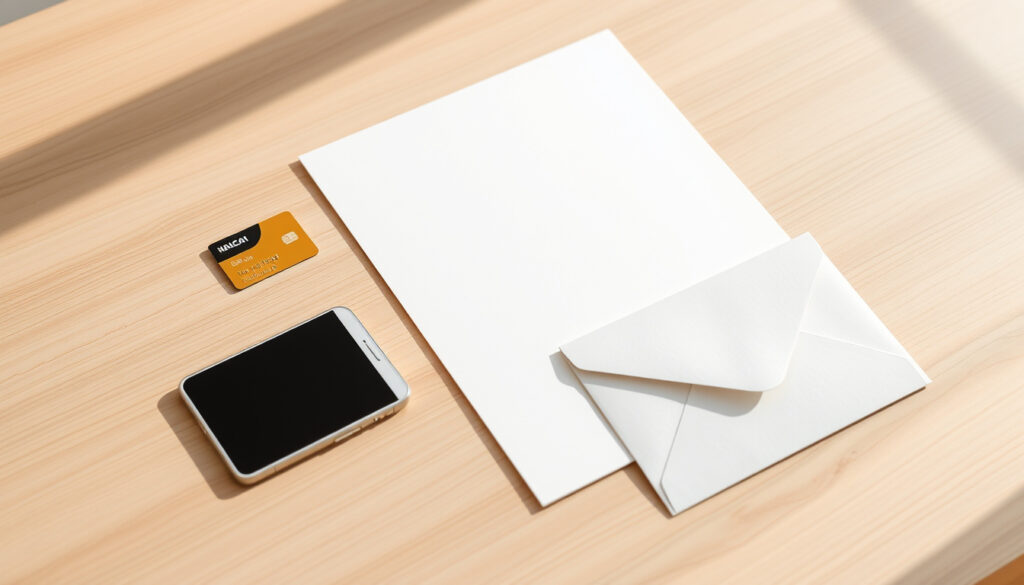
How Big Is A5 – Dimensions Sizes Comparisons
A5 paper represents one of the most practical sizes in the international ISO 216 system, measuring exactly 148 × 210 millimeters. This compact format has become a global standard for countless applications, from personal notebooks to professional printing projects. Understanding its precise dimensions helps designers, printers, and everyday users select the right paper for their needs.
The A5 format belongs to a precisely engineered family of paper sizes that share a unique mathematical relationship. Each size in the series derives from halving the previous one while maintaining perfect proportions. This elegant system, standardized internationally, ensures compatibility across borders and industries. The dimensions that follow provide a comprehensive reference for anyone working with this versatile paper format.
This guide covers everything from exact millimeter measurements to inch conversions, practical comparisons with other common sizes, and the historical context behind these standards. Whether selecting stationery, designing marketing materials, or simply curious about paper specifications, the information here serves as a reliable reference point.
What Are the Exact Dimensions of A5 Paper?
The A5 paper size measures precisely 148 by 210 millimeters, representing exactly half of an A4 sheet when folded along its longer edge. This measurement remains consistent across all manufacturers adhering to ISO 216 standards, with only minor tolerances permitted for production variations. The format’s area totals 31,080 square millimeters, which equals precisely 1/32 of a square meter.
148 × 210
5.83 × 8.27
1:√2
1/32 m²
Key Facts About A5 Dimensions
- A5 equals exactly half of A4 when folded along the long edge, making it ideal for booklet production
- The width-to-height ratio of 1:√2 (approximately 1:1.414) preserves proportions when scaling up or down
- Each A-series size halves the preceding one, following the mathematical formula defined by ISO 216
- The dimensions remain consistent worldwide, differing from regional standards like US Letter
- A5 represents the fifth division in the A-series, following A0, A1, A2, A3, and A4
- Folding an A4 sheet once along its length produces two A5 sheets
| Unit | Width | Height | Notes |
|---|---|---|---|
| Millimeters | 148 mm | 210 mm | ISO 216 standard |
| Centimeters | 14.8 cm | 21.0 cm | Common notation |
| Inches | 5.83 in | 8.27 in | Approximate (fractional: 5-7/8 × 8-1/4 in) |
| Pixels (72 DPI) | 420 px | 595 px | Screen resolution |
| Pixels (300 DPI) | 1748 px | 2480 px | Print resolution |
A5 Size in Inches, Centimeters, and Other Units
Converting A5 dimensions to inches yields approximately 5.83 by 8.27 inches, though fractional notation sometimes uses 5-7/8 by 8-1/4 inches for practical purposes. The centimeter equivalent reads 14.8 by 21.0 centimeters, with some sources citing slightly more precise figures of 14.81 by 21.01 centimeters. These minor variations reflect rounding differences rather than actual size discrepancies.
Digital Dimensions and Resolution
For digital design work, A5 dimensions translate directly into pixel values based on intended resolution. At 72 DPI, suitable for screen display, an A5 document measures 420 by 595 pixels. Print production at 300 DPI requires 1748 by 2480 pixels, providing the detail necessary for high-quality output. Designers should verify their software settings match the target output medium before beginning projects.
To remember A5 proportions, think of it as roughly the size of a standard paperback novel. In inches, it measures about 6 by 8¼, making it noticeably smaller than a US letter but taller than it is wide. The 1:√2 ratio means any design scales perfectly from A4 to A5 without distortion.
How Does A5 Compare to A4 and Other Sizes?
Understanding A5 requires context from its place within the ISO 216 A-series hierarchy. The series begins with A0, which covers exactly one square meter (841 × 1189 mm), with each subsequent size representing a halving of the previous format. This mathematical relationship means A5 sits four steps down from A0, two steps below A3, and one step below A4.
A5 Versus A4: The Halving Relationship
A4 measures 210 × 297 millimeters, making it 62 millimeters wider and 87 millimeters taller than A5. When you cut an A4 sheet in half along its longer edge, the resulting pieces equal A5 dimensions exactly. This property makes A4 an efficient parent size for A5 production, minimizing waste during manufacturing. Printers often print multiple A5 pages on A4 sheets before cutting, a technique called imposition in professional printing.
A5 Versus US Letter Size
The US Letter format (216 × 279 mm or 8.5 × 11 inches) differs significantly from A5 despite serving similar purposes. US Letter stands 18 millimeters taller and 68 millimeters wider than A5. More fundamentally, Letter uses an aspect ratio of approximately 1:1.294, which lacks the √2 property that makes the ISO system so efficient for scaling. Documents designed for one format require margin adjustments when printing on the other.
A5 most closely resembles the US Half Letter format (140 × 216 mm or 5.5 × 8.5 in), though it remains slightly larger in both dimensions. For those working across international markets, understanding this approximation helps when adapting designs between regions using different standards.
| Format | Width (mm) | Height (mm) | Aspect Ratio |
|---|---|---|---|
| A4 | 210 | 297 | 1:√2 |
| A5 | 148 | 210 | 1:√2 |
| A6 | 105 | 148 | 1:√2 |
| US Letter | 216 | 279 | 1:1.294 |
| US Half Letter | 140 | 216 | 1:1.545 |
Folding and Series Progression
The A-series progression follows a consistent halving pattern that extends in both directions. A5 folds to produce two A6 sheets (105 × 148 mm), while two A5 sheets combine to form one A4. This relationship continues through smaller sizes down to A10 (26 × 37 mm), the smallest in the series. The √2 aspect ratio ensures that halving always produces a format with identical proportions, enabling seamless scaling without cropping or distortion.
Envelope compatibility follows the same logical system. An unfolded A5 fits into a C5 envelope (162 × 229 mm), while folding once allows insertion into a DL envelope (110 × 220 mm). This designed interoperability simplifies postal preparation and reduces envelope inventory requirements for businesses handling international correspondence.
What Is A5 Paper Commonly Used For?
The compact dimensions of A5 make it particularly well-suited for portable applications where full-size paper would prove impractical. Notebooks, planners, and diaries commonly adopt A5 dimensions, allowing users to carry substantial writing space without bulk. The format fits comfortably in bags and larger pockets while providing significantly more area than smaller memo sizes.
Personal and Professional Applications
Small booklets represent another major application category for A5 paper. When folded or bound, A5 sheets create booklets that sit nicely in retail displays and mailboxes. Greeting cards printed on heavier cardstock frequently use A5 dimensions, as do event invitations requiring elegant proportions. Flyers and promotional materials for trade shows or point-of-sale displays benefit from the format’s portability and visual impact.
Professional printing services handle substantial A5 volume for corporate materials including training guides, product catalogs, and event programs. The size accommodates readable text without excessive paper consumption, making it economical for publications intended for wide distribution. Photography portfolios and design presentations often favor A5 for its gallery-like proportions when displayed flat.
When selecting paper weight for A5 projects, consider that the compact size works well with medium weights (80-120 gsm) for documents, while thicker stocks (200-350 gsm) suit cards and covers. Binding methods should account for the narrow spine dimension when designing booklets.
Envelope Compatibility
A5 paper integrates seamlessly with standard envelope systems used internationally. The C5 envelope accommodates an unfolded A5 sheet, while folding once allows use of the narrower DL envelope. Businesses operating internationally appreciate this standardization, reducing the need for multiple envelope inventories and simplifying logistics.
While A5 enjoys widespread use outside North America, adoption within the United States remains occasional rather than standard. Many US designers encounter A5 when working with international clients or preparing materials for overseas distribution, making familiarity with the format valuable across professional contexts.
A Brief History of the A5 Standard
The foundation for A5 and the entire A-series traces to German standard DIN 476, established in 1922. This pioneering work built upon earlier proposals from Sweden and Switzerland, which recognized the advantages of the √2 ratio for paper scaling. The mathematical elegance of halving a sheet while preserving proportions impressed standards committees across Europe, leading to gradual adoption beyond Germany.
- 1922: Germany introduces DIN 476, establishing the foundational concepts for the A-series with the √2 ratio
- Early 20th century: Sweden and Switzerland propose similar systems, influencing international consideration
- 1975: ISO 216 formally standardizes the A-series internationally, replacing fragmented regional approaches
- Present: The standard dominates globally outside North America, ensuring consistent paper sizing across borders
The contrast between ISO 216 adoption and North American practices reflects different historical development paths. The United States maintains ANSI standards including Letter format, which originated from earlier British imperial sizes rather than the metric-based European system. This divergence creates occasional challenges for international document exchange but rarely disrupts domestic workflows in either region.
What Is Certain and What Remains Unclear About A5?
The ISO 216 standard defines A5 dimensions with remarkable precision, leaving little room for interpretation or variation. The 148 × 210 millimeter specification carries a tolerance of ±1.5% for manufacturing, ensuring practical usability while acknowledging real-world production limitations. Major paper mills worldwide produce A5 to these specifications consistently.
Established Information
- Exact dimensions: 148 × 210 mm
- ISO 216 defines the standard
- Aspect ratio: 1:√2 (~1:1.414)
- Area equals 1/32 square meter
- Half the size of A4
- Universal adoption outside North America
Areas of Uncertainty
- Regional tolerance variations in practice
- Digital screen rendering differences
- Historical usage patterns before 1922
- Industry-specific adaptations
- Archival stability variations by manufacturer
Some aspects of A5 usage remain less thoroughly documented. Regional tolerance application varies somewhat between manufacturers, though differences remain within the permitted ±1.5% range. Historical usage before formal standardization remains poorly documented, though informal use of similar proportions likely preceded official recognition. Industry-specific conventions occasionally introduce subtle variations in paper weight or finishing that do not affect core dimensions.
Understanding the ISO 216 System
The ISO 216 paper standard defines a complete family of sizes based on the A0 format, which covers exactly one square meter with dimensions 841 × 1189 millimeters. Each halving produces the next smaller size, creating the series: A0, A1, A2, A3, A4, A5, A6, A7, A8, A9, and A10. This elegant system ensures proportional scaling between all sizes.
The √2 aspect ratio (approximately 1:1.414) represents the mathematical heart of the system. When a sheet halves along its longer edge, the resulting dimensions maintain identical proportions. A document designed for A5 scales up to A4, A3, or any larger size without cropping or distortion. This property proves invaluable for printing, archiving, and design workflows.
Professional printing organizations continue to reference ISO 216 standards as foundational resources. The Neenah Paper guide to international paper sizes and similar industry references confirm the specifications used in commercial production worldwide.
The ISO A-series represents one of the most successful examples of international standardization, enabling seamless document exchange across nearly every country except the United States and Canada.
Summary: Key Takeaways About A5 Dimensions
A5 paper measures exactly 148 × 210 millimeters (14.8 × 21.0 centimeters or 5.83 × 8.27 inches), with an area of 1/32 square meter. The How to Train Your Dragon 3 – Plot, Cast and Where to Watch article and similar resources demonstrate how versatile this format proves across different applications. This compact size fits perfectly between A4 and A6 in the ISO 216 hierarchy, sharing the series’ distinctive √2 aspect ratio that enables proportional scaling.
Understanding A5 dimensions matters for anyone working with international printing, designing portable documents, or selecting appropriate envelopes. The format’s compatibility with C5 and DL envelopes simplifies postal preparation, while its half-A4 relationship reduces waste in professional printing workflows. Whether used for notebooks, booklets, invitations, or marketing materials, A5 offers practical proportions that balance writing space with portability.
The How Many Weeks Till Christmas 2025 – Countdown Explained resource illustrates how A5 calendars and planners benefit from these proportions. As global commerce continues emphasizing international standards, familiarity with A5 and the ISO 216 system provides practical advantages across professional contexts.
Frequently Asked Questions
What is the aspect ratio of A5 paper?
A5 paper maintains an aspect ratio of 1:√2 (approximately 1:1.414). This ratio, shared by all sizes in the ISO 216 A-series, preserves proportions when scaling or halving between formats. Unlike US Letter, which uses approximately 1:1.294, the √2 ratio ensures that an A5 document scales perfectly to A4 without any cropping or distortion.
Is there a standard A5 size?
Yes, A5 is rigorously defined by ISO 216 as 148 × 210 millimeters. This standard, adopted internationally in 1975, allows manufacturing tolerances of ±1.5%, but the nominal dimensions remain consistent worldwide. Any paper marketed as A5 should match these specifications regardless of country of origin.
How big is A5 compared to US Letter?
A5 is smaller than US Letter in both dimensions. A5 measures 148 × 210 mm while US Letter measures 216 × 279 mm. A5 is approximately 68 millimeters narrower and 69 millimeters shorter than Letter. US Half Letter (140 × 216 mm) comes closer to A5 but remains slightly smaller in both directions.
Can A5 be folded from A4?
Yes, folding an A4 sheet along its longer edge produces exactly two A5 sheets. This relationship follows directly from the ISO 216 halving principle. The dimensions of A4 (210 × 297 mm) divided by two along the width give A5 (148 × 210 mm), with the √2 ratio preserved in both formats.
What envelopes fit A5 paper?
An unfolded A5 fits into a C5 envelope (162 × 229 mm). Folding once allows insertion into a DL envelope (110 × 220 mm). These envelope formats follow the ISO 269 and ISO 216 standards respectively, maintaining compatibility with A5 paper dimensions throughout the international mailing system.
What is A5 size in pixels at 300 DPI?
At 300 DPI (dots per inch), suitable for high-quality print production, A5 measures 1748 × 2480 pixels. At 72 DPI, appropriate for screen display, the same dimensions render as 420 × 595 pixels. These values derive directly from the millimeter specifications using standard conversion factors.
How does A5 compare to A6?
A6 measures 105 × 148 millimeters, exactly half the dimensions of A5. Two A6 sheets equal one A5, following the consistent halving pattern of the ISO 216 A-series. A6 commonly appears in smaller applications like postcards, pocket notebooks, and promotional flyers where A5 would prove too large.
More related posts
 Parnell Property for Sale: Auckland & Dublin Listings
 NZ Tax Brackets 2025: Rates & Thresholds Explained
 Crystal Palace vs Aston Villa: Prediction, TV Channel & H2H
 Toyota Hilux World Record: Largest Gathering, Mileage, and More
 Jon-Michael Ecker: Marine Biologist Turned Chicago Fire Actor
 Diva Exhibition Auckland Museum: Dates, Tickets & Highlights
 Budgeting Software for Hospitals: Top Tools 2026