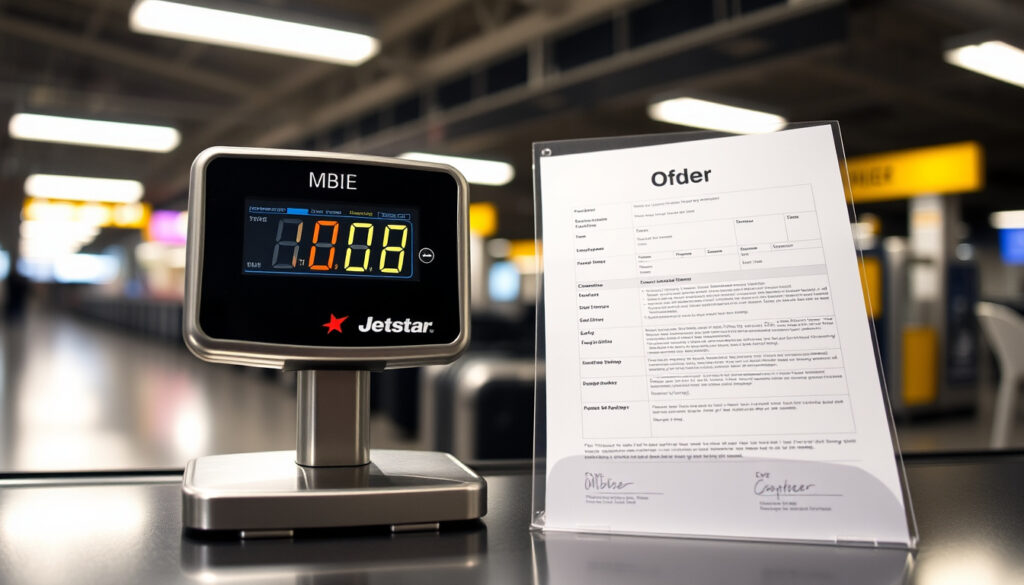
Jetstar Luggage Scale Discrepancy – MBIE Order and Key Facts
New Zealand’s Ministry of Business, Innovation and Employment has ordered Jetstar to stop using two portable baggage scales at Wellington Airport after discovering they were non-compliant with national standards. The decision came in December 2025 following an investigation into passenger complaints about incorrect weight readings that allegedly led to unfair overweight charges.
The scales, which were used to weigh carry-on luggage at the gate, failed compliance checks under the Weights and Measures Act 1987. MBIE Trading Standards found the devices could not be properly leveled due to damaged or misaligned wheels, compromising their accuracy. The airline has disputed the findings, stating the equipment did not cause higher weight readings but removed the scales immediately upon being ordered to do so.
What Is the Jetstar Luggage Scale Discrepancy at Wellington Airport?
The discrepancy centers on two portable baggage scales used by Jetstar at Wellington Airport to check carry-on luggage weight before boarding. Passengers reported that the scales appeared to give inaccurate readings, resulting in some travellers being charged overweight fees they believed were unfair. The issue drew public attention when a passenger complaint filed in September 2025 was highlighted on the television programme Paddy Gower Has Issues.
Key findings from the investigation include:
- Damaged or misaligned wheels on the portable scales prevented proper leveling
- MBIE rejected the scales as non-compliant under the Weights and Measures Act 1987
- Passengers had complained about discrepancies leading to overweight charges
- Jetstar attributed the issue to “minor wheel misalignments” affecting stability
- The airline maintains the problem did not cause scales to read higher than actual weight
- Complaints centred on carry-on enforcement at the gate rather than check-in desks
| Fact | Details |
|---|---|
| Location | Wellington Airport |
| Affected equipment | Two portable baggage scales |
| Regulatory framework | Weights and Measures Act 1987 |
| Complaint filed | September 2025 |
| Order issued | December 2025 |
| Jetstar response | Disputes findings, removed scales immediately |
Why Was Jetstar Ordered to Stop Using Baggage Scales?
MBIE Trading Standards conducted an inspection after receiving the September 2025 complaint and found the portable scales used by Jetstar could not meet legal requirements for trade-use weighing equipment. The investigation revealed the scales had damaged or misaligned wheels, which prevented them from being set on a level surface. Without proper leveling, accurate weight measurements could not be guaranteed.
What Did the MBIE Investigation Find?
National Manager of Trading Standards Stephen O’Brien confirmed the scales failed compliance testing because they could not be leveled correctly. Under New Zealand law, businesses using weighing equipment for commercial transactions must ensure scales are approved, verified by accredited persons, level, and accurate. The scales at Wellington Airport met none of these criteria. For more information on compliance requirements, travellers can visit the MBIE website.
O’Brien noted that even minor inaccuracies in weighing equipment could affect a significant number of travellers. New Zealand handles more than 20 million air passenger movements annually, meaning scale discrepancies could potentially impact thousands of passengers making carry-on weight assessments at gates.
Are Jetstar’s Luggage Scales Faulty?
The evidence suggests the scales were indeed faulty according to regulatory standards. MBIE formally rejected the equipment and issued compliance instructions to Jetstar, along with a Corrective Action Request to the independent verifier responsible for certifying the scales. Non-compliance with trading standards can result in penalties of up to $10,000 for individuals or $30,000 for companies.
Under the Weights and Measures Act 1987, trade-use scales must be approved, verified by accredited persons, and maintained in a level and accurate condition. Businesses failing to meet these requirements face substantial penalties.
Jetstar’s Response and Passenger Complaints
Jetstar has disputed the MBIE findings, arguing the scales did not produce higher weight readings than actual. The airline stated the issue involved “minor wheel misalignments” that affected the stability of the portable equipment. According to Jetstar, the misalignment could potentially result in slightly lower readings rather than inflated ones, contrary to passenger concerns about being overcharged.
Did Passengers Get Wrongly Charged for Overweight Luggage?
Passengers filed complaints specifically about being charged overweight fees for carry-on bags they believed were within acceptable limits. The issue gained traction when reporter Karen O’Leary featured the problem on Paddy Gower Has Issues, bringing it to a wider audience. Online discussions on forums such as the Australian Frequent Flyer community referenced the incident and questioned whether similar portable scales used by Jetstar in Australia might present comparable problems.
Travellers who believe they were wrongly charged due to inaccurate scales may have grounds to dispute the fee. MBIE recommends checking that scales are level, start at zero, and display a verification mark before accepting any overweight charge.
Jetstar’s Safety Measures and Policy Commitments
The airline emphasized it conducts annual calibration of scales through qualified contractors and performs daily pre-use checks on all weighing equipment in New Zealand. Jetstar stated it achieved full compliance across all New Zealand scales by October 15, 2025, although this date appears to predate the December order. The company also acknowledged that carry-on baggage enforcement represents a “pain point” for customers and indicated plans to improve its policies in this area.
Jetstar Carry-On Weight Limit and Check-In Rules
Jetstar enforces a carry-on baggage allowance for its New Zealand flights, with specific weight restrictions applying to cabin luggage. While the airline’s general policy sets carry-on limits, the enforcement mechanism varies between check-in counters and gate areas. The disputed scales at Wellington Airport were used specifically for carry-on enforcement at the gate, meaning passengers who had already passed check-in could still face weight verification before boarding.
Passengers should be aware that overweight charges for carry-on luggage can be substantial, with examples cited at $65 or more depending on the route and circumstances. The MBIE order specifically addressed the accuracy of scales used for this gate-side enforcement rather than check-in desk equipment.
Jetstar NZ Flights Baggage Rules
Airlines operating in New Zealand must comply with the Weights and Measures Act when using weighing equipment for commercial purposes. This includes scales used to determine whether passenger baggage meets stated allowances. The legislation requires scales to be verified and maintained to acceptable accuracy standards, with regular inspections by Trading Standards officials.
For scales to be legally used in trade, they must display a current verification mark, be level, and read zero when empty. Passengers questioning an overweight charge can request to see these indicators.
Does This Affect Jetstar International or Other Flights?
The MBIE order specifically addressed the two portable scales at Wellington Airport. Online discussions on aviation forums have raised questions about whether similar portable scales used by Jetstar in Australia or at other New Zealand airports might present comparable compliance issues. However, no regulatory action has been reported outside Wellington Airport, and MBIE continues follow-up activities to ensure resolution of the identified problems.
The incident highlights broader concerns about the consistency and accuracy of baggage weighing equipment across the airline industry. While this particular enforcement action focused on domestic carry-on enforcement, passengers on any Jetstar route using portable scales for weight verification could potentially encounter similar accuracy issues if equipment is not properly maintained and regularly calibrated. Travellers can check the latest information about Wellington Airport operations for any updates regarding baggage handling procedures.
How Accurate Are Airport Luggage Scales Generally?
Airport luggage scales, like all commercial weighing equipment, are subject to legal tolerances for accuracy. Portable scales used in variable conditions require regular maintenance and verification to ensure consistent performance. The Wellington Airport incident demonstrates how physical damage or wear to equipment components can compromise accuracy in ways that may not be immediately apparent to operators or passengers.
Timeline of the Jetstar Scale Investigation
Understanding when key events occurred helps contextualise the progression from initial complaint to regulatory action:
- September 2025: A passenger files a formal complaint about Jetstar’s baggage scales at Wellington Airport
- Late 2025: Reporter Karen O’Leary highlights the issue on Paddy Gower Has Issues, drawing public attention
- December 2025: MBIE Trading Standards completes investigation and orders Jetstar to stop using the scales
- December 2025: Jetstar removes the scales immediately and issues a public statement disputing findings
- December 2025 onwards: MBIE continues follow-up to ensure compliance measures are implemented
What Is Confirmed and What Remains Unclear?
Available information establishes certain facts while leaving other details uncertain:
| Established Information | Uncertain Information |
|---|---|
| MBIE found scales non-compliant and ordered their removal | Whether passengers received refunds for disputed overweight charges |
| Scales could not be leveled due to wheel damage | Whether similar scale issues exist at other New Zealand airports |
| Jetstar disputes findings, saying scales did not over-read | Whether Australian Jetstar operations face comparable regulatory scrutiny |
| MBIE issued compliance instructions to Jetstar | Details of any passenger complaints posted on social media platforms |
| Investigation stemmed from September 2025 complaint | Jetstar’s exact carry-on weight limit for New Zealand flights |
Context: Baggage Enforcement Practices in New Zealand
The enforcement of carry-on baggage weight limits has become increasingly common among low-cost carriers operating in New Zealand. Airlines use a combination of check-in desk weighing and gate-side verification to ensure passengers comply with stated allowances. The use of portable scales for gate enforcement allows staff to conduct final checks before boarding, catching instances where checked bags may have been transferred to carry-on after initial weighing.
This incident underscores the importance of maintaining weighing equipment to legal standards. When equipment fails to meet accuracy requirements, both airlines and passengers can be affected. Airlines face regulatory penalties and reputational damage, while passengers may be incorrectly charged fees or, conversely, permitted to board with bags exceeding safe weight limits.
Official Statements and Sources
MBIE Trading Standards National Manager Stephen O’Brien provided official comment on the investigation findings, confirming that scales were rejected due to their inability to be properly leveled. O’Brien urged passengers to check for level scales starting at zero with a visible verification mark and to report any concerns directly to MBIE Trading Standards.
Scales that cannot be leveled properly cannot provide accurate weight readings. We expect all businesses using trade equipment to maintain their equipment to the required standard.
— Stephen O’Brien, MBIE Trading Standards National Manager
Jetstar provided a statement emphasizing its commitment to compliance and customer service. The airline highlighted its calibration schedules and daily checks while disputing that the equipment produced higher-than-actual readings. The carrier also acknowledged carry-on baggage enforcement as an area requiring attention from a customer experience perspective.
Summary
MBIE ordered Jetstar to stop using two portable baggage scales at Wellington Airport in December 2025 after finding them non-compliant with the Weights and Measures Act 1987. The investigation followed a passenger complaint in September 2025 about inaccurate readings leading to overweight charges. While the scales were removed immediately, Jetstar disputes that the equipment caused higher weight readings, attributing the problem to minor wheel misalignments affecting stability. The incident highlights the importance of proper equipment maintenance for trade-use weighing devices and raises questions about scale accuracy standards across the airline industry. Passengers concerned about potential overcharges should verify that weighing equipment displays proper verification marks and report issues to MBIE Trading Standards. For those planning travel, understanding airline baggage policies and enforcement practices can help avoid disputes at the airport. Those flying Flights from Auckland to Perth or other routes may want to arrive early to allow time for any baggage-related discussions.
Frequently Asked Questions
How accurate are airport luggage scales?
Airport luggage scales must meet legal accuracy tolerances for commercial weighing equipment. However, portable scales can develop accuracy problems due to physical damage, wear, or improper maintenance. MBIE recommends checking that scales are level, start at zero, and display a current verification mark.
What is Jetstar’s carry-on weight limit?
Jetstar enforces carry-on baggage weight limits as part of its cabin allowance policy. Overweight charges for carry-on luggage can be substantial, with examples cited at significant amounts depending on the route. Passengers should check current policy directly with the airline.
Can I dispute an overweight charge if I believe the scale was inaccurate?
Passengers who believe they were wrongly charged due to scale inaccuracy may have grounds to dispute the fee. Documenting the scale’s condition at the time of weighing, noting whether it appeared level and displayed a verification mark, can support any complaint filed with the airline or MBIE.
What penalties apply to airlines using non-compliant scales?
Under the Weights and Measures Act 1987, businesses using non-compliant trade equipment face penalties of up to $10,000 for individuals or $30,000 for companies. MBIE can also issue compliance instructions and corrective action requests.
Are similar scale issues affecting other airports?
The MBIE order specifically addressed Wellington Airport. While online discussions have questioned whether comparable issues might exist elsewhere, no regulatory action has been reported at other New Zealand airports or for Jetstar operations in Australia.
What should I do if I notice a scale appears damaged or inaccurate?
Passengers who notice scales appear damaged, cannot be leveled, or do not start at zero should report this to airline staff immediately and file a complaint with MBIE Trading Standards. Documenting the scale’s condition with photographs can support subsequent investigations.
More related posts
 220 USD to NZD – Live Rate, Trends and Volatility
 Star Signs in Order: 12 Zodiac Signs List with Dates
 Levin Boy Racer Impounded Cars Sale: Legal Loophole
 Board and Batten Cladding: Cost, Materials, Pros and Cons
 Alcaraz Wins 2026 Australian Open Results Over Djokovic
 3 Day Cruise from Auckland: Prices, Lines & Tips 2025
 SA vs AUS WTC Final Scorecard: South Africa vs Australia Match
 Rebus Puzzles with Answers: PDF, Kids, Tricky & Easy