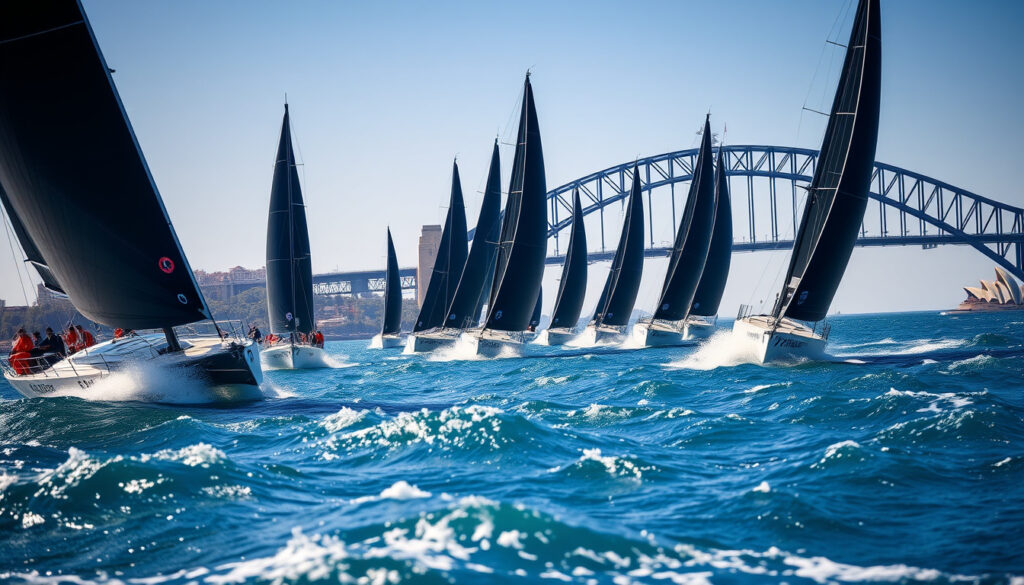
Sydney Hobart Yacht Race 2026: Start Time, TV & Black Sails
Every Boxing Day, a fleet of yachts heads out of Sydney Harbour with a simple goal: reach Hobart before everyone else, but the 628-nautical-mile sprint has a history far messier than a trophy finish—controversial black sails, a stripped winner, and a deadly storm that reshaped the race forever. This guide cuts through the noise to give you the facts, the viewing details, and what the race’s most contentious moments say about its future.
Start date: Boxing Day (26 December) · Distance: 628 nautical miles · First race: 1945 · Record time: 1 day 18 hours 23 minutes (Comanche, 2017) · Deaths in 1998: 6
Quick snapshot
- Race starts on Boxing Day each year (Rolex Sydney Hobart Yacht Race official site)
- Black sails are typically carbon fiber laminates (North Sails technical documentation)
- 1998 disaster claimed 6 lives (Rolex Sydney Hobart Yacht Race historical records)
- BNC disqualified in 2023 for a spinnaker pole fitting rule breach (ABC News)
- Exact fleet size for 2026 – not yet announced (Entrance page opens May 2026)
- Specific TV channel broadcasts outside Australia – varies by country (Official broadcast page)
- Exact number of solo sailors competing each year (Rolex Sydney Hobart Yacht Race)
- Specific weather conditions for the 2026 race are unknown in advance (Entrance page opens May 2026)
- Entries open 26 May 2026 for the 80th running (Rolex Sydney Hobart Yacht Race official site)
- 2025 post-race protest involved rule 55.3 on sail sheeting (Sail-World)
- 2017 record: Comanche finishes in 1 day 18 hours (Rolex Sydney Hobart Yacht Race official site)
- 2026 race start at 1:00 PM AEDT on Boxing Day (Official countdown live)
- Live broadcast on Nine Network and 9Now in Australia (Official broadcast page)
- International streaming via CYCATV YouTube (Official countdown live)
| Fact | Value |
|---|---|
| First race | 1945 |
| Distance | 628 nautical miles |
| Record time | 1 day 18 hours 23 minutes (Comanche, 2017) |
| Deaths in 1998 | 6 |
| Start time | 1:00 PM AEDT on Boxing Day |
| Typical fleet size | Varies annually, often 90–120 yachts |
Six facts, one pattern: the race’s stats swing between tradition (1945 start) and extremes—a record time under two days and a storm that killed six.
Where can I watch the Sydney to Hobart yacht race?
What TV channel is showing the race?
- In Australia, the race is broadcast live on the Nine Network (free-to-air TV) and streamed on 9Now. For more details, see our full guide on the 2026 start time and broadcast.
- International viewers can watch the live start on the official race website or CYCATV via YouTube.
What time does the race start on Boxing Day?
The Rolex Sydney Hobart Yacht Race 2026 starts at 1:00 PM AEDT on Boxing Day (26 December), according to the official race website. The start is a public spectacle in Sydney Harbour, with spectator fleets lining the course.
How to follow online?
- Visit the official race website at rolexsydneyhobart.com.
- Click on “Follow the fleet online” under the Spectators menu.
- Use the live tracker to search for a specific yacht by name or sail number.
- Official live shows air at 1000hrs and 1600hrs (AEST) on the official website or on CYCATV via YouTube.
- The official spectator guide includes a race tracker and fleet positions updated throughout the race.
For Australian viewers, the race is a straightforward flip to Channel 9. Outside the country, the race’s digital-first strategy—free YouTube streams and website feeds—makes it more accessible than most global sporting events.
The implication: the race’s accessibility is a strategic advantage, but it also means that viewers outside Australia must rely on digital streams rather than traditional TV.
Why are sails black in the Sydney to Hobart Yacht Race?
What material are black sails made of?
Black sails are typically made from carbon fiber laminates (North Sails performance materials). The material is inherently dark because carbon fiber itself is black, and the laminate layers are not dyed or painted—they come that way.
Are black sails faster?
Yes, but not because of the colour. The carbon fiber construction creates a stiffer, lighter sail that holds its shape better at high wind speeds, offering a competitive advantage. The trade-off: black sails can reduce visibility for other crews, but they remain legal under racing rules. North Sails documentation notes the technical edge: “Carbon fiber laminates are inherently dark and provide a competitive edge.”
The pattern: black sails are a side effect of performance engineering, not a style choice. But their appearance has become a recognisable signature of high-end racing yachts.
Why was the Sydney to Hobart winner disqualified?
What rule was broken?
The 2025 overall winner, BNC, was penalised for what the crew described as a “silly mistake” involving a spinnaker pole fitting rule. The race committee lodged a protest publicly listed on the official site. The jury found a breach of Rule 55.3 (Sail-World racing regulations analysis), which governs how sail sheeting is configured.
How did the infringement happen?
The crew reportedly forgot to fit the correct spinnaker pole attachment before the race start—a detail that violated the racing rule’s wording on sail sheeting. According to ABC News (Australian public broadcaster), the crew described it as a simple oversight. The jury determined the boat did not deliberately break a rule, but the infringement still cost them the overall win. For more on the protest, read our explainer on the rule breach and 2025 race outcome.
For competitive crews, the BNC case is a cautionary tale: the difference between a trophy and a protest is a single fitting check before the start. Strict enforcement deters cutting corners but punishes genuine mistakes just as hard as intentional cheating.
The pattern: strict enforcement of racing rules ensures fairness but can seem harsh on genuine mistakes, as the BNC case demonstrates.
How many died in the 1998 Sydney to Hobart disaster?
What caused the disaster?
Six sailors died during the 1998 race when a severe storm struck the fleet in Bass Strait. The event remains one of the worst offshore racing tragedies in history. The storm generated extreme winds and waves that overwhelmed several yachts.
What safety changes were made after 1998?
The Rolex Sydney Hobart Yacht Race official historical records note that the tragedy prompted major reforms, including mandatory storm sails, stricter crew certification requirements, and improved weather forecasting integration. The race’s safety framework was overhauled—today, all boats must carry specified survival equipment and undergo pre-race safety audits.
What this means: the 1998 disaster forced a regulatory shift that made the race safer but also raised the barrier to entry. Smaller, less-equipped yachts that might have competed in the 1990s now rarely make the fleet.
How do lone sailors sleep during the Sydney to Hobart?
What strategies do solo sailors use?
Solo sailors in the race rely on short power naps, often 20 minutes at a time, to manage fatigue during the multi-day race. They use autopilot systems, boat alarms, and weather routing tools to safely rest while the yacht sails unattended. Float Magazin (sailing lifestyle publication) provides insights into these solo sleeping techniques, noting that experienced solo sailors often schedule naps around weather windows when conditions are stable.
How do they manage rest?
- Set autopilot to maintain course and speed.
- Program alarms for wind shifts, unusual boat motion, or proximity to shipping lanes.
- Use weather routing software to anticipate calm periods for longer rest.
“The race has been held annually since 1945, attracting the world’s best offshore sailors.”
— Rolex Sydney Hobart official site (race tradition statement)
“It was a silly mistake that cost us the race – we simply forgot to fit the correct spinnaker pole attachment.”
— BNC crew member (quoted in ABC News report)
“Carbon fiber laminates are inherently dark and provide a competitive edge.”
— North Sails technical article (performance sail engineering)
For the crews racing to Hobart, the choices are clear: invest in a carbon-fibre sail for speed, but accept the trade-off in visibility; double-check every fitting before the start, or risk a protest; and for solo sailors, master the art of the 20-minute nap, or face exhaustion on day two.
cyca.com.au, reddit.com, rolexsydneyhobart.com, rolexsydneyhobart.com, nytimes.com, youtube.com, rolexsydneyhobart.com
Frequently asked questions
What is the Sydney to Hobart yacht race?
The Sydney to Hobart Yacht Race is an annual offshore yacht race that starts in Sydney Harbour on Boxing Day (26 December) and finishes in Hobart, Tasmania, covering 628 nautical miles. It is sponsored by Rolex and organized by the Cruising Yacht Club of Australia.
Who organizes the Sydney to Hobart race?
The race is organized by the Cruising Yacht Club of Australia (CYCA) and is officially branded as the Rolex Sydney Hobart Yacht Race.
How many yachts typically compete?
The fleet size varies annually, often ranging from 90 to 120 yachts. The 2025 edition was the milestone 80th race, and entries for the 2026 event opened on 26 May 2026.
What is the prize for winning?
Winners receive the Tattersall Cup for overall handicap winner and the Rolex timepiece for line honours winner. There is no cash prize—the prestige and sponsorship opportunities are the primary rewards.
Is the race dangerous?
Yes, offshore yacht racing carries inherent risks, as demonstrated by the 1998 disaster that killed six sailors. However, post-1998 safety reforms—including mandatory storm sails, improved weather forecasting, and pre-race safety audits—have significantly reduced the risk profile.
Are there separate divisions for solo sailors?
Yes, the race includes divisions for solo and double-handed crews, managed under the same race rules. Solo sailors must use autopilot and alarms to manage rest during the multi-day race.
How can I track a specific yacht during the race?
The official race website provides a live race tracker showing yacht positions, speeds, and progress. The tracker is accessible via the “follow the fleet online” section and is free to use.
More related posts
 Board and Batten Cladding: Cost, Materials, Pros and Cons
 How to Deep Clean Your Kitchen: Step-by-Step
 Super Rugby Fantasy 2026 Guide: Teams, Schedule & Picks
 Where is the liver located? Anatomy, pain, and repair
 Wales vs South Africa 2026: Score, TV, Etzebeth Ban & More
 How Big Is A5 – Dimensions Sizes Comparisons
 GOAT From India With Love Menu: Award-Winning Set Menu