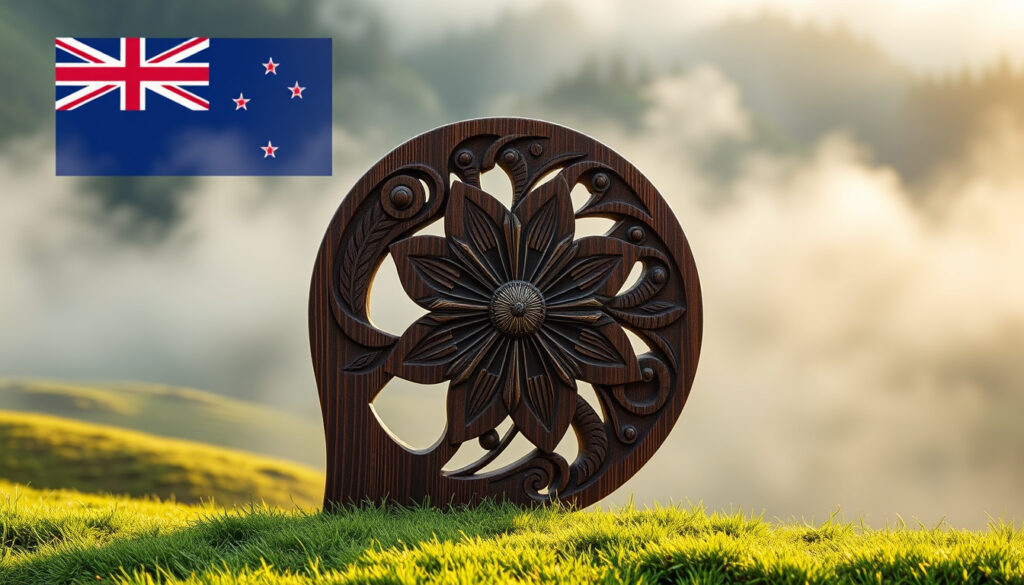
Te Wiki o te Reo Māori 2026: Dates, Theme & Phrases
For one week every September, New Zealanders trade their default small talk for kia ora — and 2026 is no exception. Te Wiki o te Reo Māori (Māori Language Week) runs from 14–20 September under the theme Ake, Ake, Ake – A Forever Language, a government-backed campaign that frames the week around the future of the language, not just a calendar date; if you’re hunting for the exact dates, the daily themes, or the te reo phrases people actually search for, every translation in this guide is tied to a named source.
Event name: Te Wiki o te Reo Māori (Māori Language Week) ·
Month observed: September each year ·
Initiative type: Government-sponsored national language campaign ·
2026 structure: Daily themes guide the week ·
Common phrase: Ake ake ake = for ever and ever
Quick snapshot
- The 2026 week runs from Monday 14 to Sunday 20 September 2026 (Christchurch City Libraries (public library network))
- The 2026 theme is Ake, Ake, Ake – A Forever Language (Te Taura Whiri i te Reo Māori (Māori Language Commission))
- The 2026 focus is Te Reo Towns (University of Auckland (university newsroom))
- Official 2027 dates have not been announced yet
- “Tū te ao – Tu te po” needs a dictionary check, not a caption translation
- Colloquial te reo for “please,” “no thank you,” and “bum” is context-dependent
- 1975: Wikipedia records the first Māori Language Week (Wikipedia (community encyclopedia))
- 1987: Wikipedia dates te reo Māori’s official status to the Māori Language Act (Wikipedia (community encyclopedia))
- 2026: the week runs 14–20 September with daily themes (Wikipedia (community encyclopedia))
- Seven daily themes guide the 2026 week (Playcentre (early childhood education association))
- Official resources are gathered at Reo Māori (Reo Māori (official language movement site))
Six details frame the week, and one pattern runs through them: the official machinery is bilingual, the timing never moves, and the 2026 structure is built for daily participation.
| Field | Detail |
|---|---|
| Māori name | Te Wiki o te Reo Māori |
| English name | Māori Language Week |
| Frequency | Annual |
| Month | September |
| Sponsorship | Government-sponsored initiative |
| 2026 structure | Daily themes announced by organizers |
The takeaway: this is a participation campaign. The government doesn’t just declare the week; it builds daily structure into it — which is why the 2026 themes matter more than the average slogan.
What date is Te Wiki o te Reo Māori?
The short answer is September, every year — and in 2026 the week fills a specific Monday-to-Sunday block.
When is Te Wiki o te Reo Māori 2026?
- Monday 14 September 2026
- Sunday 20 September 2026
Christchurch City Libraries spells out the window exactly that way — Monday 14 September to Sunday 20 September 2026 (Christchurch City Libraries (public library network)). The Māori Language Commission sets the same dates on its official campaign page. If a social post shows a different week, it’s wrong.
When is Te Wiki o te Reo Māori 2027?
- Expected month: September 2027
- Official dates: not yet announced
The safe planning assumption is that the week returns in September 2027, because the September pattern runs through the week’s history (the timeline below shows the arc). Exact dates will come from Te Taura Whiri i te Reo Māori when the campaign announces them — treat any other date as speculation.
How long is Māori Language Week?
- Seven days, Monday to Sunday
- Each day in 2026 carries its own theme
The seven-day container is part of the design. Because the 2026 campaign assigns a theme to each day, the week reads less like a single festival and more like a daily practice — which is the point of the daily-theme structure detailed in the next section.
The pattern: September is the constant, and the Monday-to-Sunday container is the design. Once you know those two things, the week is easy to plan for.
What is the theme of Te Wiki o te Reo Māori 2026?
The theme is a promise, and the focus tells you where the promise gets kept.
What is the overall theme for 2026?
- Ake, Ake, Ake – A Forever Language
- Focus for 2026: Te Reo Towns
The official theme is Ake, Ake, Ake – A Forever Language. Te Taura Whiri i te Reo Māori (Māori Language Commission) pairs it with a focus called Te Reo Towns, which it describes as “a celebration of communities who have kept te reo Māori alive and an invitation for all of Aotearoa to help it flourish into the future” (Te Taura Whiri i te Reo Māori (Māori Language Commission)). Read the theme as a commitment: the language isn’t being dusted off for seven days — it’s being claimed as forever.
What are the daily themes for 2026?
- Monday – public spaces
- Tuesday – home
- Wednesday – work and businesses
- Thursday – community
- Friday – arts
- Saturday – fitness and wellness
- Sunday – future aspirations
Playcentre’s 2026 activity guide lays out this seven-day structure (Playcentre (early childhood education association)). Notice what the list skips: there’s no grammar day and no test day. Every theme is a setting, which is the strategy — the language is meant to be spoken in the places New Zealanders already live, work, and move through.
Where can I find the official 2026 theme announcement?
- Reo Māori movement hub — official resources and partner materials (Reo Māori (official language movement site))
- Te Taura Whiri i te Reo Māori — the commission’s campaign pages carry the theme and focus in English and Māori
Start at the Reo Māori hub rather than a social graphic. If a 2026 resource isn’t linked from the official movement or commission pages, treat it as unofficial, however polished it looks.
Ake, Ake, Ake is a commitment, not a slogan. For beginners, the daily themes are the entry ramp; for organizers, they’re a checklist of the places the language actually lives.
The trade-off: seven themes risk turning the week into a checklist, but that structure is exactly what makes it usable. A nameable day — Wednesday is work — gives even the shyest beginner a reason to speak.
How to say happy Te Wiki o te Reo Māori?
Short answer: don’t force the English formula into te reo — use the phrases the campaign itself leans on.
How do I reply to kia ora?
- Reply with “kia ora”
- It works as both a greeting and a response
Kia ora is the most useful word of the week: it says hello, thank you, and “good to see you” depending on the moment, and the accepted reply is another kia ora (Te Aka Māori Dictionary (Māori language dictionary)). You don’t need a longer script. A returned kia ora is already the language being used.
What do I say instead of “Happy [week]” in te reo Māori?
- Kia kaha — “be strong / go hard”
- Ake ake ake — “for ever and ever”
English has a factory setting for greetings — happy [week], happy [month] — and te reo doesn’t run on that formula. The 2026 campaign leans on phrases that carry intent instead. One NZ put Kia kaha on customers’ phone screens for the week and glossed it as “be strong / go hard” (One NZ Media (telecommunications provider)); Ake ake ake carries the theme’s promise of forever. Say “Happy Māori Language Week” in English if you want to — plenty of people do — but the te reo phrases that land are the ones that encourage.
How do I greet someone respectfully in te reo Māori?
- Kia ora is the safest opening for any setting
- Formal occasions call for protocols beyond a greeting
Start with kia ora and let context lead. In a shop, a corridor, or a video call, kia ora is enough. Formal settings — a mihi, a marae welcome, a public event — carry their own protocols, which is why the official resources steer beginners toward everyday phrases they can say out loud without a script.
There is no clean “Happy [week]” formula in te reo. Official 2026 messages lean on phrases like Kia kaha — so say the phrase that exists instead of force-translating the one that doesn’t.
What does the phrase “Tū te ao – Tu te po” mean?
This is the search phrase that deserves the most caution, because the most confident-sounding answer online is usually the least reliable.
What does “ake ake ake” mean?
- Ake ake ake = “for ever and ever”
- It is the engine of the 2026 theme, Ake, Ake, Ake – A Forever Language
You’ve already met this phrase: it’s the first half of the official theme. The English rendering the commission chose — A Forever Language — is the best translation of the whole expression, because it keeps the promise instead of the word order. When you hear ake ake ake this week, it means the language is meant to outlast us.
What does “aroha tino nui” mean?
- Aroha = love, compassion
- Tino nui = very great, an intensifier
Aroha is one of the most loaded words in te reo — it covers love, compassion, and empathy, and it shows up in everyday phrases far beyond romance. Add tino nui and the feeling gets bigger: a great love, a deep care. Te Aka Māori Dictionary is the right check for this one, because aroha shifts with context (Te Aka Māori Dictionary (Māori language dictionary)).
Why are Māori phrases often hard to translate literally?
- Whakataukī (proverbs) carry layers of reference
- A word-for-word gloss flattens the feeling
A single te reo line can point to a story, a warning, or an entire value system. Whakataukī and karakia carry context that a dictionary string can’t capture, and a caption-sized translation often strips that context out. So when a phrase like “Tū te ao – Tu te po” keeps circulating without an official gloss, the responsible move is to check a named te reo dictionary — not to repeat the most shareable version.
The most shareable translation of “Tū te ao – Tu te po” is likely the least reliable. A dictionary check before you post is the difference between helping the language and flattening it.
The implication: treat every te reo phrase that crosses your feed as something to verify, not something to decorate a caption with.
How do you say “I love you” in te reo?
The honest answer: te reo expresses love through aroha, but the exact wording depends on who’s speaking, to whom, and why.
How to flirt in te reo?
- Love phrases build on “aroha”
- The exact wording depends on the relationship and the moment
The internet wants a pickup line; te reo wants a relationship. Phrases built on aroha exist, but the right one differs whether you’re flirting with a date, writing to a friend, or thanking an elder. That’s why the least exciting advice is the most useful: learn the warm, safe phrases first and let context guide the rest. Invented slang travels fast and usually gets corrected in public.
How do you say “please” and “no thank you” in te reo?
- Direct equivalents vary by context
- A dictionary check beats a meme
These are the words people actually need, and they’re exactly where a captioned graphic can let you down. Te reo handles politeness differently depending on the situation, so the answer isn’t one universal word — it’s a phrase chosen for the moment. Te Aka Māori Dictionary is the reliable referee (Te Aka Māori Dictionary (Māori language dictionary)).
How do you say “bum” in te reo?
- It depends whether you mean anatomy, insult, or joke
- Context decides the word — and so does the dictionary
The word people look up for a laugh is a good test of how te reo works: there isn’t one blanket equivalent that works in every sentence. The right term shifts with tone and context, which is why reliable sources keep recommending a dictionary check over a screenshot. Bonus: learning the polite version teaches you why word choice matters so much in te reo.
How to take part in Te Wiki o te Reo Māori 2026 in five small steps
You don’t need fluency; you need five actions, each small enough to survive a busy week.
- Pin the dates: Monday 14 to Sunday 20 September 2026. Block the time now, before the week sneaks up on your calendar.
- Learn the theme phrase: Ake, Ake, Ake – A Forever Language. Use it once out loud, even if it’s just to yourself.
- Pick one daily theme that fits your life. If you work, Wednesday’s “work and businesses” slot is the obvious one — use it for an email sign-off or a meeting opener (Playcentre (early childhood education association)).
- Reply with “kia ora” when someone greets you. It’s the smallest te reo habit the week asks of you.
- Bookmark the official resources linked in this guide, and check the campaign pages before you post about the week.
That’s the whole plan: five steps, zero grammar tests, one genuine attempt.
A week of daily themes moves the language only if workplaces and schools schedule te reo into real moments — Wednesday’s “work and businesses” theme is the plainest test.
The catch: none of these steps require fluency. The measure of the week is whether a beginner actually speaks, even once.
How Te Wiki o te Reo Māori became a national event
The week didn’t start as a government campaign; it became one through decades of activism and law.
- 1975 — Māori Language Week is first marked in New Zealand.
- 1987 — Te reo Māori becomes an official language under the Māori Language Act.
- 2026 — The week runs 14–20 September with the theme Ake, Ake, Ake – A Forever Language and the focus Te Reo Towns (Te Taura Whiri i te Reo Māori (Māori Language Commission)).
- 2027 — Expected in September; official dates to be confirmed by the organizing body.
The pattern: official status in 1987 gave te reo a legal foundation, and the annual week gave it a cultural rhythm. The 2026 theme is the latest reminder that this campaign is built for the long game — a forever language, one week at a time.
What’s confirmed and what’s still unclear about Te Wiki o te Reo Māori 2026
A responsible guide separates what’s nailed down from what isn’t. Here’s the split.
Confirmed facts
- Te Wiki o te Reo Māori 2026 runs Monday 14 to Sunday 20 September 2026 (Christchurch City Libraries (public library network)).
- The 2026 focus is Te Reo Towns — the communities that have kept te reo alive (University of Auckland (university newsroom)).
- Te Wiki o te Reo Māori is described as a government-sponsored initiative to encourage use of the Māori language (Wikipedia (community encyclopedia)).
What’s unclear
- Official 2027 dates — not yet announced.
- An authoritative translation of “Tū te ao – Tu te po” — not present in the 2026 campaign materials; verify with a dictionary.
- The complete official wording of the 2026 daily themes — the clearest public breakdown comes from an education partner, not the organizing body itself.
- Colloquial te reo for “please,” “no thank you,” and “bum” — context-dependent, so a dictionary check is required.
The pattern: every confirmed fact here traces to an official or institutional source, while the unclear ones are exactly where social media fills the gap with confidence it doesn’t have.
What organizers and partners say about 2026
The week isn’t just an official campaign; organizations across the country adopt it. Two voices show the range.
“Kia kaha — be strong, go hard.”
“Te Wiki o te Reo Māori 2026 takes place during 14–20 September, and the year’s theme is Te Reo Towns.”
The pattern: a telecom and a university — two very different organizations — landed on the same core message. The language belongs in everyday life, and the week is the reminder.
Te Wiki o te Reo Māori 2026 comes down to a choice for every New Zealand organization: treat the week as a calendar ornament, or use the daily themes to make te reo a working habit. The official theme — Ake, Ake, Ake – A Forever Language — sets the standard: forever is the goal, and one week is the starting line. For New Zealand workplaces, the decision is clear: put te reo in the email sign-off, the phone greeting, and the Wednesday meeting — or watch the week pass as a hashtag while the promise of a forever language waits for someone else to speak it.
en.tetaurawhiri.govt.nz, hail.to, education.govt.nz, en.tetaurawhiri.govt.nz, tetaurawhiri.govt.nz, tematawai.maori.nz
Frequently asked questions
Why is Te Wiki o te Reo Māori celebrated?
To give te reo Māori a visible, low-barrier moment in everyday New Zealand life. The campaign frames the week as an invitation for all of Aotearoa to help the language flourish — the Māori Language Commission’s own description of its 2026 focus, Te Reo Towns, appears in the theme section above. It’s a revival campaign, not a ceremonial one.
Who organises Te Wiki o te Reo Māori?
Te Taura Whiri i te Reo Māori, the Māori Language Commission, leads the official campaign, and local bodies — libraries, universities, community groups, and businesses — run events around the country. The commission’s campaign page is the source for the dates and theme cited in this guide.
How can I take part in Te Wiki o te Reo Māori if I am a beginner?
Start with kia ora and follow the daily themes; the five steps in this guide are built for people with zero fluency. For phrase lists and event calendars, the Reo Māori movement hub is the best first stop.
Is Te Wiki o te Reo Māori a public holiday?
No. It’s a campaign week, not a statutory holiday. Schools and workplaces stay open and take part through events, classes, and daily te reo challenges.
Where can I find official Te Wiki o te Reo Māori 2026 resources?
The Reo Māori movement site gathers official resources and partner materials for the week (Reo Māori (official language movement site)). The commission’s own campaign pages carry the theme, focus, and daily-theme materials; anything not linked from those official pages should be treated as unofficial.
Do I need to be Māori to join in Te Wiki o te Reo Māori?
No. The campaign is explicit on this: the 2026 focus, Te Reo Towns, is described by the Māori Language Commission as an invitation for all of Aotearoa to help te reo flourish. You don’t need whakapapa or fluency to greet someone with kia ora, learn the theme phrase, or take part in a daily theme.
The pattern: most practical questions about the week have simple answers; the translation questions need sourcing discipline.
This guide was compiled from official 2026 campaign pages, institutional announcements, and dictionary sources, all linked in the text. For future years, wait for the organizing body’s official announcements before booking anything.
More related posts
 North Shore Police Station Contact: Phone, Address, Hours
 Free Solitaire Card Games: Play Online & Download
 Speights Ale House Invercargill: Menu, Prices & Reviews
 When Is Easter 2026? Date, Good Friday & Why It Changes
 Houses for Sale in Warkworth: Find Your Perfect Property in Northumberland
 Alcaraz Wins 2026 Australian Open Results Over Djokovic
 Where Is The Gone Filmed? All Locations for Both Series
 Port of Tauranga Share Price (POT.NZ): Live Quote & Analysis