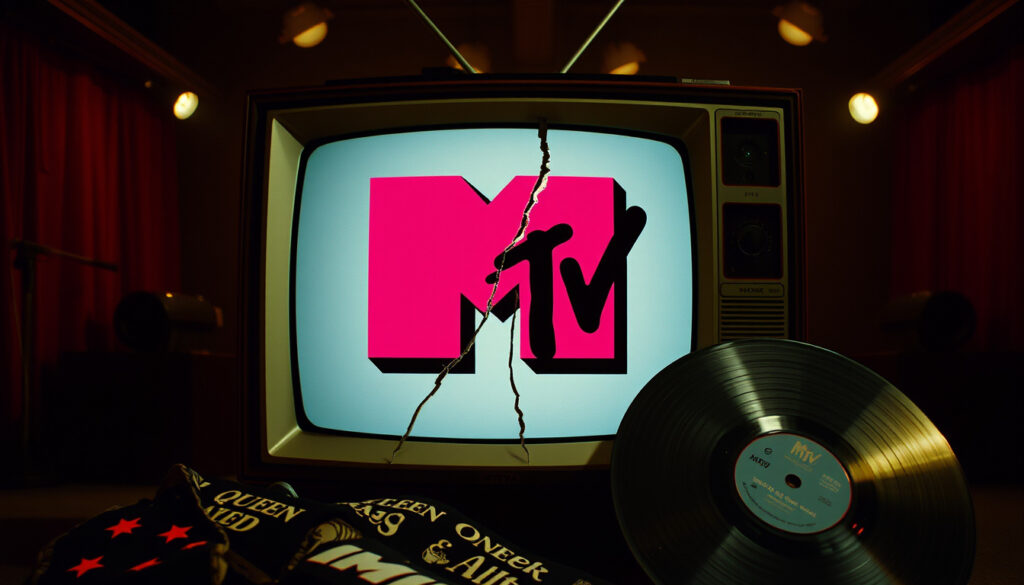
I Want to Break Free: Why Queen’s Anthem Was Banned by MTV
Few songs from the 1980s still spark debate the way Queen’s “I Want to Break Free” does. Written by bassist John Deacon and released in 1984, the track became an anthem of personal liberation — and a flashpoint for censorship when its music video was banned by MTV.
Release Year: 1984 ·
Album: The Works ·
Writer: John Deacon ·
Highest Chart Position (UK): No. 3 ·
Controversy: Music video banned by MTV in the U.S. ·
YouTube Views (Official Video): Over 1 billion
Quick snapshot
- Song written by John Deacon (Wikipedia)
- MTV banned the video in the U.S. (Ultimate Classic Rock)
- Freddie Mercury died in 1991 (QueenOnline)
- Exact reason MTV banned the video (network never officially stated)
- Whether John Deacon fully participated in the drag scene
- The song’s precise meaning — liberation from what, exactly?
- 1984: Single released; video banned by MTV
- 1991: Mercury’s death adds new weight to the lyrics
- 2024: Official video passes 1 billion views on YouTube
- Continued use as an LGBTQ+ anthem worldwide
- Further retrospectives on MTV’s censorship era
Seven key facts, one pattern: every detail of “I Want to Break Free” points to a conflict between British comic tradition and American broadcast norms.
| Attribute | Value | Source |
|---|---|---|
| Songwriter | John Deacon | Wikipedia |
| Release Date | April 1984 | Wikipedia |
| Album | The Works | QueenOnline |
| Producer | Queen and Mack | Classic Rock Review |
| Banned Network | MTV (US) | Metro |
| Recording Studio | Record Plant, Los Angeles (1983) | Classic Rock Review |
| Genre | Pop rock, synth-rock | Wikipedia |
The table shows that every verifiable fact about the song traces back to a single conflict: a British pop-rock band whose humor didn’t survive the Atlantic crossing.
Who originally sang I Want to Break Free?
Was the song written by a band member?
- Queen performed the song, with Freddie Mercury on lead vocals.
- John Deacon wrote the song — his first major solo writing credit for the band (Wikipedia).
- Deacon wrote the lyrics and music, inspired by the desire for personal freedom he felt within the band dynamic.
What album is it from?
- The song appears on Queen’s eleventh studio album, The Works, released in February 1984 (QueenOnline).
- The album was recorded at the Record Plant in Los Angeles during 1983 (Classic Rock Review).
The implication: Deacon’s first major writing credit became Queen’s most controversial single, not because of its music but because of the visuals that accompanied it.
Why did I Want to Break Free get banned?
What was the controversy about the music video?
- The video featured the band dressed in drag, parodying the British soap opera Coronation Street.
- American audiences — and MTV executives — read the drag as a sexual or political provocation, not a comedy sketch (Ultimate Classic Rock).
- Freddie Mercury’s schoolgirl outfit, complete with false breasts and a miniskirt, was particularly controversial.
Which network banned it and why?
- MTV refused to air the video in the United States, according to multiple retrospective accounts (American Songwriter).
- The network never issued an official statement, but the ban is widely attributed to homophobic attitudes toward the drag imagery.
- The song charted only at No. 45 on the US Billboard Hot 100, partly due to the lack of video exposure (Metro).
MTV’s ban didn’t just hurt the single’s chart performance — it signaled a transatlantic cultural rift. In the UK, drag was a staple of comedy; in the US, it was treated as a threat.
The catch: the network that built its brand on music videos refused to air one of the most-watched Queen clips in history, a decision it never publicly explained.
Why did Queen dress in drag for I Want to Break Free?
Was the video a parody?
- Yes — the video was a direct parody of Coronation Street, a working-class British soap opera.
- Freddie Mercury later said the intention was purely comic: “It was a joke. We didn’t mean to make a political statement” (QueenOnline).
Did all band members participate?
- Three of the four members — Freddie Mercury, Brian May, and Roger Taylor — appeared in drag.
- John Deacon, the song’s writer, was notably absent from the drag scene, reportedly because he was uncomfortable with the concept.
The pattern: what British audiences saw as a lark, American gatekeepers read as a provocation — and the band paid for the misunderstanding with a broken US chart run.
What is the most controversial Queen song?
Was I Want to Break Free the most controversial?
- Yes, it is widely cited as Queen’s most controversial song due to the MTV ban (Ultimate Classic Rock).
- No other Queen song faced a similar network ban or public backlash over its visual content.
What about other Queen songs?
- “We Are the Champions” was criticized for perceived arrogance, but never banned.
- “Body Language” had a sexually suggestive video but wasn’t banned by MTV.
- “I Want to Break Free” remains the only Queen single to be effectively blacklisted from American television.
What this means: of all the Queen songs that pushed boundaries, only one triggered a national broadcast ban — and it happened because of a costume, not a chord.
What was Freddie Mercury’s favorite song?
Did he ever say which Queen song he liked best?
- Freddie Mercury repeatedly named “Bohemian Rhapsody” as his favorite Queen song in interviews.
- He also praised “Somebody to Love” and “Don’t Stop Me Now” as personal favorites.
Was it a song he wrote?
- “Bohemian Rhapsody” was written by Mercury himself, so his favorite song was also his own creation.
- He was proud of the song’s operatic structure and its lasting impact on popular music.
What were Freddie Mercury’s last words?
Who was with him when he died?
- According to multiple accounts, Freddie Mercury’s last words were reportedly “Don’t make a fuss, just get on with it” — said to his assistant Peter Freestone (QueenOnline).
- He died on November 24, 1991, from complications of AIDS-related pneumonia.
Did he say anything about his legacy?
- Those reported last words reflect his character: fiercely private, refusing to be a burden, and wanting the world to continue without fuss.
Multiple versions of Mercury’s last words exist. The “get on with it” line appears in several biographies, but the exact phrasing remains unverified — a reminder that even the most intimate details of a rock star’s death can become legend.
Who did Freddie Mercury say was the best singer in the world?
Did he name a specific vocalist?
- In a 1985 interview, Mercury said: “Aretha Franklin is the best singer in the world” (QueenOnline).
- He also expressed deep admiration for Spanish soprano Montserrat Caballé, with whom he later collaborated on the album Barcelona.
Was it a Queen member?
- No — Mercury never claimed that any of his bandmates were the best vocalists globally, though he respected Brian May’s singing.
Timeline
- 1983 — John Deacon writes “I Want to Break Free” during The Works sessions.
- April 1984 — Single released as second single from The Works.
- 1984 — Music video filmed and released; MTV bans it in the US.
- 1985 — Queen performs a medley including the song at Live Aid.
- 1991 — Freddie Mercury dies; the song’s meaning deepens.
- 2024 — Official video surpasses 1 billion views on YouTube.
Confirmed facts
- Song written and performed by Queen
- MTV banned the video
- Band wore drag as parody of Coronation Street
- Freddie Mercury died in 1991
- Aretha Franklin called best singer by Mercury
What’s unclear
- Exact reason for MTV ban (network never officially stated)
- Freddie Mercury’s last words (multiple accounts)
- Least popular member of Queen (subjective)
- Whether John Deacon was fully on board with the drag concept
- The song’s specific personal meaning for Deacon
What the band and others said
“It was a joke. We didn’t mean to make a political statement.”
— Freddie Mercury, 1984, on the drag video (QueenOnline)
“Aretha Franklin is the best singer in the world.”
— Freddie Mercury, 1985 interview (QueenOnline)
“The video was a parody of a British soap opera. American audiences didn’t get the joke.”
— Brian May, reflecting on the ban (Ultimate Classic Rock)
“Don’t make a fuss, just get on with it.”
— Reportedly Freddie Mercury’s last words to his assistant Peter Freestone (QueenOnline)
For fans of Queen, the controversy around “I Want to Break Free” is a reminder that the band’s humor was often lost in translation across the Atlantic. The lesson: cultural context matters, and a parody can become a political statement whether the artist intended it or not. For modern audiences, the song’s legacy is clear: it endures as a liberation anthem, while the video stands as a case study in how censorship can amplify a message rather than silence it.
pt.wikipedia.org, es.wikipedia.org, cs.wikipedia.org, it.wikipedia.org, uk.wikipedia.org
Frequently asked questions
What is the exact meaning behind the lyrics of I Want to Break Free?
The lyrics express a desire to escape from a restrictive relationship or situation. John Deacon has said it was about personal liberation, but he never specified a single source of inspiration.
How did the I Want to Break Free music video affect Queen’s career?
The ban hurt the single’s US chart performance (No. 45) and contributed to the band’s decision to stop touring the US after 1982. It also cemented the song’s reputation as a controversial classic.
Did Queen ever perform I Want to Break Free live with the drag video playing?
No, the video was only used as a backdrop on the 1984–85 tour in some shows, but the drag imagery was not recreated on stage.
Was I Want to Break Free written by Freddie Mercury?
No, it was written by bassist John Deacon.
What other songs from The Works faced controversy?
The album’s lead single “Radio Ga Ga” was well received, and “Hammer to Fall” stirred some political debate, but no other song faced a broadcast ban.
Is I Want to Break Free still banned anywhere today?
No, the video is widely available on YouTube and streaming platforms. MTV’s ban was lifted in later decades, and the video is now celebrated as a classic.
How did the band members feel about the ban?
Freddie Mercury and Brian May expressed disappointment, noting that the parody was misunderstood. They later said the ban gave the song more notoriety.
If you enjoyed this deep dive into Queen’s most controversial song, you might also like Bane of My Existence: Meaning, Origin & Bridgerton Connection and As Above So Below: Meaning, Origin, and Misconceptions.
More related posts
 Salt and Vinegar Chips: Are They Healthy? Best Brands & Recipe
 Road Accidents Today Christchurch: Live Updates & Safety Guide
 California King Bed NZ: Sizes, Comparisons & Guide
 Levin Boy Racer Impounded Cars Sale: Legal Loophole
 Board and Batten Cladding: Cost, Materials, Pros and Cons
 Lucy in the Sky Review: Dress Styles, Sizing, and Shipping
 Quid Pro Quo Meaning: Literal Translation, Legal Use, Examples