1 Year Old Birthday Present Ideas – Best Safe Developmental Gifts
Choosing the right birthday present for a one-year-old requires balancing fun with developmental appropriateness. At this age, children are rapidly developing motor skills, language abilities, and cognitive understanding. The best gifts support these growth areas while meeting strict safety standards. This guide covers age-appropriate toy recommendations, safety considerations, and practical advice for selecting memorable first birthday presents.
Parents and gift-givers often feel overwhelmed by the sheer number of options available. Understanding what one-year-olds can actually play with—and what poses risks—simplifies the decision significantly. The American Academy of Pediatrics emphasizes that toys for this age group should encourage exploration without presenting choking hazards or other dangers.
What Are the Best Birthday Gifts for a 1-Year-Old?
The most successful gifts for one-year-olds share common characteristics: they engage multiple senses, support emerging skills, and hold up to enthusiastic handling. Whether shopping for a baby boy, baby girl, or a gender-neutral celebration, these categories consistently deliver value.
| Category | Top Pick | Price Range | Why It Fits |
|---|---|---|---|
| Toys | MEGA BLOKS First Builders | $15–$20 | Large pieces, stacking play |
| Books | Board book set | $10–$20 | Durable pages, tactile elements |
| Keepsakes | Personalized blanket | $25–$40 | Sentimental, lasting memory |
| Experiences | Music class pass | $40–$80 | Developmental, memorable |
Quick Gift Guide at a Glance
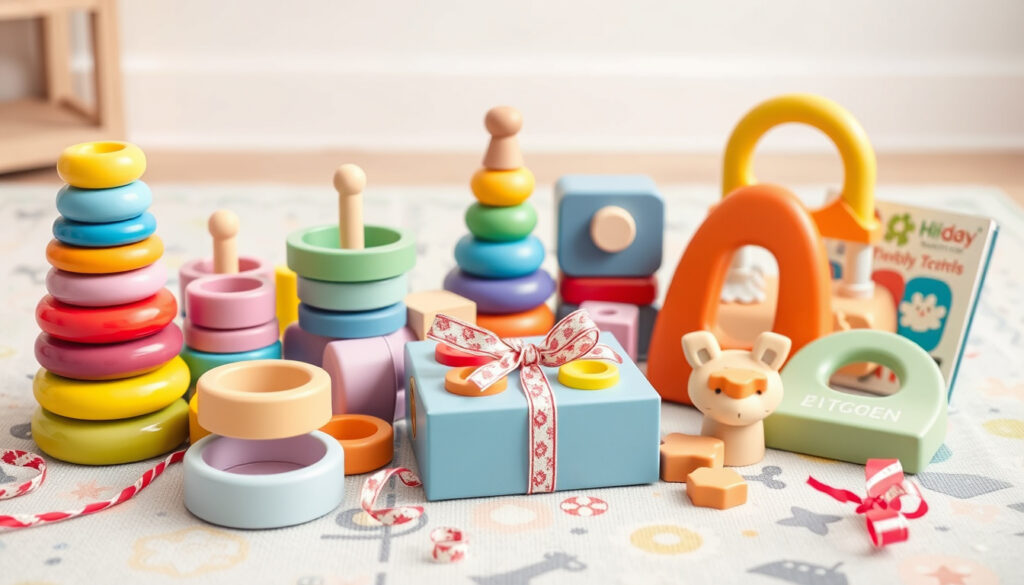
Stacking blocks remain a top choice because they build fine motor coordination while introducing basic math concepts like size and sequence. Board books with textures or sounds captivate developing minds and create bonding opportunities during reading time. Personalized items like custom blankets or name puzzles serve both functional and sentimental purposes. Experience-based gifts such as swimming lessons, music classes, or museum memberships provide developmental benefits that extend well beyond the birthday celebration.
Key Insights for Choosing 1-Year-Old Gifts
- Focus on sensory exploration through toys with different textures, sounds, and colors
- Avoid any items with small parts that could pose choking risks
- Prioritize BPA-free and non-toxic materials in plastic toys
- Select open-ended toys that allow multiple ways to play
- Match gifts to current developmental milestones for optimal engagement
- Consider durability—quality toys last through multiple children
- Think long-term: versatile toys provide value beyond the first birthday
1-Year-Old Gift Snapshot
| Milestone | Recommended Gift Type | Examples |
|---|---|---|
| Crawling/Walking | Push toys, walkers | VTech Activity Walker, Haba Walker Wagon |
| Fine Motor | Stacking, grasping toys | MEGA BLOKS, peg puzzles |
| Language | Board books, talking toys | Poke-a-Dot books, toy phones |
| Cognitive | Shape sorters, nesting cups | Melissa & Doug puzzles, stackable cups |
| Sensory | Textured items, instruments | Hape Xylophone, crinkle books |
| Imaginative | Figurines, play sets | Fisher-Price Little People sets |
What Toys Are Safe for 1-Year-Olds?
Safety forms the foundation of any gift decision for young children. The American Academy of Pediatrics provides clear guidelines that parents and gift-givers should follow when selecting presents for one-year-olds.
Essential Safety Guidelines
The primary concern for this age group involves choking hazards. Toys must be large enough that they cannot fit entirely inside a child’s mouth. The Consumer Product Safety Commission recommends avoiding toys with small removable parts for children under three years old. This includes small balls, button batteries, and magnets, which pose serious risks if ingested.
Balloons pose a significant suffocation risk for young children and should never be given to one-year-olds. Broken balloon pieces can block airways if inhaled.
Material Safety Standards
Material choices matter significantly when selecting gifts for babies and toddlers. According to child safety experts, BPA-free labels indicate plastic toys meet current safety standards for food-contact items. Food-grade silicone offers a durable, safe alternative particularly suitable for teething children. Wooden toys require smooth, sanded edges and finishes using non-toxic, water-based products rather than older lacquers that may contain harmful chemicals.
Organic materials represent the preferred choice when available, reducing exposure to pesticides and chemical treatments during manufacturing. Parents should verify that wooden toys carry certification for toy safety standards before purchase.
Toys to Avoid
- Toys with small parts that can detach or break
- Items containing button batteries or small magnets
- Sharp edges on metal or wooden toys
- Toxic paints or finishes on any surface
- Cords or ribbons longer than seven inches
- Very soft plastic that may tear and create hazards
Best Gifts for 1-Year-Old Boys and Girls
Gender-targeted gift recommendations often appear in parenting discussions, but developmental needs remain remarkably similar across sexes at this age. The best approach focuses on individual interests rather than stereotyped preferences.
Gifts for One-Year-Old Boys
Vehicle-themed toys consistently engage young boys, with push-along cars and trucks encouraging gross motor development as children push toys across floors. The VTech Stroll & Discover Activity Walker combines transportation themes with interactive learning elements that support cognitive development. Foam building blocks in primary colors appeal to the grasping instincts common in this age group while allowing creative construction play.
Gifts for One-Year-Old Girls
Puzzle play and pretend scenarios captivate many one-year-old girls. The Melissa & Doug First Shapes Jumbo Peg Puzzle develops problem-solving skills while strengthening fine motor coordination through knobbed pieces designed for small hands. Doll and figure sets encourage nurturing play behaviors and language development through storytelling opportunities.
Research from early childhood development specialists indicates that open-ended toys serving multiple play purposes provide greater developmental value than highly themed or gendered items for children aged 12 months.
Gender-Neutral Options
Many excellent toys transcend traditional gender boundaries. Building blocks, shape sorters, musical instruments, and water play toys engage all children regardless of sex. These items also solve the practical challenge when the child’s preferences remain unknown or when gifts might be shared among siblings.
What Educational Toys Suit 12-Month-Olds?
Educational toys for one-year-olds differ from those marketed for older children. At 12 months, the focus sits firmly on sensory exploration, cause-and-effect learning, and fundamental motor skill development.
Fine Motor and Hand-Eye Coordination
Fine motor development accelerates rapidly during the second year of life. Toys requiring grasping, releasing, and manipulating objects strengthen the small muscles needed for later writing and self-care tasks. The MEGA BLOKS First Builders Toddler Blocks offer chunky pieces sized perfectly for small hands learning to stack and balance. The Fat Brain Toys PlayTab provides multiple textures and manipulative elements that reward reaching and grasping attempts.
Montessori-inspired busy boards have gained popularity for good reason. These activity boards combine latches, gears, buttons, and other manipulating elements on a single surface, providing concentrated practice for fine motor control in an engaging format.
Gross Motor Development
Walking and movement dominate the physical development of one-year-olds. Push toys provide essential support as children transition from cruising along furniture to independent walking. The VTech Stroll & Discover Activity Walker offers stability assistance combined with interactive features that reward each successfully completed step.
Foam climbing blocks create safe environments for practicing emerging climbing skills while developing strength and coordination. Balls in various sizes encourage throwing, rolling, and eventually catching behaviors that build hand-eye coordination and spatial awareness.
Cognitive Development Through Play
Cause-and-effect toys teach fundamental scientific concepts at the most basic level. Pop-up toys demonstrate that actions produce reactions, building the cognitive framework for later problem-solving. Shape sorters introduce categorization and spatial reasoning while providing the satisfaction of successful completion.
Nesting cups teach size relationships through hands-on experimentation with ascending and descending scales. Children discover that larger cups can hold smaller cups but not vice versa, building intuitive understanding of volume and dimension.
The workspaceforchildren.com recommends prioritizing toys that allow self-directed exploration over those requiring parental assembly or following specific instructions.
Sensory and Language Development
Sensory exploration forms the foundation of all early learning. Textured balls provide varying tactile experiences that build nerve connections in developing hands. Crinkle books offer auditory stimulation alongside visual interest, rewarding investigation with interesting sounds.
Board books remain essential tools for language development at this age. Interactive books with tactile elements, sounds, or lift-the-flap features maintain attention while introducing vocabulary and narrative concepts. Musical instruments like the Hape Pound & Tap Bench combine auditory stimulation with cause-and-effect learning and early appreciation for rhythm.
Personalized and Budget-Friendly 1st Birthday Gifts
First birthdays often inspire gift-givers to seek something special and memorable. Personalization adds sentimental value while remaining practical for everyday use.
Personalized Gift Options
Custom blankets embroidered with the child’s name and birth date become treasured keepsakes that last for years. Name puzzles serve dual purposes—teaching letter recognition while providing personalized play opportunities. Photo books documenting the first year of life create meaningful gifts from grandparents and close family members.
Personalized storybooks featuring the child’s name as the main character captivate young readers and create strong associations with reading as a pleasurable activity. Building vocabulary through interactive reading sessions supports early language acquisition, and parents can extend this learning by exploring Animals Starting with U for additional word-building activities that complement their child’s growing communication skills.
Budget-Friendly Choices
Quality gifts need not carry premium prices. Many excellent options fall under $20, making them suitable for party favors, sibling gifts, or when budget constraints limit spending. Board books typically range from $8 to $15 and provide hours of reading enjoyment. Basic stacking cups and shape sorters often cost under $15 while offering substantial developmental benefits.
The hiccapop.com resource on educational toys confirms that simple, inexpensive toys often provide equal or greater developmental value than complex electronic alternatives.
DIY and Handmade Gifts
Handmade items carry special meaning when created by family members or close friends. Knitted toys, sewn soft books, or wooden toys crafted with care become family heirlooms that children eventually pass to their own children. Parents should ensure any handmade items meet safety standards regardless of their sentimental value.
Developmental Timeline for Gift Selection
Children develop rapidly during the second year, and gift selections should evolve accordingly. Understanding the progression helps parents and gift-givers choose items appropriate for current abilities while preparing for emerging skills.
- 9-12 months: Soft toys for grasping, textured balls, push-along toys for cruising support
- 12-15 months: First push walkers, large stacking toys, simple shape sorters, board books
- 15-18 months: Push toys for walking practice, nesting cups, musical instruments, figurines
- 18+ months: Complex building sets, tricycles, advanced puzzles, art supplies
Gifts chosen slightly ahead of current abilities provide appropriate challenges that stimulate continued development. However, items significantly beyond current skill levels may frustrate rather than engage young children.
Safe vs. Risky: Gift Clarity
| Safe Choices | Items to Avoid |
|---|---|
| Large plush toys without small parts | Toys small enough to swallow |
| Unbreakable plastic construction toys | Toys with detachable small pieces |
| Board books with durable pages | Balloons (suffocation risk) |
| Soft foam blocks and balls | Toys with long cords or ribbons |
| Rounded wooden toys with smooth finishes | Metal toys with sharp edges |
| BPA-free plastic items from reputable manufacturers | Antique toys with unknown material safety |
Parents should verify that all gifts, regardless of the source, meet current safety standards before allowing children to play with them. Even well-meaning relatives may not be aware of updated safety recommendations.
Why These Gifts Work for 1-Year-Olds
Understanding the developmental science behind toy recommendations helps parents make informed choices. At one year old, children are mastering fundamental skills that form the foundation for all future learning.
Fine motor skill development at this stage focuses on the pincer grasp—the ability to pick up small objects between thumb and forefinger. Toys requiring two-hand coordination, passing objects between hands, and releasing objects into containers all support this crucial milestone. The CDC developmental milestones resource confirms that most one-year-olds are working toward these motor goals.
Cognitive development centers on cause-and-effect understanding and object permanence—knowing that things continue to exist even when out of sight. Toys that respond to actions teach these concepts effectively while providing engaging feedback that maintains attention and encourages repetition.
Language development accelerates rapidly during the second year, and the vocabulary explosion typically begins around this time. Interactive books, talking toys, and music provide rich language exposure in formats that capture developing attention spans.
Expert Sources and Safety Standards
Several organizations provide authoritative guidance on toy safety and developmental appropriateness for young children. Parents benefit from consulting these resources when making gift decisions.
The American Academy of Pediatrics recommends choosing toys that are safe and age-appropriate, considering the child’s developmental stage rather than chronological age alone.
The ASTM International F963 standard provides comprehensive safety requirements for toys sold in the United States, covering mechanical, physical, and chemical hazards. Parents should look for ASTM certification when purchasing toys.
The Consumer Product Safety Commission maintains databases of recalled products and safety alerts that parents can check before purchasing used items or accepting secondhand gifts. This due diligence prevents unknowingly introducing hazardous items into the home.
Summary
Selecting the right birthday present for a one-year-old involves balancing safety, developmental appropriateness, and enjoyment. Focus on toys supporting fine motor skills, gross motor development, cognitive growth, and language acquisition. Prioritize BPA-free materials, avoid small parts that pose choking risks, and choose open-ended toys that allow multiple play possibilities. Whether selecting personalized keepsakes, budget-friendly options, or educational toys, matching gifts to the child’s current developmental stage ensures meaningful engagement. Parents seeking additional guidance can explore related topics like Animals Starting with U for vocabulary-building activities or How to Train Your Dragon 3 for family entertainment recommendations.
Frequently Asked Questions
What outdoor toys are suitable for a 1-year-old’s birthday?
Appropriate outdoor toys for one-year-olds include sandboxes with safe toys, splash pads, soft balls, and riding toys with parental supervision. Avoid any outdoor toys with small parts or that require advanced coordination.
What types of toys do 1-year-olds typically enjoy playing with?
One-year-olds typically enjoy toys they can grasp, push, pull, dump, and fill. Stacking blocks, shape sorters, push toys, board books, and musical instruments all capture their interest and support development.
How much should I spend on a first birthday gift?
Meaningful gifts range from $10 to $50 depending on your relationship with the family and budget. Quality matters more than price—many excellent options fall in the $15-25 range. Expensive toys are not necessarily better for developmental purposes.
Are electronic toys appropriate for 1-year-olds?
Simple electronic toys with cause-and-effect features can be appropriate. However, experts generally recommend prioritizing passive toys that encourage interaction over screen-based or heavily electronic alternatives at this age.
What are the best non-toxic gift options for babies?
Look for toys made from organic cotton, natural wood with non-toxic finishes, food-grade silicone, and BPA-free plastics. Certified organic materials and reputable manufacturers provide the most reliable non-toxic options.
Should I buy gender-specific toys for a 1-year-old?
Developmental needs at one year old are largely similar across genders. Open-ended toys without strong gender coding generally offer the best value and can be enjoyed regardless of the child’s sex.
How do I know if a toy is age-appropriate?
Check the age recommendation on packaging, but also consider the child’s specific abilities. Toys should match current skills while offering slight challenges. Avoid anything with small parts for children who still mouth objects.
More related posts
 Callum Turner Movies & TV Shows: Full Filmography & Career Guide
 Harvey Norman Price Match Guide: Exclusions & How to Claim
 What Is a Conjunction? Types, Examples & How to Identify
 What Does WYLL Mean? Definition, Uses, and How to Reply
 H&M Christchurch – Locations, Hours and Contact
 PAK’nSAVE Whanganui: Online Shopping & Weekly Specials
 181 cm in Feet and Inches: Exact Conversion, Not 6 ft
 Best Online Spanish Learning: 80/20 Rule & Top Apps