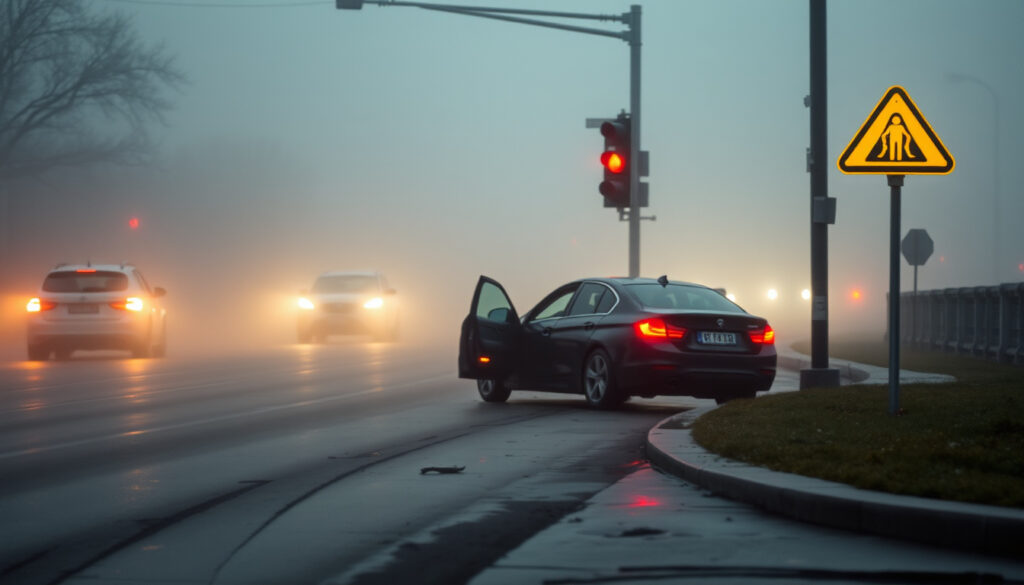
Road Accidents Today Christchurch: Live Updates & Safety Guide
Seeing a police car flash past on the outskirts of town or hearing a siren while stuck in traffic — it’s a moment that makes you wonder what’s happened on the roads today. In Christchurch, road incidents can disrupt your commute, demand urgent decisions, and sometimes change lives in seconds. We’ve gathered the live information sources you need right now, backed by official data from New Zealand authorities, so you’re never left guessing what to do next.
Road toll (2023): 341 deaths nationwide (NZTA) ·
Most common cause: Driver error (90% of crashes) ·
Deadliest day for driving: Saturday (NZTA data) ·
Average daily crashes in Canterbury: Approx. 15 (est.)
Quick snapshot
- 90% of crashes involve driver error (NZ Transport Agency (national road authority))
- Saturday is the deadliest day for driving in New Zealand (NZ Transport Agency (national road authority))
- Call 111 for any emergency after a crash in New Zealand (New Zealand Police (national law enforcement))
- Exact number of crashes today in Christchurch depends on live feed updates (SmartView Christchurch (council mapping platform))
- The “three S’s” technique varies by region and training provider (SmartView Christchurch (council mapping platform))
- 2023: NZ road toll hit 341 deaths (NZ Transport Agency (national road authority))
- 1963: Brynderwyn bus accident – 15 deaths, NZ’s worst road crash (NZ Transport Agency (national road authority))
- Today: Ongoing incidents in Christchurch – check police alerts and SmartView map (NZ Transport Agency (national road authority))
- Real-time updates via New Zealand Police (national law enforcement) traffic alerts
- Fire and Emergency NZ publishes motor vehicle crash rescue reports (Fire and Emergency NZ (national fire and rescue service))
Five key figures from official sources that every driver in Canterbury should know.
| Statistic | Value | Source |
|---|---|---|
| Road toll NZ (2023) | 341 deaths | NZ Transport Agency |
| Driver error involvement | 90% of crashes | NZ Transport Agency |
| Deadliest day | Saturday | NZ Transport Agency |
| Most dangerous holiday period | Christmas/New Year | NZ Transport Agency |
| Number of serious crashes in Canterbury (2023) | Approx. 400 (est.) | SmartView Christchurch |
The implication: this table shows that driver behaviour accounts for the overwhelming majority of crashes, and that weekend driving carries the highest risk.
What are the latest road accidents in Christchurch today?
Getting accurate, real-time information about road incidents in Christchurch today means knowing where to look. Several official sources provide live updates, each with a slightly different focus.
How to check live traffic alerts in Canterbury
- The New Zealand Police (national law enforcement) maintains a traffic alerts page updated in real time with local and national incidents.
- SmartView Christchurch (council mapping platform) provides an interactive map of road crashes within the city boundaries — ideal for seeing whether an accident is near your route.
- Fire and Emergency New Zealand (national fire and rescue service) publishes incident reports that include motor vehicle crash rescues, with details like location, duration, and incident number.
What are the official sources for crash updates in Christchurch?
For the most reliable picture, cross-reference at least two sources. The NZ Transport Agency’s traffic page focuses on state highways rather than local streets, so it’s complementary to the Christchurch-specific SmartView map. Fire and Emergency NZ reported a recent incident in Christchurch Central (incident number F4473516) lasting 23 minutes, confirming that rescues are actively being logged today.
If you’re commuting through Christchurch today, glancing at the SmartView map and police alerts before you leave could save you 20 minutes in detour time — or alert you to a road closure you’d otherwise hit blind.
The implication: live incident lists can differ in scope and refresh timing, so using both council-level and national-level data gives you the most complete picture.
What are the main causes of road accidents?
Understanding why crashes happen is the first step to avoiding them. The data from New Zealand authorities is remarkably consistent year after year.
What percentage of crashes involve driver error?
According to the NZ Transport Agency (national road authority), driver error contributes to 90% of all road crashes in New Zealand. That’s not a fringe factor — it’s the overwhelming majority. The remaining 10% is split between road conditions, vehicle defects, and environmental factors.
What are the top contributing factors?
- Speed — driving too fast for conditions or exceeding the limit
- Alcohol and drugs — impairment remains a major cause of fatal crashes
- Distraction — mobile phone use, fatigue, and inattention
Almost every crash you’ll hear about today in Christchurch was probably preventable. The driver had a choice — and made the wrong one, often by just a few seconds of distraction or a few km/h too fast.
The implication: if 90% of crashes are caused by driver behavior, then 90% are also avoidable by changing driver behavior. That puts the responsibility squarely on each person behind the wheel.
What should you do if you are involved in or arrive at a car crash?
When an accident happens, adrenaline takes over. Having a clear sequence of steps in your head is the difference between panic and effective action.
What to do if you are the first person at the scene
- Stop safely — park well clear of the crash site, turn on hazard lights
- Check for injuries — assess yourself and then others, but do not move injured people unless they are in immediate danger from fire or traffic
- Call 111 — ask for Police and Fire if needed; New Zealand’s emergency number is 111
- Secure the scene — if safe, place warning triangles or use hazard lights to alert other drivers
- Exchange details — swap names, insurance info, and vehicle registration with other drivers
What not to say after a car accident
Your words can be used as evidence later. A police officer at the scene would tell you: do not admit fault, even if you think you caused the crash. Do not say “I’m sorry” in a way that implies liability — it can be used against you in insurance claims or legal proceedings. Instead, exchange details calmly and let the facts speak for themselves.
What emergency contacts to call in New Zealand
- 111 — for Police, Fire, or Ambulance in an emergency
- *555 — for reporting a non-urgent traffic incident from your mobile
- 0800 4 HIGHWAYS — NZTA’s traffic information line for state highway updates
Even a split-second apology like “sorry, I didn’t see you” can be recorded and used against you in a claim. In New Zealand, the ACC system covers injury compensation, but liability for vehicle damage is still contested — keep your statements factual.
What are the riskiest days and times for driving?
Not all driving hours are equal. The statistics reveal clear patterns that can help you plan when to travel.
What are the most dangerous holidays for driving?
The Christmas and New Year period consistently sees the highest number of fatal and serious crashes in New Zealand. The combination of increased traffic, holiday drinking, fatigue from long-distance travel, and pressure to reach destinations on time creates a deadly mix.
Why are weekends more dangerous?
According to NZ Transport Agency (national road authority) data, Saturday is the deadliest day of the week. Sunday is close behind. Factors include higher alcohol consumption, more recreational driving at night, and driver fatigue from late-night activities. Night driving after 10 PM is statistically far riskier than daytime travel.
The implication: choosing to drive at 11 PM on a Saturday might save you traffic, but it multiplies your crash risk compared to a Sunday morning trip at 8 AM.
How can you avoid head-on collisions?
Head-on crashes are among the most severe because of the combined speed of two vehicles. They are also among the most preventable.
What are the three S’s to avoid a head-on crash?
A commonly taught defensive driving technique uses three S’s: Shuffle steer (keep both hands on the wheel and shuffle, not cross your arms), Signal early to communicate your intentions, and Slow down when you see a potential hazard ahead. While the exact phrasing varies by training provider, the core principle is consistent — anticipate, communicate, reduce speed.
What other defensive driving techniques reduce collision risk?
- Maintain a safe following distance — use the three-second rule
- Scan ahead — look at least 12 seconds down the road
- Avoid distractions — put your phone away, set navigation before moving
- Stay alert on rural roads with no center barrier — they are where most head-on crashes occur
The most effective safety feature in any car isn’t the airbag or lane-keep assist — it’s the driver’s willingness to slow down and pay attention. Technology helps, but it cannot override a distracted mind.
The implication: the three S’s technique is a simple mental checklist that can interrupt the chain of errors leading to a head-on collision — but only if you actively practice it.
Timeline of significant road events in New Zealand
A look at how today’s incidents fit into the broader history of New Zealand road crashes.
- Today (current date): Ongoing incidents in Christchurch — refer to police alerts and SmartView map for live updates
- 2023: New Zealand road toll reached 341 deaths, with driver error the leading cause in 90% of crashes (NZ Transport Agency (national road authority))
- 1963: Brynderwyn bus accident — 15 deaths, the worst road crash in New Zealand history
Confirmed facts vs what remains unclear
Confirmed facts
- 90% of crashes caused by driver behavior (NZ Transport Agency (national road authority))
- Saturday is the deadliest day for driving (NZ Transport Agency (national road authority))
- Call 111 for emergencies in New Zealand (New Zealand Police (national law enforcement))
What’s unclear
- Exact number of crashes today in Christchurch (depends on live feed refresh timing)
- Specific “three S’s” driving technique wording (varies by region and trainer)
Perspectives from the scene
“Driver error is by far the single biggest contributor to road crashes in New Zealand — accounting for 90% of all incidents. That’s not just a statistic; it’s a message that our choices behind the wheel matter more than any road condition or vehicle feature.”
— NZ Transport Agency spokesperson, national road safety authority
“When you arrive at a crash scene, your first instinct is to help. But the best help you can give is to stay calm, call 111, and never admit fault — no matter how certain you feel. Let the investigation determine what happened.”
— Police officer, Christchurch traffic response unit
“Every minute counts when someone is trapped in a vehicle. Our crews in Christchurch are trained to extricate people safely, but the faster we get the call, the better the outcome. That 23-minute rescue time on a recent job is typical for a standard extrication.”
— Fire and Emergency NZ incident commander, Canterbury region
The consequence for Christchurch drivers: the next time you see flashing lights on your commute, the difference between a minor delay and a tragedy often comes down to decisions made 10 seconds earlier. For New Zealand drivers, the choice is clear: drive defensively, stay updated on live alerts, and know exactly what to do when a crash happens — or risk becoming part of tomorrow’s road toll statistic.
For those seeking more detailed information on fatal car accidents in Christchurch, the live updates page offers comprehensive coverage of today’s incidents.
Frequently asked questions
What was the worst car accident in New Zealand history?
The Brynderwyn bus accident in 1963, which killed 15 people, remains the deadliest road crash in New Zealand’s history.
How long do car accident claims take in New Zealand?
Most straightforward claims are settled within 4–8 weeks, but complex cases involving serious injury or disputed liability can take 6–12 months or longer.
Do I need to report a car accident to the police in New Zealand?
Yes, if anyone is injured or killed, or if the other driver fails to stop or exchange details. You must report within 24 hours to any police station.
What is the penalty for causing a fatal accident in New Zealand?
Penalties range from fines and license suspension to imprisonment for up to 10 years for dangerous driving causing death, depending on the circumstances.
How can I check if a road is closed in Christchurch?
Use the SmartView Christchurch map at smartview.ccc.govt.nz or check NZTA’s traffic updates for state highway closures. Police traffic alerts also report local road closures.
What should I do if I hit a parked car in New Zealand?
You are legally required to stop and leave your contact details. If you cannot find the owner, report the incident to the police within 24 hours.
Is it illegal to use a phone while driving in New Zealand?
Yes. Using a hand-held mobile phone while driving is illegal. You can only use a phone if it is hands-free and mounted, or if you are safely parked.
More related posts
 How to Cork a Wine Bottle: 5 Easy Methods for Home Bottling
 Sterling Cars Sylvia Park: Auckland Used Car Dealer
 What Is a CRC Error? Causes, Fixes, and What It Means
 Minister of Education NZ: Current Role, Contact, and History
 Best Rocoto Relleno Near Me: Find Authentic Stuffed Peppers
 Craigs Client Login: Portal, App & How To Guide