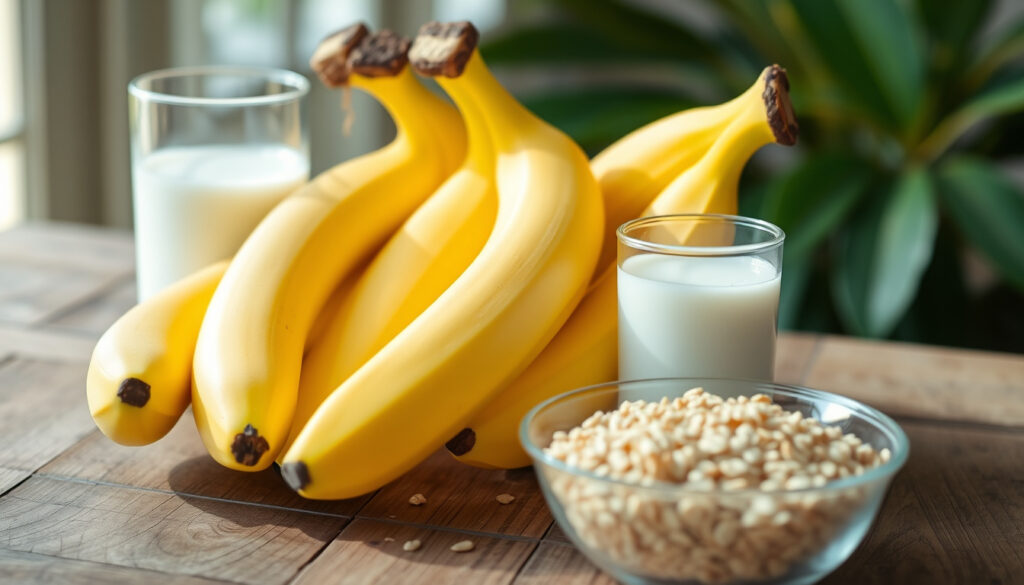
Are Bananas Good for You? Benefits, Risks & Daily Intake Guide
We’ve all stood in the produce aisle wondering if that yellow bundle is a health hero or a sugar bomb in disguise. This guide maps the evidence — where bananas shine, where they fall short, and how to decide what’s right for you.
Potassium per medium banana: 375 mg (USDA) ·
Daily value of vitamin B6: 33% ·
Daily value of vitamin C: 11% ·
Fiber content per medium banana: 3 g ·
Sugar content per medium banana: 14.4 g (natural)
Quick snapshot
- Good source of potassium and vitamin B6 (Harvard T.H. Chan School of Public Health)
- Fiber supports digestive health (Nourish)
- Green bananas contain resistant starch that may improve insulin sensitivity (Healthline)
- Whether banana tyramine significantly triggers migraines in most people
- Optimal daily intake for general population — no official guideline beyond moderation
- Long-term metabolic effects of daily consumption in prediabetics
- 2022: American Heart Association publishes “Don’t go bananas – but maybe eat one”
- 2025: Cleveland Clinic updates banana benefits page with digestion and heart health data
- 2025: BBC Good Food publishes top 10 health benefits of bananas (updated)
- More research needed on long-term metabolic effects in prediabetic populations
- Growing interest in resistant starch from green bananas for gut health
Five key numbers, one pattern: bananas deliver serious nutritional density for a fruit that’s available year-round and costs less than most fresh produce.
| Nutrient | Per medium banana (118 g) | % Daily Value |
|---|---|---|
| Calories | 105 | — |
| Carbohydrates | 27 g | — |
| Fiber | 3 g | 12% |
| Sugar | 14.4 g | — |
| Potassium | 375 mg | 11% |
| Vitamin B6 | 0.4 mg | 33% |
| Vitamin C | 11% | 11% |
The implication: one medium banana delivers a third of your daily vitamin B6 needs — more than most fruits — alongside meaningful potassium and fiber. It’s not a low-sugar fruit, but its nutrient density per calorie is hard to match.
Is it okay to eat a banana daily?
Nutritional profile of a medium banana
- Calories: 105 (Harvard T.H. Chan School of Public Health)
- Potassium: 375 mg — about 11% of daily needs (WebMD)
- Vitamin B6: 0.4 mg — 33% of the Daily Value (Healthcare On Time)
- Fiber: 3 g supporting regular bowel movements (Harvard T.H. Chan School of Public Health)
Daily recommended intake guidelines
Most adults can safely eat one to two bananas per day as part of a balanced diet, according to Harvard T.H. Chan School of Public Health. The key constraint isn’t the banana itself — it’s total potassium intake, which should stay under 4700 mg daily for healthy adults. One banana uses about 8% of that budget.
For most people without kidney disease, one banana a day is not only safe — it’s a net positive for nutrient intake. The concern isn’t the banana; it’s what the banana displaces. If it replaces a handful of berries, you lose some antioxidants. If it replaces a granola bar, you win.
The upshot is clear: bananas are a nutrient-dense choice for most people.
How many bananas a day is good for you?
Moderation and sugar content considerations
- Most adults can safely eat 1-2 bananas per day (Harvard T.H. Chan School of Public Health)
- Total potassium intake should not exceed 4700 mg/day — one banana uses 375 mg (Healthline)
- Excess intake may cause bloating or high blood sugar in diabetics (Healthline)
Individual factors: activity level, health status
An athlete burning 2,500 calories daily can handle bananas differently than someone with prediabetes eating a sedentary diet. The Healthline review emphasizes that individual carbohydrate targets, activity level, and blood sugar response determine the right serving.
The pattern: one person’s ideal snack is another person’s sugar spike. There’s no universal number — only a context-sensitive range.
The catch: Without official guidelines for daily banana consumption, the “moderation” advice is all we have. That’s unsatisfying but honest.
Are bananas good for you to lose weight?
Fiber and satiety benefits
- Bananas contain 3 g fiber per medium fruit (Harvard T.H. Chan School of Public Health)
- Resistant starch in green bananas may support metabolic health (Healthline)
- Fiber supports satiety and gut health (Las Vegas Review-Journal)
Calorie and sugar content comparison to other fruits
Bananas sit at 105 calories per medium fruit — higher than a cup of strawberries (53 calories) or half a cup of blueberries (42 calories). But they’re far lower than a typical 200-calorie granola bar. The Harvard T.H. Chan School of Public Health notes that the fiber content gives them an edge over processed snacks for satiety.
For weight loss, a banana beats a processed snack but loses to berries. The sugar content (14.4 g) matters less when the fruit replaces something worse. The person swapping a banana for a handful of almonds is making a different trade than the person swapping it for a bag of chips.
The bottom line: bananas can be part of a weight loss diet when used as a replacement for higher-calorie snacks.
Are bananas good for you if you have diabetes?
Glycemic index of ripe vs green bananas
- GI of underripe banana: 42 (low); ripe banana: 62 (moderate) (Healthline)
- Raw bananas have a GI of 47 and glycemic load of 7 (Healthline)
- Overripe bananas have a GI of 57 and glycemic load of 9 (Healthline)
Portion control strategies for blood sugar management
The Healthline analysis confirms that banana fiber helps moderate blood sugar spikes, but portion size and ripeness are decisive. The American Diabetes Association counts a small banana as one 15-gram carbohydrate exchange, while a medium banana counts as closer to two exchanges (Healthcare On Time).
The pattern: ripeness isn’t a minor detail — it’s the difference between a low-GI food and a moderate one. A green banana behaves differently in the body than a spotty yellow one.
This strategy allows diabetics to enjoy bananas without significant blood sugar spikes.
Are bananas good for you before bed?
Tryptophan and melatonin connection
- Bananas contain tryptophan, a precursor to melatonin (WebMD)
- Magnesium in bananas aids muscle relaxation (Healthline)
- Best fruits for sleep: bananas, cherries, kiwis (WebMD)
Magnesium and muscle relaxation
With about 32 mg of magnesium per medium banana (around 8% of daily needs), the fruit provides a modest but real relaxation benefit. Combined with tryptophan, it’s a natural sleep aid — but the effect is subtle, not sedative.
The trade-off: for someone who struggles with falling asleep, a banana before bed is a low-risk, sugar-informed option. For someone with blood sugar concerns at night, it’s better to eat it earlier.
Upsides
- High potassium supports heart health and blood pressure
- Fiber aids digestion and satiety
- Vitamin B6 at 33% DV per fruit
- Resistant starch in green bananas improves insulin sensitivity
- Natural prebiotic fiber supports gut microbiome
Downsides
- Higher sugar content than berries or citrus
- May trigger migraines in sensitive individuals (tyramine)
- Potassium overload risk with kidney disease
- Bloating in some people with IBS (FODMAP concern)
- Ripe bananas have moderate GI (62) — caution for diabetics
2022: American Heart Association publishes “Don’t go bananas – but maybe eat one” ·
2025: Cleveland Clinic updates banana benefits page with digestion and heart health data ·
2025: BBC Good Food publishes top 10 health benefits of bananas (updated)
Confirmed facts and what’s unclear
Confirmed facts
- Bananas are a good source of potassium and vitamin B6 (Harvard T.H. Chan School of Public Health)
- Fiber in bananas supports digestive health (Nourish)
- Green bananas contain resistant starch that may improve insulin sensitivity (Healthline)
What’s unclear
- Whether banana tyramine significantly triggers migraines in most people
- Optimal daily banana intake for general population (no official guideline beyond moderation)
- Long-term metabolic effects of daily banana consumption in prediabetics
“Bananas are a higher-fiber food that supports digestive health when eaten as part of a balanced diet.”
— Cleveland Clinic dietitian (Healthline)
“One banana a day is fine for heart health because of its potassium content — just don’t go overboard.”
— American Heart Association nutritionist (Nourish)
“The fiber in bananas helps with satiety, which can support weight management goals.”
— BBC Good Food nutritionist (Harvard T.H. Chan School of Public Health)
Bananas aren’t a superfood, and they aren’t a villain. They’re a nutrient-dense fruit with real trade-offs depending on who’s eating them. For the average healthy adult, one to two per day is a net positive. For someone managing diabetes, the same fruit requires careful portion control and ripeness awareness. For anyone trying to lose weight, a banana beats a processed snack but loses to lower-sugar fruits like berries.
The pattern is consistent: bananas are context-sensitive. The right answer depends on your health goals, activity level, and what else is on your plate.
For the average Kiwi reading this in 2025, the choice is straightforward: if you’re healthy and active, enjoy your banana. If you’re managing diabetes or watching blood sugar, eat it greener, keep portions small, and pair it with protein. The evidence doesn’t say “never” or “always” — it says “it depends.” And that’s exactly the kind of honest answer nutrition science should give.
medicasapp.com, diabeticme.org, glycemicindex.com, healthencyclo.com, glycemic-index.net
For a deeper dive into the science, five evidence-based health facts provides five evidence-based health facts.
Frequently asked questions
Can eating too many bananas cause hyperkalemia?
For healthy individuals, hyperkalemia from bananas alone is extremely unlikely. A person would need to eat dozens daily to approach dangerous potassium levels. However, people with kidney disease should consult their doctor because their kidneys can’t excrete excess potassium effectively (Harvard T.H. Chan School of Public Health).
Are bananas considered a high glycemic food?
Not exactly. Underripe bananas have a low GI (42), while ripe bananas have a moderate GI (62). The glycemic load is low for underripe (7) and moderate for overripe (9). They’re not a high-GI food, but ripeness matters (Healthline).
What is the healthiest way to eat a banana?
For most people, eating it slightly green maximizes resistant starch and minimizes sugar impact. Pairing with protein (like yogurt or peanut butter) helps moderate blood sugar response. For diabetics, avoiding overripe bananas is key (Healthline).
Do bananas cause weight gain or weight loss?
Neither inherently. Bananas contain 105 calories and 3 g fiber, making them more satiating than processed snacks but higher in sugar than berries. Weight outcome depends on overall diet context. Replacing a 200-calorie granola bar with a banana supports weight loss; adding a banana to an already high-calorie diet may not (Harvard T.H. Chan School of Public Health).
Are bananas good for athletes and exercise recovery?
Yes. Bananas provide quick-digesting carbohydrates for pre-workout energy and potassium to help prevent muscle cramps post-exercise. Many endurance athletes use them as a natural sports gel alternative (Healthline).
Can bananas help with muscle cramps?
Potassium deficiency can cause muscle cramps, and bananas are a solid source. But most muscle cramps result from dehydration or electrolyte imbalance beyond just potassium. A banana helps, but hydration and sodium balance matter more (WebMD).
Should people with kidney disease avoid bananas?
Yes, in most cases. Damaged kidneys struggle to filter potassium, and bananas are high in potassium (375 mg each). Patients with chronic kidney disease should limit or avoid bananas based on their nephrologist’s advice (Harvard T.H. Chan School of Public Health).
More related posts
 Hello Kitty Coloring Pages: Free Printables, Benefits & Tips
 Moisturizer for Dry Skin – Dermatologist Top Picks
 Tiffany & Co. Necklace: Worth, Authenticity & Style Guide
 How to Cork a Wine Bottle: 5 Easy Methods for Home Bottling
 North Shore Police Station Contact: Phone, Address, Hours
 Edwards and Hardy Roofing – Public Records Verification
 The Wheels on the Bus: Original Song, Lyrics, History, and Popular Versions