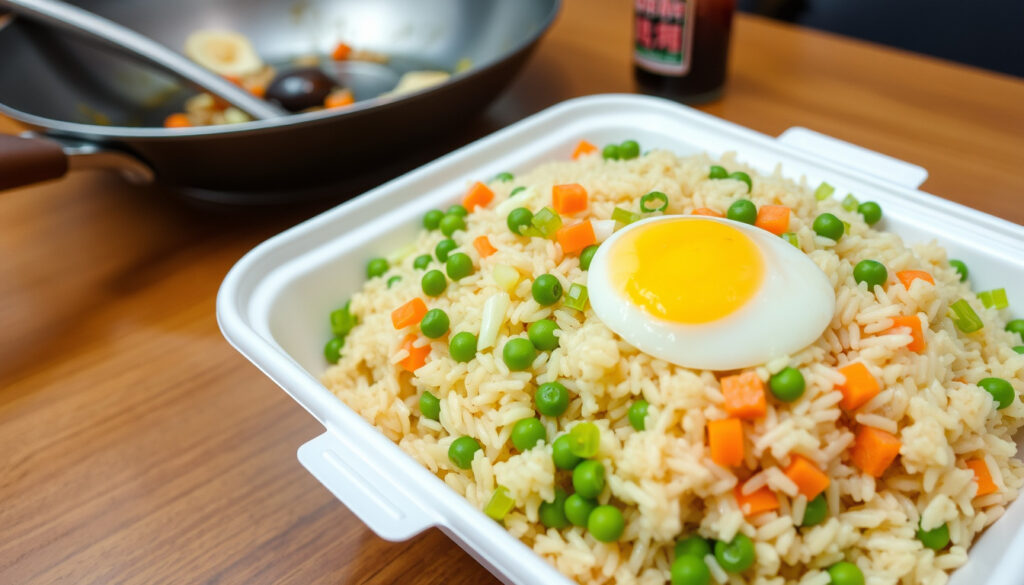
Fried Rice Recipe NZ: How to Make Chinese Takeaway Style
There’s something about a plate of fried rice that tastes like it came straight from a Chinese takeaway — golden grains, smoky aroma, just the right amount of sauce. But when you try it at home, the result can be disappointing: clumpy, bland, or just not quite right. This guide breaks down exactly how to get that authentic takeaway flavour using ingredients you can find at any New Zealand supermarket, with step-by-step instructions and the common mistakes to avoid.
Cook time: 15 minutes ·
Core ingredients: 5 (rice, egg, soy sauce, vegetables, protein) ·
Difficulty: Easy ·
Popular variations: 10+ ·
Average calories per serving: 400 kcal
Quick snapshot
- Day-old rice improves texture (I Love Eggs (NZ egg industry board))
- High heat and a wok create wok hei (Love Food Hate Waste NZ (food waste reduction initiative))
- Oyster sauce and soy sauce add umami (New World (NZ supermarket chain))
- Whether MSG is universally used in authentic recipes
- Love Food Hate Waste NZ recipe updated 2026-09-23 (Love Food Hate Waste NZ source)
- I Love Eggs NZ recipe updated 2026-09-20 (I Love Eggs NZ source)
- New World NZ recipe updated 2026-03-02 (New World NZ source)
- Serve immediately topped with spring onions and sesame seeds
- Try variations: chicken, pork, or vegetable fried rice
Five key facts about fried rice in New Zealand, one pattern: local institutions consistently recommend day-old rice and a hot wok for best results.
| Fact | Details |
|---|---|
| Origin | Chinese cuisine |
| Key ingredient | Day-old cooked rice |
| Typical cooking time | 15 minutes |
| Popular in NZ | Yes, widely available at takeaways |
| Average calories per serving | 400 kcal |
What is the secret to a good fried rice?
What’s the secret ingredient to fried rice?
- Using day-old rice prevents clumping (I Love Eggs (NZ egg industry board)).
- High heat and a wok create wok hei (Love Food Hate Waste NZ (food waste reduction initiative)).
- MSG or oyster sauce adds umami (New World (NZ supermarket chain)).
The pattern: the core secret is dry, separated rice grains and intense heat. Without day-old rice, the grains release too much moisture and turn sticky.
Should I add the egg to fried rice before or after the rice?
Love Food Hate Waste NZ (food waste reduction initiative) recommends scrambling the egg first in a separate pan, then adding it back at the end. New World (NZ supermarket chain) uses a similar approach: cook the egg first, remove, then stir-fry rice and vegetables, finally folding the egg through. This prevents the egg from coating the rice and making it soggy.
Home cooks who scramble the egg directly into the rice end up with a gluey texture. Cook it separately for fluffy, distinct pieces.
The pattern: cooking eggs separately and using day-old rice is the foundation of perfect texture.
Should you fry your rice before cooking?
Not in the sense of frying raw rice. NZ recipes use pre-cooked rice that is fried with aromatics and sauce. Beef + Lamb New Zealand (red meat sector body) shows a make-ahead workflow: cook rice separately, let it cool, then stir-fry. The key is to heat the rice through in the wok, not fry it from raw.
The catch: if you use freshly boiled rice, the steam inside the grains makes it impossible to get that dry, separated texture. Day-old rice is non-negotiable.
How to make fried rice like Chinese takeaway?
Use high heat and a wok
- Preheat wok until smoking before adding oil (Love Food Hate Waste NZ (food waste reduction initiative)).
- A non-stick wok or fry pan over medium heat works, but a carbon-steel wok gives the best wok hei (New World (NZ supermarket chain)).
Pork NZ (NZ pork industry body) fries onion first, then pork, then adds cooked rice to heat through and coats it with sauce — all on high heat.
Add ingredients in the correct order
The sequence matters: cook protein first, then vegetables, then rice. Love Food Hate Waste NZ (food waste reduction initiative) starts by stir-frying garlic and onions, then adds rice, soy sauce, vegetables, and optional meat. New World (NZ supermarket chain) stir-fries rice and garlic for 4-5 minutes before adding sauces and vegetables.
Season with oyster sauce and soy sauce
- Chinese takeaway-style fried rice commonly uses soy sauce as primary seasoning (New World (NZ supermarket chain)).
- Oyster sauce or dark soy sauce is added for deeper color and savoriness (I Love Eggs (NZ egg industry board)).
- WeightWatchers NZ (weight management program) includes a lighter version with reduced sodium soy sauce.
The implication: the right balance of soy sauce, oyster sauce, and a touch of sesame oil (added at the end) is what gives takeaway fried rice its distinctive flavour.
What are the five ingredients in fried rice?
Six NZ recipe sources agree on a core set of ingredients, but one pattern stands out: flexibility. The five that appear in nearly every recipe:
- Cooked rice (preferably day-old) (I Love Eggs (NZ egg industry board))
- Eggs (I Love Eggs (NZ egg industry board))
- Vegetables (carrots, peas, corn) (New World (NZ supermarket chain))
- Protein (ham, chicken, shrimp, or just egg) (Pork NZ (NZ pork industry body))
- Soy sauce and sesame oil (Love Food Hate Waste NZ (food waste reduction initiative))
Variations may include garlic, ginger, and oyster sauce. The trade-off: more ingredients add flavour but also increase prep time and calories.
For New Zealand home cooks, these five ingredients are available in almost every supermarket — no specialty Asian grocery required. That’s the point: accessible takeaway flavour.
The implication: mastering these five ingredients gives any home cook a reliable base for countless variations.
What gives Chinese fried rice its flavour?
MSG enhances savoriness
While debated, MSG is a common addition in takeaway kitchens. New World (NZ supermarket chain) relies on oyster sauce and soy sauce for umami instead. The key: in NZ recipes, chicken stock powder (which contains MSG) is sometimes used — I Love Eggs (NZ egg industry board) includes chicken stock powder in its fast fried rice recipe.
Oyster sauce adds depth
Oyster sauce is a staple in NZ takeaway-style fried rice. New World (NZ supermarket chain) uses it alongside soy sauce for a richer flavour profile.
Sesame oil provides nuttiness
Sesame oil is added at the end for aroma — a small amount goes a long way. I Love Eggs (NZ egg industry board) includes dark soy sauce and sesame oil in its recipe.
Wok hei from high heat
Wok hei — the smoky flavour only achieved by extreme heat — is hard to replicate at home. Love Food Hate Waste NZ (food waste reduction initiative) uses medium heat for its recipe, which reduces smoke but also reduces that signature char.
The pattern: if you want real wok hei, you need a gas burner that can get a carbon-steel wok smoking hot. Induction hobs can’t match it.
What are common fried rice mistakes?
Why does my fried rice never taste good?
- Using freshly cooked rice is the most common mistake (I Love Eggs (NZ egg industry board)).
- Overcrowding the pan steams the rice instead of frying (New World (NZ supermarket chain)).
- Not seasoning enough or using the wrong soy sauce (Love Food Hate Waste NZ (food waste reduction initiative)).
Another issue: low heat. Pork NZ (NZ pork industry body) advises high heat throughout to keep the rice from absorbing too much moisture.
Using fresh rice leads to mushiness
Freshly cooked rice has too much moisture. I Love Eggs (NZ egg industry board) specifically recommends long grain white rice that has been cooked and left for 8 hours or overnight. Without that drying time, the grains break down and clump.
Low heat fails to create wok hei
Cooking on low heat steams the rice. Love Food Hate Waste NZ (food waste reduction initiative) uses a non-stick wok over medium heat — but for proper wok hei, you need high heat and a metal wok.
The catch: if you add too much soy sauce too early, the rice absorbs it and becomes heavy. Add sauces at the very end, tossing to coat.
Home cooks who overcrowd the wok end up with a stir-fry that boils rather than fries. Cook in batches if needed — it makes the difference between soggy and perfect.
The catch: even with the right ingredients, technique errors like overcrowding or low heat will ruin the dish.
Why is fried rice unhealthy?
High sodium and oil content
Fried rice can be high in calories, sodium, and unhealthy fats. WeightWatchers NZ (weight management program) lists its easy fried rice recipe as a healthier option, but restaurant versions often contain extra oil and salt.
Portion size matters more than single dishes
No single food is ‘bad’, but large servings of fried rice can push daily calorie and sodium limits. A typical takeaway serving may contain over 800 calories and more than 2,000 mg of sodium.
Some Chinese dishes are higher in sugar and fat
Fried rice is relatively moderate compared to battered and deep-fried dishes like General Tso’s chicken or sweet and sour pork. The main concern with fried rice is the oil used and the sodium from soy sauce.
The pattern: if you control the oil and use low-sodium soy sauce, homemade fried rice can be a balanced meal — especially when loaded with vegetables and lean protein.
For New Zealanders who order takeaway regularly, the implication is clear: homemade fried rice gives you control over ingredients and portion size.
Step-by-step: Perfect fried rice recipe NZ
This method combines techniques from Love Food Hate Waste NZ (food waste reduction initiative), New World (NZ supermarket chain), and I Love Eggs (NZ egg industry board) into one reliable process.
- Prepare the rice. Cook long grain white rice at least 8 hours ahead (overnight is best) and refrigerate uncovered to dry out. I Love Eggs (NZ egg industry board) says this step is critical for texture.
- Scramble the eggs. In a wok or large frying pan over medium-high heat, scramble 2 eggs in a little oil until just set. Remove and set aside. Love Food Hate Waste NZ (food waste reduction initiative) starts this way.
- Cook aromatics and protein. Add a splash more oil and fry minced garlic, diced onion, and your choice of protein (cubed chicken, ham, or pork) for 2-3 minutes. Pork NZ (NZ pork industry body) fries onion first, then pork.
- Add vegetables. Toss in frozen peas, corn, and diced carrot. Cook for another 2 minutes until heated through.
- Add the rice. Break up cold rice with your fingers before adding to the wok. Stir-fry for 4-5 minutes, ensuring each grain is coated in oil and separates. New World (NZ supermarket chain) stir-fries rice and garlic for 4-5 minutes at this stage.
- Season. Drizzle in 2 tablespoons soy sauce, 1 tablespoon oyster sauce, and a splash of sesame oil. Toss well. I Love Eggs (NZ egg industry board) also adds a pinch of chicken stock powder for extra savouriness.
- Finish. Fold the scrambled eggs back through the rice. Add a knob of butter for shine (as New World (NZ supermarket chain) does). If the rice seems dry, add a tablespoon of water (Love Food Hate Waste NZ (food waste reduction initiative) advises this). Garnish with sliced spring onions and serve immediately.
What we know and what’s still unclear
Confirmed facts
- Day-old rice improves texture (I Love Eggs (NZ egg industry board)).
- High heat is essential for wok hei (Love Food Hate Waste NZ (food waste reduction initiative)).
- Oyster sauce and soy sauce are common seasonings (New World (NZ supermarket chain)).
What’s unclear
- Whether MSG is universally used in authentic Chinese fried rice recipes. NZ supermarket recipes avoid it, but many takeaway kitchens include it.
- Whether induction cooktops can effectively generate the high heat needed for wok hei.
- Whether adding butter is a standard practice in authentic Chinese fried rice or an NZ adaptation.
What the sources say
Start by cooking eggs separately, then stir-fry garlic and onions before adding rice, soy sauce, vegetables, and optional meat.
Love Food Hate Waste NZ (food waste reduction initiative)
Use long grain white rice that has been cooked and left for 8 hours or overnight for best results.
I Love Eggs (NZ egg industry board)
Stir-fry rice and garlic for 4-5 minutes before adding sauces and vegetables, then finish with a knob of butter.
New World (NZ supermarket chain)
The bottom line for New Zealand home cooks: you can make restaurant-quality fried rice in 15 minutes using day-old rice, a hot pan, and the right sauces. The trade-off is clear — spend a few minutes preparing the rice the night before, or accept a clumpy result. For anyone craving that classic takeaway taste without leaving home, the recipe above delivers consistent results with ingredients from your local Countdown or New World.
Related reading: Love Food Hate Waste NZ fried rice recipe · New World NZ easy egg fried rice recipe
happymumhappychild.co.nz, thelivinglook.com, thehearthtable.blog, thelivinglook.com, chefsresource.com, foodrepublic.com
Frequently asked questions
Can I use leftover rice for fried rice?
Yes — in fact, leftover rice that has been refrigerated for at least 8 hours is ideal. I Love Eggs (NZ egg industry board) recommends long grain white rice that has been cooked and left overnight.
What vegetables go well in fried rice?
Frozen peas, corn, diced carrots, and chopped spring onions are the most common NZ additions. New World (NZ supermarket chain) uses mixed frozen vegetables for convenience.
How to prevent fried rice from being soggy?
Use day-old rice that is dry and separated. Avoid overcrowding the pan — cook in batches if necessary. Love Food Hate Waste NZ (food waste reduction initiative) suggests adding a little water only if the mixture sticks, not as a routine step.
Is it necessary to use a wok?
Not strictly — a large non-stick frying pan works. But a carbon-steel wok over high heat gives the best smoky wok hei. New World (NZ supermarket chain) and Love Food Hate Waste NZ (food waste reduction initiative) both offer recipes using standard pans.
Can I add meat to egg fried rice?
Absolutely. Diced chicken, ham, pork, or shrimp work well. Pork NZ (NZ pork industry body) has a dedicated pork fried rice recipe that fries the meat first before adding rice.
What type of rice is best for fried rice?
Long grain white rice such as jasmine or basmati. I Love Eggs (NZ egg industry board) specifies long grain white rice for its ability to stay separate when cold.
Can I freeze fried rice?
Yes, fried rice freezes well for up to 3 months. Cool completely, then store in an airtight container. Reheat in a wok or microwave.
More related posts
 Minister of Education NZ: Current Role, Contact, and History
 St John’s College Hastings: Fees, Rankings, Uniform & More
 Lottery Winner Hospitalized Partying: Adam Lopez
 Happy New Year 2026 Images: Free Wishes & Greetings
 California King Bed NZ: Sizes, Comparisons & Guide
 Ivermectin Dosage for Humans: Weight, 12 mg, How to Take
 Places to Stay in Auckland: Best Districts for 2026
 Our Vets St Albans: Hours, Services, Appointments & Cost