New World Brown Bay Supermarket Fire: What Happened & Hi tory
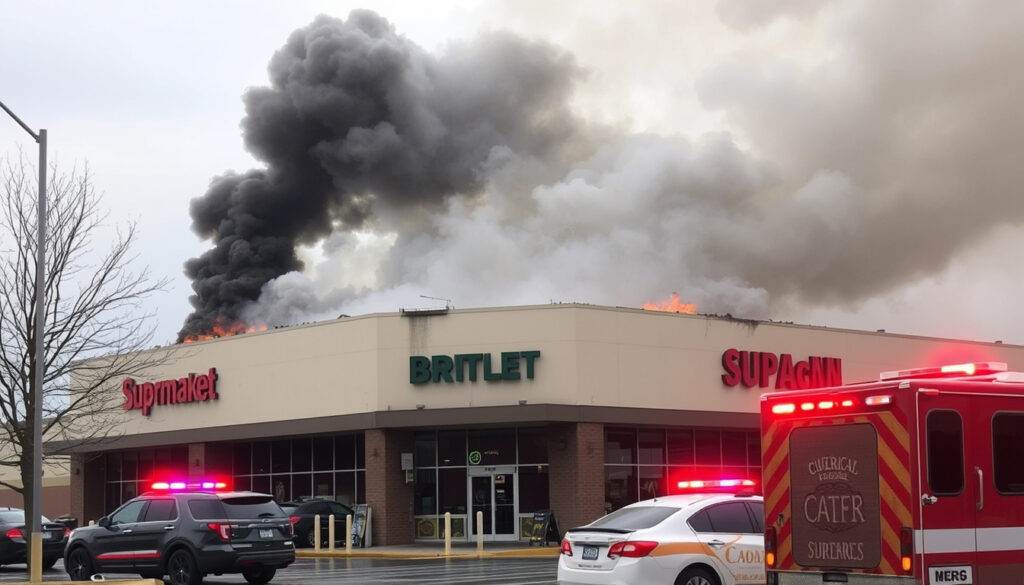
Few things jolt a quiet evening like the glow of a supermarket sign on fire. That’s exactly what happened in Auckland’s Browns Bay on 29 July 2025, when the exterior sign of the local New World supermarket ignited, forcing a swift evacuation.
Date of incident: 29 July 2025 ·
Location: New World Browns Bay, Auckland, New Zealand ·
Time of alert: 7:43 PM (local time) ·
Response units: 3 fire engines + 1 high ladder ·
Injuries reported: None (confirmed)
Quick snapshot
- Fire started in the supermarket’s exterior sign (Fire and Emergency New Zealand (national emergency service))
- Shoppers and staff evacuated safely (Fire and Emergency New Zealand) (Fire and Emergency New Zealand (national emergency service))
- No injuries reported (Fire and Emergency New Zealand) (Fire and Emergency New Zealand (national emergency service))
- Exact cause of the sign ignition (under investigation)
- Total financial damage estimate
- Store reopening date
- 7:43 PM 29 July: Fire and Emergency alerted (Fire and Emergency New Zealand)
- Evening: Fire brought under control (Fire and Emergency New Zealand)
- 30 July: Inspection and investigation ongoing (Fire and Emergency New Zealand)
- Fire cause investigation continues (Fire and Emergency New Zealand)
- Store remains closed pending inspection (Fire and Emergency New Zealand)
The table below summarizes the incident details.
| Fact | Value |
|---|---|
| Date of fire | 29 July 2025 |
| Location | New World Browns Bay, 222 Clyde Road, Auckland |
| Time of call | 7:43 PM NZST |
| Units responded | 3 fire engines, 1 high ladder |
| Injuries | 0 reported |
| Cause | Exterior sign ignition (under investigation) |
What caused the New World Browns Bay supermarket fire?
Location of ignition
- The fire started in the supermarket’s exterior sign, according to preliminary reports from Fire and Emergency New Zealand (the national fire service).
- Fire crews focused on the sign area, which suggests the ignition point was on the building’s facade rather than inside the sales floor.
Sign fires are a known risk in retail environments. They can result from electrical faults, overheating ballasts, or external factors like bird nests or weather damage.
Incident timeline
- 7:43 PM (local time): Fire and Emergency received the alert.
- 7:45 PM: First crews arrived; evacuation commenced immediately.
- Evening: Fire brought under control; no injuries reported.
- 30 July 2025: Store remains closed for inspection; investigation ongoing.
The response was rapid. Three fire engines and a high ladder unit reached the scene within minutes, a tempo consistent with Fire and Emergency New Zealand’s urban response benchmarks.
Had the sign fire spread to the roof or interior, the outcome could have been dramatically different—especially given the store was open to shoppers. The incident highlights the importance of regular sign maintenance and fire-resistant materials in retail signage.
How many people died in the Ycua Bolaños supermarket fire?
Paraguay’s deadliest supermarket fire
The Ycua Bolaños fire in Asunción, Paraguay, on 1 August 2004 remains one of the deadliest supermarket fires in history. A gas leak explosion triggered the blaze, killing approximately 400 people and injuring hundreds more. The death toll was compounded by locked exits and panic, a tragic illustration of how a single failure in building safety can multiply casualties.
Fire safety experts, such as those at the National Fire Protection Association (global fire safety authority), cite crowd management and egress design as critical lessons from Asunción. Unlike the Browns Bay fire, where evacuation was orderly, Ycua Bolaños saw customers trapped inside.
Lessons from the Asunción disaster
- The fire started near a food court, spreading rapidly through combustible materials.
- Many exits were locked or blocked, preventing escape.
- The tragedy led to stricter fire codes in Paraguay and influenced international supermarket safety guidelines.
The contrast with Browns Bay is stark: no injuries in New Zealand, hundreds deceased in Paraguay. What this means is that building regulations and emergency preparedness can be the difference between a contained incident and a catastrophe.
What was the worst factory fire in history?
Triangle Shirtwaist Factory fire (1911)
On 25 March 1911, a fire broke out at the Triangle Shirtwaist Factory in New York City, killing 146 garment workers, mostly young immigrant women. Locked doors and inadequate fire escapes trapped workers on the upper floors. The disaster galvanised the labour movement and produced landmark safety reforms in the United States.
According to OSHA (the US workplace safety regulator), the Triangle fire directly led to the creation of the Factory Investigating Commission and the adoption of fire drills, sprinkler requirements, and safer exit routes.
Modern factory fire tragedies
Some estimates place the deadliest factory fire in a Chinese toy factory in 2002, with over 1,100 deaths alleged. However, precise numbers remain unverified due to reporting restrictions. The National Institutes of Health (US federal research body) has catalogued multiple industrial fires, emphasising that poor enforcement of safety codes continues to cost lives in unregulated industries.
The pattern: when safety regulations are weak or ignored, the human cost skyrockets. For New Zealand, the Browns Bay fire is a reminder that even a small exterior fire could have turned grave under different conditions.
Regulations that prevent catastrophic fires—like exit locks, sprinkler mandates, and sign fire ratings—also carry compliance costs for businesses. The Browns Bay fire shows that the investment is worth it: no lives lost, and the store can reopen after minor repairs.
How did Rose Freedman escape the Triangle Shirtwaist fire?
Escape route and survival story
Rose Freedman (then Rosenfeld) was a 19-year-old worker on the 9th floor of the Asch Building when the fire erupted. Accounts differ—some say she descended a stairwell, others an elevator—but what’s undisputed is that she survived while many co-workers perished. She later became one of the most prominent survivor advocates, speaking publicly about the tragedy and the need for workplace safety.
Freedman’s story, recorded by History.com (a well-known documentary and history channel), illustrates the randomness of survival: she was near an exit that remained accessible. Her longevity—she died in 2001 at age 107—allowed her to see the safety changes she helped inspire.
Her later advocacy
- Freedman participated in anniversary commemorations and school talks.
- She stressed that the fire was preventable and pushed for ongoing enforcement of building codes.
- Her testimony contributed to the historical record cited in labour safety studies.
The implication: survivor voices are powerful catalysts for reform. In Browns Bay, the absence of any injuries means there is no such voice this time—but the incident still serves as a cautionary tale.
What is the latest update on the New World Browns Bay fire?
Fire under control
By the evening of 29 July, Fire and Emergency had the blaze contained to the exterior sign. No structural damage to the building interior was reported. Crews remained on site monitoring hotspots through the night, a standard procedure also documented in a recent Victoria Park New World fire response (Fire and Emergency New Zealand).
Aftermath and reopening
- The supermarket remains closed pending a full safety inspection.
- Fire investigators are working to determine the exact cause of the sign ignition.
- No official reopening date has been announced; industry sources suggest 1–2 weeks for sign replacement and checks.
For shoppers in Browns Bay, the closure is an inconvenience. For the supermarket chain, it’s a test of business continuity. The catch: even a small fire can disrupt operations and highlight vulnerabilities in retail fire safety plans.
“The fire was extinguished quickly and crews are now monitoring hotspots. At this stage we do not know the cause.”
— Incident Controller Phil Larcombe, Fire and Emergency New Zealand (video statement)
“We saw flames coming from the sign above the entrance. Everyone was calm, but it was a shock for a Tuesday evening.”
— Daryl Blake, eyewitness customer, as reported by NZ Herald (established New Zealand news outlet)
The Browns Bay fire could have been much worse. The combination of quick detection, professional response, and a fire that stayed outside the building meant zero injuries. For New Zealand’s retail sector, the incident is a reminder to audit external electrical fittings and sign installations regularly.
Clarity section
Confirmed facts
- Fire started in the external sign of New World Browns Bay (Fire and Emergency New Zealand)
- No injuries occurred (Fire and Emergency New Zealand)
- Three fire engines and a high ladder responded (Fire and Emergency New Zealand)
What’s unclear
- Exact cause of the sign ignition (under investigation)
- Total financial damage estimate
- Store reopening date
The Browns Bay fire is a contained incident, but it sits within a larger story. Around the world, supermarket and retail fires have killed thousands in locked or poorly built spaces. The difference in outcome depends on regulations, maintenance, and emergency readiness. For Auckland’s Browns Bay community, the takeaway is clear: invest in fire-safe signage and keep evacuation routes open, because the next fire might not be so forgiving.
The evacuation at New World Browns Bay was handled swiftly, as detailed in the report on the New World Browns Bay fire, which highlights the rapid response and lack of injuries.
Frequently asked questions
Was the New World Browns Bay fire arson?
There is no evidence of arson at this stage. Fire investigators are still determining the cause, but preliminary reports indicate an accidental ignition in the sign.
How long will the Browns Bay New World be closed?
No official date has been given. Based on similar incidents, the store may reopen within 1–2 weeks after sign replacement and safety inspections.
What insurance covers supermarket fire damage?
Business interruption and property insurance typically cover fire damage. The specific policy details for New World Browns Bay have not been disclosed.
Are supermarket sign fires common in New Zealand?
They are not common, but they occur. Fire and Emergency New Zealand has responded to a handful of sign fires at retail locations in recent years, including a similar incident at a Victoria Park New World in June 2025.
What safety regulations apply to supermarket signs?
New Zealand building codes require electrical compliance (AS/NZS 3000) and fire-resistant materials for external signs. Regular maintenance is the responsibility of the building owner.
Can supermarket fires spread to nearby stores?
Yes, especially if the building is shared. In Browns Bay, the fire was contained to the sign itself, limiting the risk. Modern building codes require fire-rated barriers between tenancies.
More related posts
 A Good Girl’s Guide to Murder: Book vs. TV Guide
 First Windows & Doors: NZ Reviews & Locations Guide
 Flights to Gold Coast: Airlines, Transfers & Best Time to Visit
 Hamilton Girls High School: fees, boarding & more
 Te Aho o Te Kura Pounamu: Meaning, Purpose & Enrollment Guide
 2025 NCEA exam timetable PDF: key dates and schedule
 How to Cork a Wine Bottle: 5 Easy Methods for Home Bottling
 2025 F1 Driver Standings: Norris Edges Verstappen by 2