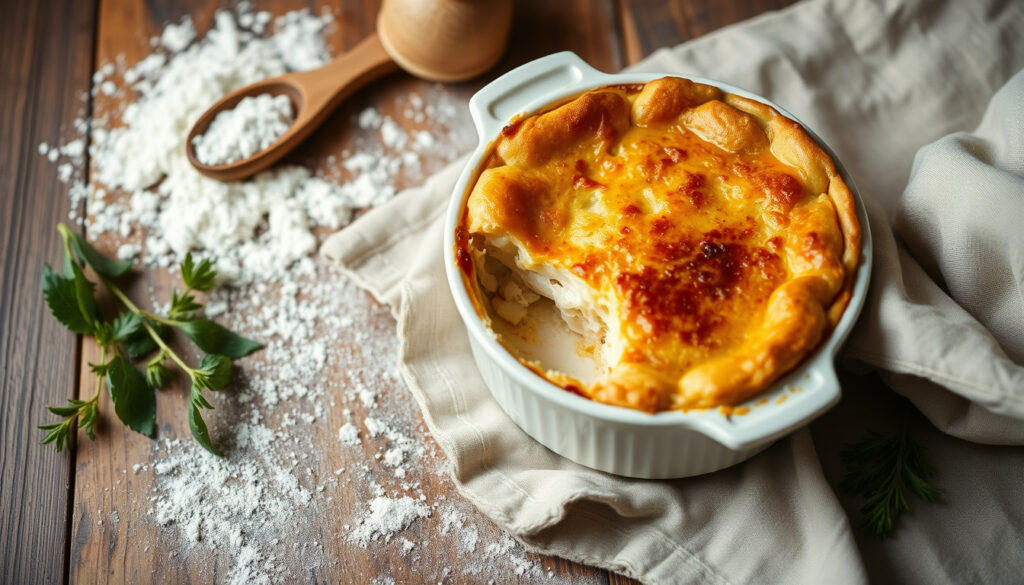
Smoked Fish Pie NZ: Classic Kiwi Recipe with Baking Tips
There’s something about a smoked fish pie that makes a winter dinner feel like a warm hug – the smoky scent drifting through the house, the creamy sauce coating flaky fish, and that golden mashed-potato top. In New Zealand, cooks often turn to local kahawai or snapper for the filling, and some swap in kumara for a sweet twist (NZ Herald Eat Well (popular NZ recipe site)). This guide walks you through the best fish choices, common pitfalls, and a step-by-step method so you can build a pie that’s silky, smoky and properly Kiwi.
Bake time: 35-45 minutes ·
Serves: 4 ·
Key ingredients: smoked fish, white fish, mashed potato, creamy sauce ·
Origin: New Zealand adaptation of British classic
Quick snapshot
- Smoked fish is commonly used in New Zealand fish pies for extra flavour (NZ Herald Eat Well)
- Hot-smoked fish (e.g., kahawai, salmon) is flaky and ready to eat (Love Food Hate Waste NZ (food waste initiative))
- Fish does not need to be pre-cooked if cut into small chunks (RNZ (public broadcaster))
- Common mistakes include watery sauce and overcooked fish (The Fishing Website (NZ angling community))
- Which specific smoked fish species is most popular in homemade pies (mostly anecdotal – kahawai and salmon are common suggestions)
- Optimal ratio of smoked to white fish varies by recipe – some use 50:50, others go heavier on white fish
- Poach white fish in seasoned milk (5-7 minutes) (NZ Herald Eat Well)
- Make roux sauce (5 minutes) (NZ Herald Eat Well)
- Assemble and top with mash (15 minutes) (NZ Herald Eat Well)
- Bake at 180°C for 35-40 minutes (NZ Herald Eat Well)
- Serve with steamed greens or a crisp salad
- Store leftovers in the fridge for up to 3 days
- Freezes well unbaked or baked (wrap tightly)
Four key numbers for your smoked fish pie:
| Attribute | Detail |
|---|---|
| Traditional NZ fish pie | Often uses a mix of white fish and smoked fish |
| Bake temperature | 180°C (350°F) |
| Typical bake time | 35-40 minutes |
| Popular topping | Mashed potato (sometimes with kumara) |
Can you make fish pie with smoked fish?
Yes, and in New Zealand it’s almost expected. Smoked fish adds a layer of savoury depth you can’t get from white fish alone. The key is understanding which type of smoked fish to use.
Why smoked fish works well in fish pie
- Hot-smoked fish (e.g., kahawai, kingfish, salmon) is already cooked – it flakes easily and doesn’t need further cooking, only gentle reheating (Love Food Hate Waste NZ).
- Cold-smoked fish (e.g., some packaged salmon) is uncooked and requires poaching or pan-cooking before adding to the pie – less common in NZ home kitchens.
- The smokiness shines through the creamy sauce without overpowering the delicate white fish.
Difference between hot-smoked and cold-smoked
- Hot-smoked: cooked during smoking, flesh is flaky, ready to eat – ideal for pie.
- Cold-smoked: cured but not cooked, texture is silky – needs cooking; not typical for pie.
Hot-smoked kahawai or salmon give the biggest flavour return for the least effort. Home smokers in NZ often use kahawai because it’s plentiful and takes smoke beautifully (The Fishing Website).
The pattern: smoked fish is a cheat code for complex flavour – use it as the lead, not the backup.
What is the best fish for fish pie in NZ?
New Zealand’s waters offer plenty of options. The best fish pie balances a mild white fish with a punch of smoked fish.
Best white fish options (snapper, gurnard, hoki)
- Snapper – sweet, firm flesh; holds up well in sauce. A premium choice (NZ Herald Eat Well).
- Gurnard – delicate, slightly firmer than snapper; stays moist.
- Hoki – sustainable, affordable, and flaky – a smart everyday option (RNZ).
Role of smoked fish in the mix
- A 50:50 ratio of smoked to white fish gives a balanced flavour – not too overpowering.
- Smoked kahawai adds a robust, earthy note; smoked kingfish is milder.
- Smoked salmon (hot-smoked) offers a luxurious twist.
Chef Al Brown’s Love Food Hate Waste recipe uses both smoked fish and kumara mash, proving that the right fish choice can transform a simple pie into a signature dish (Love Food Hate Waste NZ).
The takeaway: don’t skimp on the white fish quality – it’s the canvas. The smoked fish is the colour.
Do I need to cook fish before making a fish pie?
This is the most common confusion. The short answer: for most NZ recipes, no – but there are exceptions.
When to pre-cook raw fish
- If your white fish is cut into small chunks (2-3 cm), it will cook perfectly during the 35-40 minute bake time (RNZ).
- If the fillets are very thick (e.g., snapper fillet more than 3 cm), poach them in milk for 3-4 minutes first to ensure they don’t stay raw in the pie centre.
Why smoked fish is already cooked
- Hot-smoked fish is fully cooked and safe to eat as-is. Adding it to the pie only needs gentle reheating – fold it in just before baking (Love Food Hate Waste NZ).
- Overcooking smoked fish turns it rubbery – add it late.
Many home cooks poach fish in milk, then wonder why the pie is watery. The fix: use a roux-based béchamel instead of poaching liquid. Keep the milk for the sauce, not the fish (NZ Herald Eat Well).
The trade-off: convenience vs control. Chunks of raw white fish = less work but you must trust your oven. Pre-poaching = safer but adds moisture – thicken the sauce accordingly.
What are some common mistakes in fish pie?
Even experienced cooks hit these pitfalls. Here’s how to sidestep them.
Watery sauce from un-dried fish
- Pat fish dry before adding to the dish. Wet fish leaches liquid into the sauce.
- Use a roux-based béchamel (butter + flour + milk) rather than a thin cream sauce (RNZ).
- Let the sauce thicken fully before combining with fish.
Overcooking the fish
- Fish continues cooking in the hot sauce and in the oven. Err on the side of slightly under-done at assembly.
- Smoked fish needs only a few minutes in the oven – a 35-minute bake is enough (The Fishing Website).
Bland mash topping
- Season the mash well with salt, pepper, and butter. Add cheese (cheddar or parmesan) for a crispy crust.
- Kumara mash adds natural sweetness and pairs brilliantly with smoked fish (NZ Herald Eat Well).
Season the mash as you would a potato side dish – double the butter and add a handful of grated cheddar. Then the topping becomes a golden, crunchy shield, not a bland blanket.
The pattern: most fish-pie failures come from water – either too much of it in the sauce or too little in the topping. Balance is everything.
What makes Jamie Oliver’s fish pie special?
Jamie Oliver’s fish pie is famous for two twists: smoked haddock and cheddar mash, plus hidden soft-boiled eggs. While haddock is rare in NZ, the method adapts beautifully.
Smoked haddock and cheddar
- Oliver uses undyed smoked haddock for colour and flavour. In NZ, substitute hot-smoked kahawai or salmon (NZ Herald Eat Well).
- Cheddar in the mash adds a sharp contrast to the creamy sauce.
Soft-boiled eggs as a hidden layer
- Eggs halved and nestled in the filling add richness and protein. Al Brown’s NZ recipe uses hard-boiled eggs for the same effect (Love Food Hate Waste NZ).
- For a truly Kiwi version, try kumara mash instead of potato and add a pinch of smoked paprika.
Jamie’s recipe calls for a pint of milk – that’s a lot of liquid. NZ cooks should use a thick béchamel with only 500 ml milk to avoid a watery pie. The eggs help absorb excess too.
Why this matters: celebrity recipes give us a framework, but local ingredients like kahawai and kumara make the dish genuinely Kiwi. Use the technique, swap the produce.
How to Make Smoked Fish Pie – Step by Step
- Prepare the fish: Cut white fish (snapper, gurnard or hoki) into 3 cm chunks. Flake hot-smoked fish (kahawai or salmon) into large pieces, removing skin and any bones (The Fishing Website).
- Make the sauce: Melt 50 g butter in a pan. Add 1 finely chopped onion and cook until soft. Stir in 3 tbsp flour, cook 1 minute. Gradually whisk in 500 ml milk, stirring constantly until thick. Season with salt, white pepper and a pinch of nutmeg.
- Prepare the topping: Boil 4 large potatoes (or 3 potatoes + 1 kumara) until tender. Mash with 50 g butter and ¼ cup milk. Stir in ½ cup grated cheddar if desired (Love Food Hate Waste NZ).
- Assemble: Layer white fish chunks in the base of a baking dish. Scatter smoked fish over the top. Add hard-boiled eggs (sliced) if using. Pour the sauce over the fish. Spoon the mash on top, spreading to the edges. Drag a fork across for peaks.
- Bake: Place dish on a tray to catch drips. Bake at 180°C (350°F) for 35-40 minutes until bubbling and golden. If the top browns too quickly, cover loosely with foil for the last 10 minutes (NZ Herald Eat Well).
- Rest and serve: Let the pie rest for 5 minutes before serving. This sets the sauce and prevents it from flooding the plate.
Make the filling and sauce a day ahead – just assemble, top with mash, and bake when needed. It’s even better the next day as flavours meld.
The sequence: sauce first, then fish, then mash. Each layer should be slightly over-seasoned to compensate for the others being mild. Taste as you go.
What We Know and What’s Unclear
Confirmed facts
- Smoked fish is a common ingredient in NZ fish pies (NZ Herald Eat Well)
- Fish does not need to be pre-cooked if cut into small chunks (RNZ)
- Common mistakes include watery sauce and overcooked fish (The Fishing Website)
- Kumara mash is a popular NZ twist on the potato topping (NZ Herald Eat Well)
What’s unclear
- Which specific smoked fish species is most popular in homemade pies (anecdotal evidence only – kahawai and salmon lead)
- Optimal ratio of smoked to white fish varies widely by recipe
Chef Perspectives
“The combination of smoked fish with kumara mash creates a distinctly New Zealand pie. The sweetness of the kumara balances the smokiness, and it’s a great way to use up leftover fish.”
— Chef Al Brown, via Love Food Hate Waste NZ (Love Food Hate Waste NZ)
“A creamy leek sauce rounds out the smokiness beautifully. I use a mix of hot-smoked kahawai and a mild white fish for texture.”
— Annabel Langbein, cookbook author and food writer (NZ Herald Eat Well)
The message from two of New Zealand’s most trusted food voices is clear: local ingredients, proper technique, and a generous hand with seasoning are the secrets to a memorable smoked fish pie.
nzherald.co.nz, gourmetseafood.co.nz, cavegirl.co.nz, allysongofton.co.nz, egmontseafoods.co.nz, nzherald.co.nz
Frequently asked questions
How should I store leftover smoked fish pie?
Cover tightly with foil or plastic wrap and refrigerate for up to 3 days. Reheat in a 160°C oven for 15-20 minutes until hot through. The mash stays crispier if you reheat uncovered for the last 5 minutes.
Can I freeze smoked fish pie?
Yes – either unbaked or baked. Assemble the pie without baking, cover well (double wrap), and freeze for up to 3 months. Bake from frozen at 180°C for 60-70 minutes. If already baked, thaw in the fridge overnight and reheat gently.
What side dishes go well with smoked fish pie?
Steamed green vegetables (broccoli, green beans, or peas) cut through the richness. A simple salad with lemon vinaigrette also works well. Some Kiwis like a dollop of tomato relish on the side.
Can I use kumara instead of potato for the topping?
Absolutely – and many NZ recipes do exactly that. Kumara mash is sweeter and pairs beautifully with smoked fish. Use a 50:50 mix of potato and kumara if you want a balance of creaminess and sweetness (NZ Herald Eat Well).
What type of smoked fish is best – hot-smoked or cold-smoked?
Hot-smoked is the clear choice for pie. It’s flaky, fully cooked, and holds up well during baking. Cold-smoked fish is best reserved for salads or starters (The Fishing Website).
Should I remove skin from smoked fish before adding to the pie?
Yes – remove the skin and any pin bones. Smoked fish skin can be tough and chewy after baking. Flake the flesh directly into the dish (Love Food Hate Waste NZ).
Can I make the pie ahead and refrigerate before baking?
Yes – assemble up to 24 hours ahead, keep covered in the fridge, and bake when needed. You may need to add 10 minutes to the baking time because the dish starts cold.
For home cooks in New Zealand, the choice is clear: use hot-smoked kahawai or salmon, balance it with snapper or hoki, and don’t be afraid of kumara in the mash. A great smoked fish pie rewards patience with technique – and punishes shortcuts with a watery sauce. Take the extra five minutes to make a proper roux and pre-season your mash, and you’ll produce a pie that would make any Kiwi proud.
More related posts
 Flu Vaccine NZ 2025: Availability, Cost, and Eligibility
 Revenge of the Sith: Release, Cast, and Fan Debate
 Black Betty BBQ Menu: Brisket, Burgers, and the Song’s History
 What Is Zoom Bombing? Definition and Prevention Tips
 The Twelve Season 3: Plot, Cast, and Ending
 Weather Auckland Cyclone Tam: Facts and Impact
 SoundHound Share Price: SOUN Stock Live Quote & Analysis
 Rental Cars Queenstown Airport – Prices Companies Booking Guide